Libya Central Bank Certificates of Deposit Aim to Absorb Excess Liquidity and Stabilize the Dinar
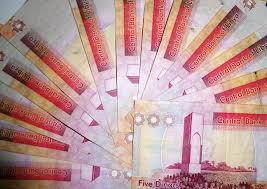
The Central Bank of Libya (CBL) has invited commercial banks to subscribe to a fresh issue of Shariah-compliant certificates of deposit (Issue No. 2-2026 of Unrestricted Mudaraba Certificates). This new issuance, announced on January 22, 2026, follows a similar issue a week earlier (Issue No. 1-2026 of Murabaha Certificates of Deposit). Together, these moves reflect an ongoing effort by the central bank to absorb excess dinars from the market. The certificates pay profit margins of roughly 6-7% per year (for example, a recent 15-billion-dinar issue carried about 7.5% to banks and 6.5% to depositors). By offering a safe place for people to park savings, the bank hopes to draw cash out of private hands and into the banking system – a step that Libyan analysts welcomed as helping to support the dinar and confidence in local banks.
Pent-up liquidity is the core issue. Libyans hold on the order of LD 70 billion outside the formal banking sector. Much of that idle cash has fueled a booming parallel foreign-exchange market, which in 2025 drove the unofficial dollar rate to record highs against the dinar. By enticing savers with competitive, profit-sharing certificates, the central bank hopes to capture even a fraction of those funds. In April 2025, the bank first allowed such certificates at roughly 5% return, and more recently it launched larger 15-billion-dinar sales over fall 2025. Libyan experts praised the innovation: one commentator called the certificates “a step in the right direction” to bolster the dinar and ease dollar speculation.
Issuing these certificates also directly shrinks the money supply. By mid-2025 Libya’s broad money had grown to around LD 170 billion, in part reflecting past years of high spending and liquidity. The new issues – totaling billions of dinars – are designed to soak up some of that excess. Central bankers say the goal is explicitly to narrow the gap between the official exchange rate and the parallel market. As one analyst noted, the bank’s “first aim” is to reduce the price differential that has made the official rate much stronger than the black-market rate. In effect, the certificates act as a liquidity-absorbing instrument: the more deposits banks raise through them, the less cash remains chasing hard currency outside the system.
Tapping Idle Savings into Banks
These monetary tools arrive as Libya’s economic policymakers engage with the international community on reform. In late 2025 a series of foreign delegations visited or held talks with Libyan officials, underscoring the link between domestic financial policy and wider economic confidence. At the IMF/World Bank annual meetings in Washington last October, CBL Governor Naji Issa briefed IMF Director Jihad Azour and his team on Libya’s situation. The IMF side “commended the CBL’s initiatives” in managing the crisis and noted progress toward a unified state budget and other reforms expected to strengthen the dinar. In parallel, EU Ambassador Nicola Orlando met the governor in Tripoli and praised the bank’s “commitment to financial sustainability and inclusive development,” reaffirming the EU’s support for Libya’s economic reform program. These messages from international institutions have emphasized that Libya must tighten its fiscal stance as it taps oil revenues, even as the CBL rolls out new tools to stabilize the currency.
On the diplomatic front, Libyan economic officials have been active as well. A Libyan team in Washington held talks with U.S. Treasury deputies on public finance reform, digitalization of payments and unified budgeting. The Treasury officials urged that unifying Libya’s national budget was a key step to strengthening financial stability and restoring confidence in state institutions. Back home in Tripoli, a World Bank delegation from Washington discussed how to improve Libya’s business environment and attract investment. Even trade missions have gathered: for example, a high-level French business delegation was told that Libya remains “a promising country with all the necessary elements for growth”. In effect, the central bank’s new certificates and the delegation visits are two sides of the same coin: authorities are signaling that Libya is addressing excess liquidity while simultaneously courting foreign expertise and investment.
Whether these combined efforts succeed will depend on political conditions and broader reforms. Experts caution that the dinar’s strength ultimately rests on economic fundamentals, not just central bank tactics. In particular, all sides agree that Libya needs a unified budget and controlled spending – a point emphasized repeatedly by the IMF and the U.S. side. The certificates of deposit are a tool to buy time by cooling the parallel market and stabilizing banks’ balance sheets. But without parallel progress on fiscal discipline, subsidy reform and anti-corruption, their impact may be limited.
Steps Toward Stability
The new deposit certificates are a gauge of Libya’s economic trajectory. By issuing Shariah-compliant certificates, the central bank is demonstrating its willingness to innovate in monetary policy, using methods (profit-sharing contracts rather than interest) that fit local laws. At the same time, recent visits by IMF, World Bank, EU and trade delegations suggest growing international confidence in Libya’s leadership – so long as reforms continue. For Libyan readers, the key takeaway is this: authorities are actively seeking to plug a liquidity leak and strengthen the currency, while also inviting external partners to aid in a broad economic turnaround. The government’s challenge in 2026 will be to convert these cautious, incremental steps into durable stability – by unifying budgets, curbing excess spending, and indeed convincing citizens to put money in banks. Analysts are watching closely; but at least for now, Libya’s central bank is not standing still, and the flurry of reforms (domestic and diplomatic) may yet yield a more solid financial footing.