Libya France Economic Cooperation Expands Amid Major Energy and Investment Deals
Acting Foreign Minister Al-Taher Al-Baour met in Tripoli on Jan. 26 with French Ambassador Thierry Vallat to discuss expanding Libya’s bilateral ties. According to the Libyan News Agency, the two discussed prospects for economic cooperation in the areas of investment, energy, and development. They also reviewed the latest political and security developments in Libya and ways to help strengthen stability. Both sides emphasized the importance of coordination in international forums and the need to strengthen existing cooperation to broaden the horizons of bilateral partnership.
In recent months, Libya’s interim Government of National Unity under Prime Minister Abdulhamid Dbeibah has actively courted foreign investment as it seeks to rebuild the economy. A multi-sector French trade delegation visited Tripoli Jan. 18-20, holding meetings with the General Union of Chambers of Commerce, the privatization and investment board, and other agencies. Libyan officials framed the visit as part of a policy of “economic openness” and diversifying international partnerships. Meanwhile, Economy Minister Mohammed Al-Huweij met the French ambassador in December, urging activation of long-dormant trade agreements and inviting French companies to join Libya’s reconstruction efforts. He noted that around 33 French firms already operate in Libya across sectors from energy to healthcare and said the government aims to expand projects in oil, gas, solar, and medical infrastructure.
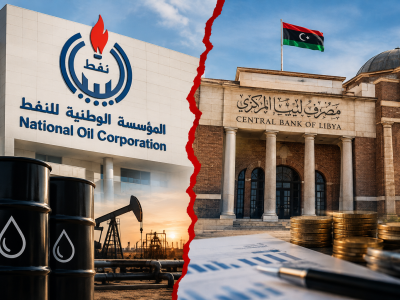
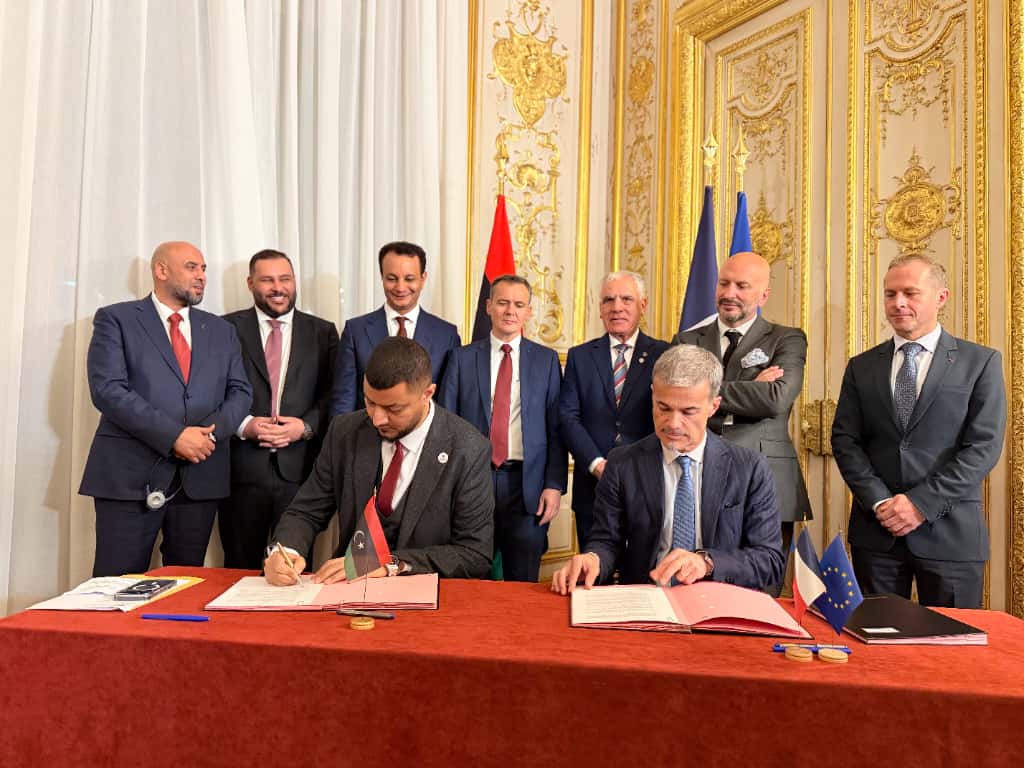
Tripoli’s diplomatic efforts have coincided with major energy deals. At the Libya Energy & Economy Summit on Jan. 24, Prime Minister Dbeibah announced a 25-year oil development agreement with France’s TotalEnergies and U.S. ConocoPhillips – a package worth over $20 billion aimed at raising production by up to 850,000 barrels per day. Dbeibah said the deal, along with related accords with Chevron and Egypt’s oil ministry, reflected Libya’s strengthening ties with “the largest and most influential” global energy partners. These steps underline how critical foreign capital is to Libya’s oil sector: the state oil company has long cited potential output of roughly 1.6 million bpd, but experts note Libya’s politics have historically made it hard to translate that geological potential into actual production.
This flurry of agreements and meetings is being cited as evidence that Libya is opening up to investment again. After years of conflict, average output in 2025 was about 1.37 million barrels per day, up from roughly 1.14 million in 2024. But analysts warn that the recovery remains precarious. The Middle East Institute notes that Libya continues to operate under “competing centers of authority,” with rival factions undermining unified governance. Indeed, the National Oil Corporation reported that it had no approved budget for 2025 and mounting debts to service companies – a stark sign of how political deadlock hurts production. In recent years budget disputes and factional fights have repeatedly triggered shutdowns of oil fields and export terminals.