English Education Reform in Libya Gains Momentum with U.S. Support
In Tripoli on January 13, officials from Libya’s education ministry sat down with the U.S. Embassy’s cultural attaché to discuss a surprisingly ambitious goal: improving English instruction across Libyan schools. Undersecretary Masouda Al-Aswad led the Libyan side of the talks, which the ministry framed as laying out “prospects for joint cooperation” in 2026 with Washington. The agenda was practical – how to make English lessons more effective – but it carried broader meaning. In a country long struggling with divided institutions and an oil-dependent economy, focusing on teacher training and curriculum reform signals an investment in human capital that analysts suggest could aid Libya’s fragile recovery.
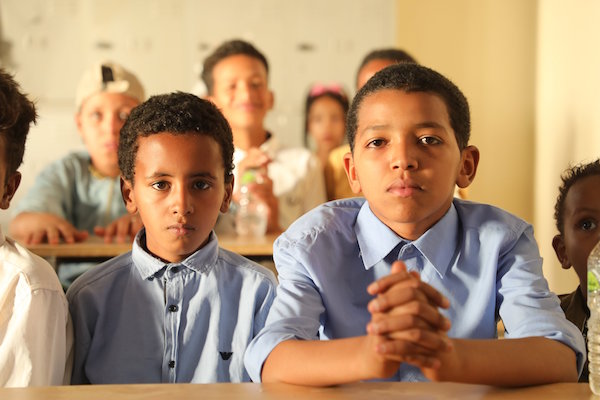
The meeting’s immediate goal was to boost the quality of English teaching in government-run schools. According to the ministry, the visitors and Libyan officials discussed ways to raise the efficiency of English language teachers and inspectors, and to improve classroom methods so that students receive the best educational services. In other words, the plan is to sharpen how English is taught – from updating lesson plans to giving teachers new professional tools. Though no firm numbers were announced, the ministry highlighted that the embassy had just helped organize a recent workshop. In late December, a U.S.-supported training session for 45 English teachers from around Libya concluded, aimed at “strengthening the skills of current and future leaders in the field of English language education”. Both sides praised that program in public statements, underscoring it as the first step of what they hope will be ongoing cooperation.
Building Educational Ties with the U.S.
The renewed attention to English instruction comes as Libya carefully rebuilds its ties with foreign partners. The U.S. Embassy in Tripoli has quietly offered English‐teaching programs off and on since 2011, but the new meeting suggests these efforts may be stepping up. U.S. officials, for their part, cast the initiative as part of a longer-term commitment. In September, the embassy funded a regional workshop that sent twenty Libyan teachers to training abroad, and embassy statements have noted that such projects “reflect Washington’s commitment to supporting education and youth empowerment” in Libya. In practical terms, the embassy’s Regional English Language Office provides curricular materials and teacher workshops, while Libya’s education ministry provides school infrastructure. By working together, both sides are aiming for win–win outcomes: Libya gains new teaching capacity, and the U.S. builds a cultural bridge in a strategically important nation.
The focus on teacher training is wise.
Libya’s public schools were long neglected during years of conflict, and English – as a critical skill for business and higher education – has lagged behind in many curricula. A UNICEF study last year found English proficiency cited as the top advanced skill that Libyan youth lack, with half of young respondents noting it as a major barrier to employment. At the same time, Libya has enormous youth unemployment (over 50%) and a fragile economy still dominated by oil. In this context, improving English education has a clear domestic payoff: it could help prepare a generation of Libyans for jobs in tourism, international trade, or technology, areas where Libya hopes to diversify. Even government statements suggest they see English as an instrument of quality – the goal is not just learning a language, but improving “the quality of English language education and learning” overall.
The training event in December illustrated these aims. Deputy Chief of Mission Inga Himink and Undersecretary Al-Aswad awarded certificates to the teachers who completed the workshop. Several participants were veterans of Libya’s under-resourced schools, where English is a standard subject but often hampered by outdated methods. Attendees came from across Libya’s regions, indicating an attempt to spread resources beyond the capital. The embassy thanked the ministry for support and facilitation, and expressed hope for continued cooperation. Whether further teacher training or curriculum projects materialize in 2026 may depend on Libya’s political stability and budget priorities, but the momentum from this start is clear.
Education’s Role in Libya’s Recovery
Beyond the classroom, analysts see this partnership as part of a larger strategy. Libya’s economy is finally stabilizing after a decade of upheaval, but it remains dangerously concentrated in oil and gas. A recent World Bank report warned that heavy reliance on oil, lack of diversification, and declining education quality are key challenges to long-term growth. Libya needs an educated workforce to develop other sectors. English language skills often serve as a proxy for a modern, adaptable skill set; for instance, universities and international firms operating in Libya commonly use English for instruction or business. So by investing now in English teachers, Libya’s leaders are implicitly betting on a future where its engineers, doctors and entrepreneurs can collaborate globally.
The institutional angle is also important. For years Libya’s public education system suffered from political turmoil – schools were sites of propaganda under Gaddafi, and later suffered from division between rival authorities. Rebuilding trust in institutions means updating them for a new era. Cutting-edge teaching methods help assure families that schools serve children’s interests, not old political agendas. A U.S.-backed English program carries symbolic weight: it suggests that Libya’s government is looking outward for expertise, and that it is willing to work with international partners to strengthen its ministries. The very presence of a U.S. cultural attaché meeting with Libya’s undersecretary reflects a quieter kind of diplomacy, one focused on building human capital rather than negotiating oil deals or military aid.
Critics might caution that learning English alone will not fix all of Libya’s problems – literacy rates among younger Libyans are already high, and the real hurdles are jobs and security. Yet most observers agree that human-capital measures are necessary for lasting progress. As a recent UNICEF report pointed out, Libya’s youth face not only a job crunch but also gaps in essential skills like reading and writing, let alone advanced skills. Better-trained teachers can tackle multiple issues at once: raising general education standards while also imparting valuable languages and soft skills. In that sense, the U.S. Embassy’s focus on English teaching is as much about improving educational technique as it is about the language itself.
In practical terms, the announced 2026 program will likely translate into more workshops, teaching materials and maybe pilot school exchanges. For many Libyans, any support for education is welcome, given how much the sector has suffered. Officials on both sides speak carefully, portraying the cooperation as mutual enrichment rather than a one-way aid flow. The Libyan statement emphasized “joint cooperation” and “best educational services” for students, reflecting a narrative that resounds with families: this partnership is meant to benefit Libya’s children directly.
Looking ahead, the key question is follow-through. Political deadlock or security incidents could derail even well-meaning initiatives. So far, that seems unlikely to stop educational ties. In fact, just this week another training session for Libyan teachers opened in Tunis under the U.S. Regional English Language Office (RELO) auspices. Libya’s ability to expand these programs will depend on the central government’s capacity to coordinate across regions – a test of the “institutions” that the World Bank says must improve. If Libya’s leaders can maintain the fragile ceasefire and resume elections, they should seize on education programs as tools of unification and development. For now, the English meeting in Tripoli is a small but tangible example of that path.
No one pretends that training a few dozen teachers will instantly transform Libya. But for policymakers observing Libya’s recovery, even modest steps in schooling carry echo in the wider economy. Teaching English better might help a Libyan student land a job at an oil-and-gas contractor or an international university; it might also send a message that Libya is open to new ideas. In a country with so many obstacles to surmount, such pragmatic educational initiatives are unlikely to be flashpoints. Instead they provide a reminder that Libya’s long-term fortunes depend on education and jobs as much as on pipelines and petro-dollars.