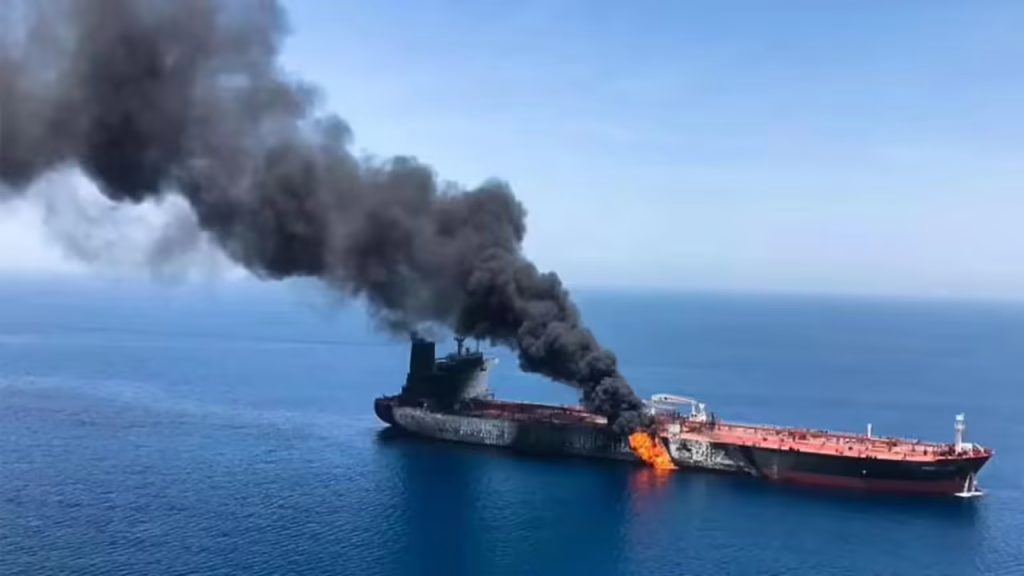
The renewed escalation across the Gulf, including direct confrontation between Iran, United States, Israel, has once again placed global energy security at the mercy of geography. Any sustained restriction of traffic through the Strait of Hormuz immediately reverberates across oil markets. Not because the world lacks crude, but because so much of it depends on a narrow maritime passage. In moments like this, energy supply security is measured as much by route as by reserve.
Nearly a fifth of global petroleum liquids transit daily through the Strait of Hormuz. When that flow is disrupted, buyers reassess exposure. Refiners widen their search to West Africa and the North sea, freight costs adjust upward as voyages lengthen and risk calculations change.
This is where Libya’s geography begins to matter in a different way.
The Mediterranean Advantage
Libya sits on the southern shore of the Mediterranean, directly plugged into European refining hubs. As a Mediterranean producer, Libya exports directly into Southern Europe without transiting Hormuz or other Gulf chokepoints.
For European buyers, this matters more today than it did a decade ago. Since 2022, reduced Russian pipeline flows have narrowed supply flexibility. LNG markets remain competitive, with Asian demand influencing pricing cycles. Now renewed instability in the Gulf adds another layer of uncertainty, diversification is no longer a strategic aspiration but rather a procurement discipline. In that setting, proximity carries tangible value.
Libya’s advantage however is not limited to Europe. Westbound cargoes can clear the Strait of Gibraltar and move into the United States and wider Atlantic Basin without touching Gulf waters. Eastbound shipments can transit the Suez Canal and continue via the Gulf of Aden toward Asian markets, bypassing Hormuz entirely. This routing flexibility allows Libyan crude to access major demand centers while avoiding the corridor currently at the center of geopolitical strain.
Sweet Crude in a Sour Market
Libya’s crude is not merely accessible, it is attractive. The country’s light, low sulfur crude aligns well with European and Atlantic Basin refinery configurations. In a high volatility environment, refiners prefer feedstock that requires minimal adjustment and carries lower processing cost. A lower sulfur barrel delivered on a shorter, less exposed route naturally becomes more attractive when geopolitical risk premiums widen.
When Hormuz tightens, global trade patterns adjust: Asian refiners seek to secure Middle Eastern supply that remains available, while European refiners broaden their search to West Africa and the North Sea.
Risk Perception and the Insurance Equation
Energy markets respond not only to supply and demand balances but to perceived exposure. A tanker loading in Ras Lanuf carries risk tied to Libya’s internal political rivalry and competing governing structures. Yet it does not face the same immediate naval confrontation risk associated with Gulf transit. Insurers and charterers factor these differences into pricing decisions.
If Gulf tensions persist, the insurance differential alone could narrow the effective premium on Mediterranean barrels, even in a rising price environment. In this context, Libya’s strategic geography becomes leverage.
Can Libya Convert Geography into Capital?
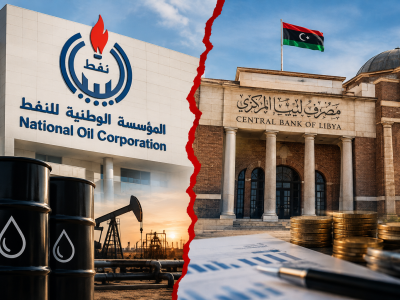
Opportunity, however, depends on consistency. Libya’s output has historically been affected by institutional division, parallel authorities, and periodic competition over control of facilities and revenue flows. International buyers remember shutdowns and abrupt export disruptions. They will only treat Libyan crude as a lower risk alternative if production and export schedules remain dependable.
If output can be sustained around current levels and terminals remain insulated from internal contestation, Libya has room to reposition itself. Not as a replacement for Gulf supply, which remains indispensable to the global system, but as a reliable Mediterranean anchor within a diversified sourcing strategy.
For United States and European players alike, that distinction matters. A light, competitively priced barrel that can reach Atlantic markets via Gibraltar or Asian buyers through Suez and the Gulf of Aden offers commercial optionality at a time when route security is being repriced.
A Strategic Repricing
Energy markets periodically revalue geography. The present strain around the Strait of Hormuz is one such moment. As risk concentrates in narrow corridors, supply that can move along alternative paths gains relative weight. Libya cannot substitute for the Gulf in scale, but in a market increasingly sensitive to transit exposure, it does not need to. If stability holds, Libya’s coastline, crude quality, and routing flexibility position it as a practical hedge in an energy map that is once again being redrawn by geopolitics.