After every oil crisis, geography matters again: where Libya fits in the new energy security map
The latest escalation in the Gulf has reminded markets of an old lesson. Energy security is not only about how much supply exists, but also about where that supply sits, how it moves, and how many alternatives buyers still have when a chokepoint starts to fail.
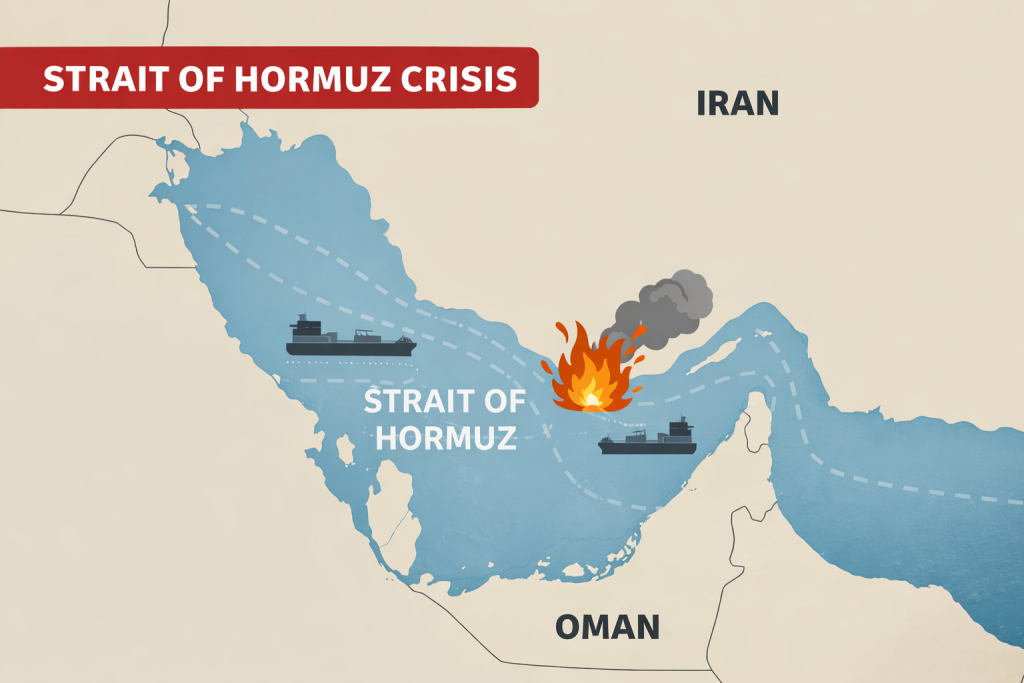
That lesson feels especially sharp this week. The war involving Iran has pushed Brent above $100 again, forced the International Energy Agency into its largest ever coordinated emergency stock release, and driven European benchmark gas prices up by more than 50% since the conflict began. On March 16, oil loading operations were suspended again at Fujairah, the UAE export hub just outside the Strait of Hormuz, after a drone strike sparked a fire in the petroleum industrial zone. Even infrastructure built to bypass Hormuz is now showing its own vulnerability.
For Libya, this is not simply another moment of higher oil prices and familiar windfall talk. The more interesting question is whether the crisis is changing how Europe values proximity, route diversity, and smaller scale pipeline optionality. In other words, Libya’s strategic relevance may be rising for a different reason than the one usually assumed. The country is not about to replace Gulf volumes. But in a market that has just rediscovered the cost of concentration, Libya’s position in the Mediterranean starts to look less like a regional fact and more like a strategic asset.
Recent LER coverage has already examined Libya as a freight advantage and as a possible crude beneficiary of Hormuz disruption. But the new energy map emerging from this war points toward a slightly different conclusion. Europe’s immediate exposure is not just to lost crude barrels. It is also to disrupted gas and refined fuel flows. Reuters reported this week that the closure of Hormuz has upended LNG trade and pushed the EU into emergency discussions over consumer support, tax cuts, industrial aid, and even possible gas price caps. Another report noted that diesel, not crude, may be the most structurally exposed fuel in this crisis, with 3 million to 4 million barrels per day of diesel supply at risk from Hormuz disruption and European diesel prices rising sharply at the Amsterdam Rotterdam Antwerp hub.
That matters for Libya because it suggests the country’s future value to Europe may lie less in being a dramatic replacement supplier and more in being a nearby insurance asset within a stressed regional system. Geography is doing the work here. Libyan gas reaches Italy through Greenstream, not through Hormuz. Libyan crude and products move across the Mediterranean on shorter routes to European buyers. And Libyan upstream projects, however modest in global terms, sit inside a basin that Europe can access with fewer maritime and political choke points than the Gulf.
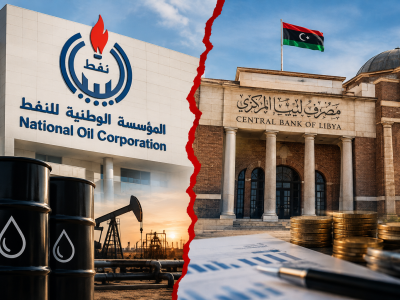
This is where Libya’s 2026 gas agenda becomes newly relevant. In February, National Oil Corporation Chairman Massoud Suleman said Libya wants to raise natural gas production over the next five years to make more supply available for export to Europe by the early 2030s. The same month, Libya awarded new oil and gas exploration blocks to international firms including Eni, QatarEnergy, Chevron and Repsol, a sign that investors still see strategic value in Libyan molecules despite the country’s familiar operating risks.
On its own, that ambition does not transform Europe’s balance. The more realistic case is that Europe is rediscovering the premium attached to optionality. After every major oil shock, buyers reprice not only volumes but also routes. They pay more attention to redundancy. They start asking whether the next cubic metre or barrel comes through a congested and militarized corridor, or through a shorter and more politically diversified path. In that environment, Libya’s advantage is relative rather than absolute. It is valuable because it is near, pipeline connected, and outside the Gulf war’s main shipping bottleneck.
There is another reason this angle matters. Libya’s gas story is also a domestic economic story. More reliable gas production does not only create a future export opportunity. It can ease pressure on domestic power generation, reduce the need to burn more valuable liquids at home, and improve the overall efficiency of the energy system. That may sound less dramatic than oil tankers trapped near Hormuz, but it is precisely the kind of system level improvement that turns geography into durable economic value. A country becomes more useful to buyers not simply because it is close, but because it can deliver consistently from a more coherent domestic base.
The current war has made that distinction harder to ignore. Europe is scrambling because its exposure to imported energy remains high and because even the bypass routes now look vulnerable. Fujairah was supposed to represent resilience beyond Hormuz. This week it looked exposed as well. That should sharpen thinking in both Brussels and Tripoli. For Europe, the lesson is that energy security is not solved by replacing one dependency with another. For Libya, the lesson is that proximity alone is not enough. The country has to convert its location into dependable capacity.
That means moving beyond headline ambitions. If Libya wants to matter more on Europe’s energy map by the early 2030s, it will need to show progress now through faster gas project execution, steadier domestic supply, and credible development of the resources that have attracted fresh interest from Eni, QatarEnergy and others. The opportunity is real, but it is not automatic. Markets reward available optionality, not theoretical reserves.
So where does Libya fit in the new energy security map? Not as the savior of Europe’s energy system, and not as a simple substitute for the Gulf. Its place is more subtle, and perhaps more durable than that. Libya is emerging as a Mediterranean hedge: a nearby supplier whose importance rises when distance, chokepoints, and concentration begin to carry a higher price.
That is often how geography works after an oil crisis. It does not rewrite the market overnight. But it changes what buyers value, and it changes which producers suddenly look more strategic than they did before. In the middle of the latest Gulf shock, Libya may be finding that its greatest energy asset is not only what lies underground, but where it sits on the map.