In a disrupted oil market, can Libya earn a premium for reliability?
The latest Gulf energy crisis has already done the obvious things. It has pushed oil back above $100, disrupted flows through the Strait of Hormuz, and reminded the market that geography still matters. But it may also be changing something less visible and, for Libya, potentially more important over time: the value buyers place on reliability itself. Reuters reported this week that the Iran war has disrupted about 20% of the world’s oil and LNG supply, while attacks on Gulf energy sites and shipping routes have left traders and governments bracing for a longer period of uncertainty.
That matters because in a market under stress, crude is not judged only by quality or distance. It is also judged by confidence. Buyers want to know whether barrels can load on time, whether routes will remain open, whether insurance costs will jump again, and whether a supplier can keep exporting while rivals are forced into workaround mode. In calmer markets, those questions sit in the background. In wartime energy markets, they move to the center.
That is where Libya enters the conversation in a different way.
Much of the recent discussion around Libya has focused on its Mediterranean location. That point is valid, but it is no longer the only one worth making. The more interesting question is whether Libya can gradually turn operational steadiness into a stronger commercial position. In other words, if Gulf barrels now carry a larger and more durable risk premium, can Libyan crude begin to command a modest premium for being available with fewer shipping complications and lower route exposure?
This is not the same as saying Libya becomes a substitute for the Gulf. It does not. Reuters reported that Gulf disruptions have removed enormous volumes from the market, far beyond anything Libya could replace on its own. Even the UAE’s Fujairah outlet, which sits outside the Strait of Hormuz, handles around 1 million barrels per day of Murban crude, while the wider conflict has affected much larger regional flows.
But markets do not need Libya to replace the Gulf in order to value Libyan crude differently. They only need to start pricing reliability more aggressively.
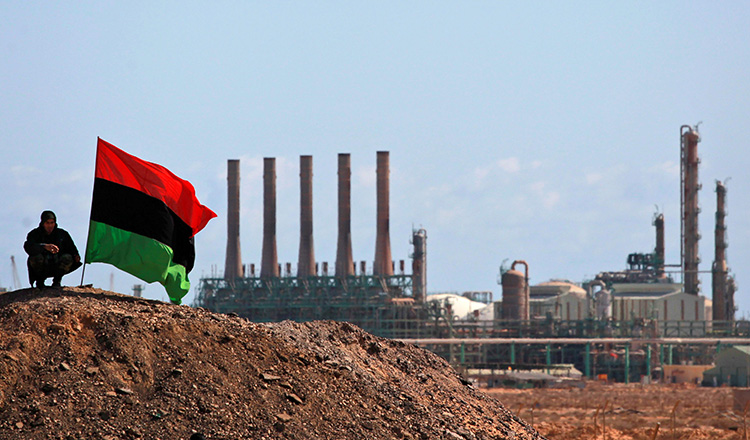
That possibility is easier to see now than it was a few months ago. Reuters reported yesterday that Sharara, Libya’s largest oil field, kept producing after a pipeline fire because the National Oil Corporation redirected flows through alternative routes. The incident did not remove Libyan risk, but it did show something important: when a technical disruption hit, the system absorbed it without turning it into a full production collapse. In an oil market now defined by interrupted shipping lanes, blocked chokepoints, and fears of fresh attacks on energy infrastructure, that kind of continuity matters.
This is the real opening for Libya. The country has always had certain physical advantages in the European market. Its crude is relatively close, many of its barrels suit Mediterranean refining systems, and shipping times are shorter than from the Gulf. But the current crisis may be increasing the value of a different trait: the ability to keep supplying when the global market is paying more attention to disruption than to abundance.
That does not mean Libya has suddenly solved its own supply problems. It has not. The country still carries political, operational, and infrastructural risks of its own, and those risks are well known to traders. Yet reliability in commodity markets is rarely absolute. It is comparative. A supplier does not need to be risk free to benefit. It only needs to look steadier, more reachable, or less exposed than the alternatives at a given moment.
This is why the current Gulf crisis could alter commercial thinking around Libyan crude. Reuters noted that the war has left a deep scar on Middle Eastern energy, with maritime confidence unlikely to return quickly even if hostilities ease. That matters because once buyers and insurers begin to treat disruption as persistent rather than temporary, the premium on route security and supply continuity can outlast the initial price spike.
For Libya, the implication is subtle but important. The immediate gain from higher oil prices is obvious. The longer term opportunity is more structural. If European buyers increasingly want barrels that arrive with fewer routing complications and lower war related uncertainty, Libya may find that reliability starts to matter more than the old story of sheer reserve size or headline production targets. A barrel that reaches the refinery on time can become more valuable than a theoretically cheaper one trapped behind insurance surcharges, tanker delays, or military risk.
That is also why Libya’s own resilience now matters more than ever. Sharara’s continued output after the fire was not just a domestic success. It was a reminder that in a disrupted market, operational adaptability can become part of commercial value. The same applies more broadly. Pipeline continuity, export flexibility, storage capacity, and faster response to technical incidents all shape how buyers see Libya, even if they are harder to measure than output alone. This is an inference from the reported Sharara rerouting and wider Gulf disruption.
So can Libya earn a premium for reliability? Not overnight, and not automatically. Markets have long memories when it comes to Libyan disruptions, and one week of Gulf turmoil will not erase that. But the question is more plausible today than it was before the Strait of Hormuz crisis widened. If the war leaves behind a lasting risk premium on Gulf exports, then buyers may begin to reward suppliers that can offer something now in shorter supply: confidence.
That would not make Libya the winner of the crisis. But it could make reliability one of its most underappreciated energy assets in a market that has suddenly remembered how much uncertainty costs.