As the Hormuz Crisis Enters Its Fourth Week, Can Libya Convert Higher Prices Into Lasting Gains?
Three weeks into the Hormuz crisis, oil markets are no longer responding to headlines alone. They are responding to sustained disruption, reduced confidence, and the growing premium attached to available supply. For Libya, that opens a window, but not without constraints.
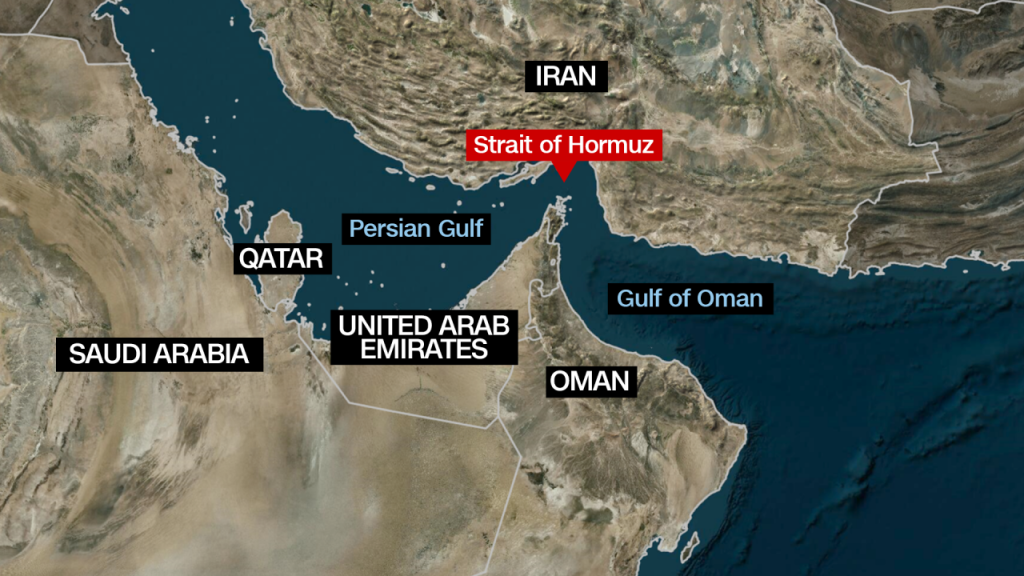
As conflict in the Gulf intensifies, the immediate effect is obvious. Oil prices have surged, global supply chains are under strain, and the cost of insecurity is being priced back into every barrel. Reuters reported this weekend that the disruption has become so severe that the International Energy Agency described it as the worst energy shock in modern history, with benchmark crude climbing above $110 and around a fifth of the world’s oil and LNG trade affected by the closure and broader attacks on regional energy infrastructure.
For Libya, that creates a familiar temptation. Higher prices make every exported barrel more valuable, and every Gulf disruption revives the same argument that Libya could emerge as one of the market’s alternative suppliers. That part is true, but only up to a certain extent.
The more important question now is not whether Libya matters more in a disrupted market. It does. The more important question is whether Libya can convert this moment into something more durable than a revenue spike.
That distinction matters because oil crises reward different producers in different ways. Some benefit simply because they are already pumping steadily when prices rise. Others benefit because they can raise production fast enough to replace missing barrels. Libya sits somewhere in between. It is not positioned to replace Gulf scale, but it is well placed to extract more value from a market that is suddenly paying a premium for available supply.
The constraint is not geology. It is execution.
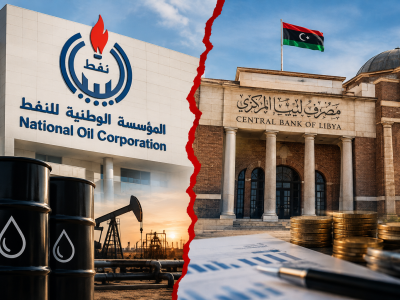
Libya is currently producing roughly 1.4 million barrels per day, while the National Oil Corporation has framed 1.6 million barrels per day as a nearer term objective and 2 million barrels per day as a longer horizon goal. LER has already noted that even after the recent licensing round, those targets remain difficult to achieve quickly and will depend more on existing assets and operational continuity than on new exploration alone.
That is what makes this Hormuz moment economically interesting. It is not only a test of prices. It is a test of whether Libya’s oil system is resilient enough to respond when the market suddenly needs more from it.
The international backdrop is supportive. Reuters reported that Gulf producers are scrambling to reroute exports around Hormuz through overland pipelines, while Iraq has already declared force majeure on parts of its oil sector after export flows were severely disrupted.
In other words, the market is no longer dealing with a hypothetical risk. It is dealing with reduced access, delayed cargoes, and shrinking confidence in one of the world’s most important energy corridors.
That should, in theory, increase interest in Libyan crude. But theory and capacity are not the same thing.
For Libya, the real economic opportunity lies in three areas.
The first is revenue timing. Even if production does not rise sharply, a sustained period of elevated prices can improve fiscal inflows. In a state where hydrocarbons still dominate public revenue, that matters immediately. But windfalls only help if they arrive into a system capable of using them without turning them into another round of short term political competition. LER has already warned that energy gains in Libya do not enter a neutral institutional environment. They move through a fragmented political system in which oil income is also a source of leverage.
The second is production credibility. Libya does not need to add Gulf sized volumes to matter. It needs to show that it can hold output steady, protect key infrastructure, and move closer to 1.6 million barrels per day without repeated disruption. In a tight market, reliability itself becomes a commercial asset. But reliability cannot be declared. It has to be demonstrated across fields, pipelines, storage, export terminals, and field services.
The third is investment signaling. A crisis like this changes how investors read risk. On one side, higher prices make upstream exposure more attractive. On the other, they sharpen the penalty for operational fragility. Libya’s recent licensing round brought in major international players including Chevron, Eni, and QatarEnergy, which signals that long term interest in the country’s reserves remains intact. But this current shock raises the bar. Investors will not only ask whether Libya has reserves. They will ask whether it can turn urgency into dependable production growth.
This is where the current moment becomes more than a geopolitical story.
Hormuz disruption is not automatically a Libyan success story. It is a market opening. Whether Libya benefits in a lasting way depends on whether it can do the less dramatic work that energy markets usually reward only after the headlines fade: maintain infrastructure, reduce unplanned outages, secure export continuity, and align production planning with realistic operating conditions.
That may sound less exciting than the usual narrative about Libya becoming an alternative to the Gulf. But it is the more serious economic argument.
The world is not looking for a full substitute for Gulf oil. It is looking for barrels that are available, bankable, and consistent. Libya can offer part of that. It cannot offer all of it, at least not yet.
And that is why this week’s surge in oil prices should be read carefully in Tripoli and beyond. The opportunity is real, but it is not simply a reward for being outside the Gulf. It is a reward for being able to produce when others cannot, export when others are constrained, and prove that short term price advantage can be translated into long term market confidence.
For Libya, the pressure on Hormuz is therefore not only an external shock. It is an internal test.
If the country responds with stability, disciplined operations, and credible production management, this crisis could strengthen Libya’s position in the global energy map. If not, it will remain what many commodity windfalls have always been: a valuable moment that passed faster than the institutions needed to capture it.