Beyond the Tanker: What Libya’s Response Reveals About Maritime Risk Management
A drifting Russian LNG tanker did not become a coastal disaster, but the episode exposed how closely Libya’s economic resilience now depends on maritime preparedness.
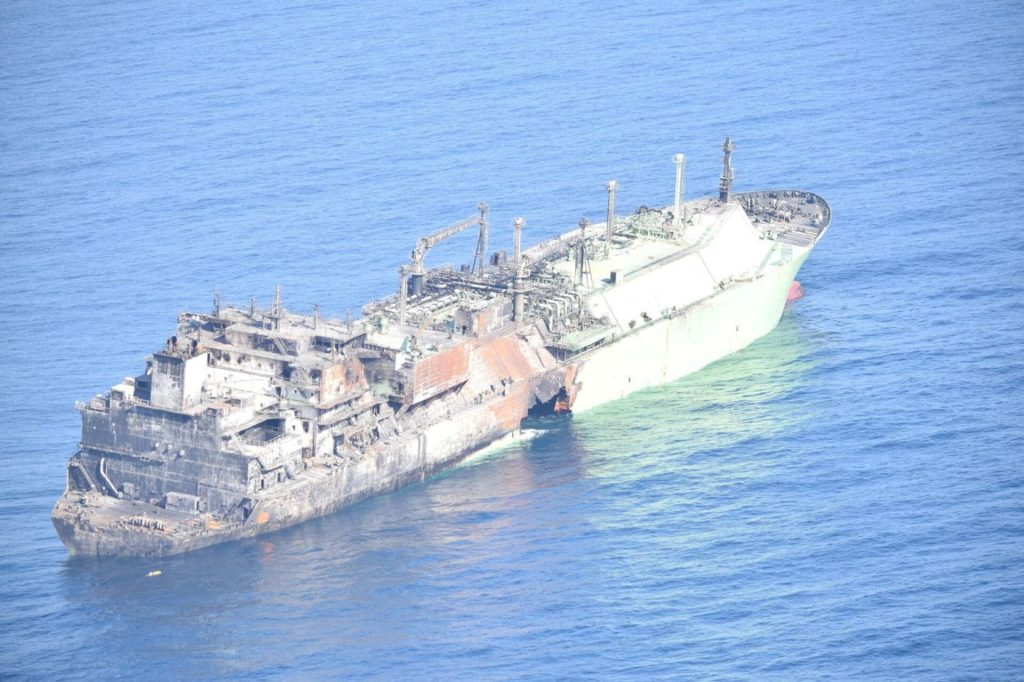
The drifting Russian LNG tanker Arctic Metagaz may at first look like a narrow maritime emergency. A damaged vessel, a coastal warning, an emergency meeting, and a salvage operation. But for Libya, the episode carries greater significance than the emergency incident itself. It reminds policymakers that maritime risk no longer sits within the narrow domain of ports and shipping authorities. It also very much shapes economic resilience, environmental security, and institutional credibility.
In recent days, Libyan authorities moved to contain the threat after the damaged tanker entered Libyan waters. The Transport Ministry convened an emergency meeting that brought together the Environment Ministry, the naval chief of staff, the coastguard, the National Oil Corporation, the Ports Authority, and emergency services to coordinate coastal monitoring and protection. Soon after, the NOC, through Mellitah Oil and Gas and in coordination with Eni, contracted a specialist international firm to handle towing and possible spill response operations.
That was the right immediate response. More importantly, the incident exposed a deeper vulnerability.
Libya’s coastline is not just a geographic boundary. It is an economic corridor. Offshore energy infrastructure, export terminals, ports, fishing activity, and coastal communities all depend on maritime security that many take for granted until a crisis tests it. When authorities described the coastline as a key natural and economic resource, they were accurate. A serious leak, collision, or prolonged emergency involving a vessel carrying heavy fuel, diesel, and uncertain quantities of LNG would not only damage the environment. It could also unsettle shipping confidence, raise cleanup costs, and force new questions about Libya’s emergency preparedness.
That is why the Arctic Metagaz incident matters beyond the immediate danger. It shows how quickly geopolitical conflict elsewhere can spill into Libya’s economic space.
Reuters reported that crews had abandoned the vessel after an earlier attack, leaving it to drift toward Libya with roughly 450 metric tons of heavy oil, 250 tons of diesel, and an uncertain amount of LNG on board. Southern European states warned the European Commission about the ecological threat, while Italian authorities said Libya assumed responsibility for intervention once the tanker entered Libyan search and rescue waters.
For Libya, the challenge was immediate, but it was also reputational. Could the country respond quickly enough to protect its coastline, reassure shipping interests, and shield offshore infrastructure from the secondary effects of crisis?
So far, the answer appears encouraging. Libyan institutions coordinated rather than fragmented. The emergency meeting showed that the state recognized the need for cross agency action. The NOC also activated an operations room under direct supervision, while Mellitah and Eni helped secure specialist intervention. Together, those steps reflected a practical understanding that technical capacity matters just as much as administrative authority in a maritime emergency. Officials also sought to reassure the public and markets that pollution from the vessel did not threaten offshore platforms, ports, or terminals.
Still, reassurance should not obscure the lesson.
The Arctic Metagaz crisis highlights a structural weakness in Libya’s economic environment. The country’s energy debate often centers on production volumes, upstream investment, and export earnings. Far fewer people focus on maritime contingency planning, coastal monitoring, salvage readiness, and pollution response capacity. Yet these are not side issues. In a hydrocarbon economy with long exposure to the Mediterranean, they form part of the country’s basic operating environment.
That matters even more as Mediterranean shipping becomes increasingly entangled with geopolitical confrontation, sanctions evasion, and aging or weakly regulated fleets. Multiple reports have linked the tanker to Russia’s so called shadow fleet, a network of vessels associated with sanctions avoidance and reduced transparency. Whether or not that becomes the central policy issue for Libya, the economic implication is already clear. The Mediterranean now presents a more complex and risk laden operating environment, and Libya can no longer treat maritime hazards as isolated exceptions.
For LER readers, that is where the real economic significance lies.
A major coastal pollution event would not only harm ecosystems. It could also disrupt port operations, complicate insurance and shipping costs, interfere with nearby energy logistics, and place fresh pressure on already stretched institutions. Even when authorities contain an incident, the test remains real. Investors, insurers, shipping operators, and energy partners all watch closely to see whether a state can respond with speed, coordination, and technical competence.
In that sense, Libya’s handling of this case matters precisely because it was preventive. No large scale pollution has been reported. No damage to Libyan oil infrastructure has occurred. So far, the vessel has not turned into the ecological disaster that some European states feared. But that absence of catastrophe should not lead anyone to dismiss the risk. It should lead to the opposite conclusion. Rapid intervention and visible coordination prevented a maritime threat from becoming an economic one.
The more strategic question now is whether Libya treats this incident as a one off emergency or as a signal to invest more seriously in maritime risk management.
That would require stronger coastal surveillance, clearer emergency command structures, deeper technical partnerships for salvage and spill response, and more systematic protection of maritime zones that support the energy sector. It would also require a broader recognition that state capacity at sea increasingly shapes confidence on land. In an economy where ports, offshore facilities, and coastal corridors matter so heavily, maritime preparedness is no longer a secondary policy field. It is part of economic resilience.
The Arctic Metagaz may eventually be remembered as a drifting tanker that never caused the worst. But for Libya, its greater significance lies elsewhere. It exposed a truth that should already shape policy. Maritime emergencies are not simply events to survive. They test whether the state can protect the economic systems that depend on the sea.