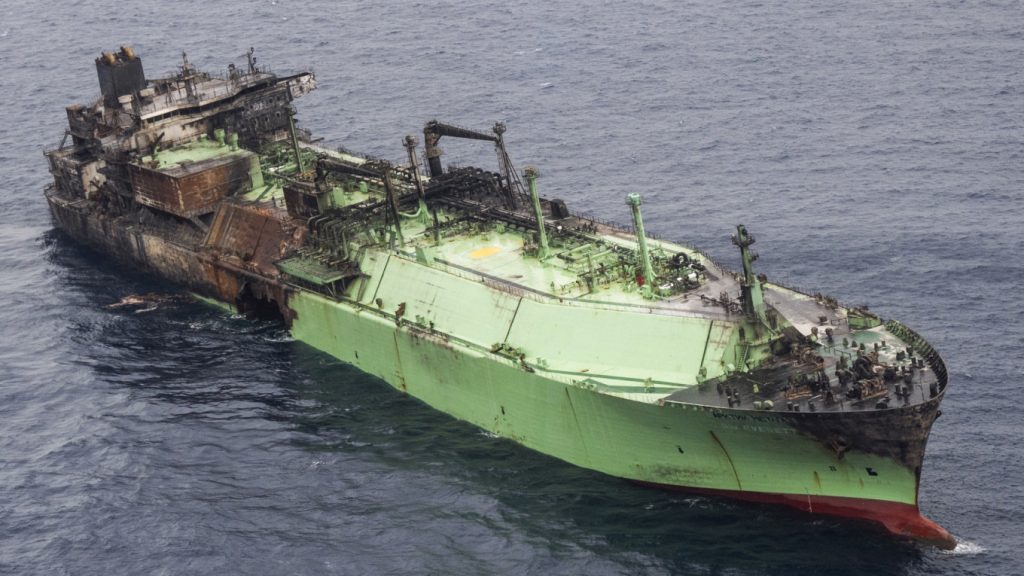
A damaged Russian LNG tanker drifting toward Libya’s western coast has turned from a maritime incident into a wider test of Libyan state capacity. The case now raises difficult questions about sovereignty, coastal security, and crisis response.
The vessel, Arctic Metagaz, no longer represents only a shipping emergency. It has become a symbol of how quickly an external security incident can spill into Libya’s strategic space and expose weak coordination onshore.
That concern shaped the latest statement from the Defense and National Security Committee in the House of Representatives. The committee warned that the incident could carry serious security and military consequences, especially as the abandoned tanker moved closer to Libyan waters and key coastal infrastructure. It also described the strike on the civilian vessel as an act of maritime terrorism and rejected claims that drones involved in the attack had launched from Libyan territory.
Libya’s institutions now face two urgent tasks at once. They must contain the immediate threat and control the political fallout.
On the operational side, the National Oil Corporation has already moved to hire a specialist company through Mellitah Oil and Gas, in cooperation with Eni, to secure the tanker and tow it safely to a Libyan port. NOC has also tried to reassure the public and energy markets that the environmental threat remains manageable and that oil facilities are not under direct danger.
Still, the political significance of the episode goes beyond the vessel itself.
Libya did not create this crisis. Yet it may still have to absorb its consequences. The tanker involves a foreign ship, damage linked to a broader geopolitical conflict, and competing narratives about responsibility. That combination has pushed the issue beyond maritime safety. It now touches the core question of whether Libya can protect its waters from crises that originate elsewhere.
This is why the incident has taken on the character of a sovereignty test.
The environmental risk adds even more pressure. Reports indicate that the vessel carries substantial fuel on board, including heavy oil and diesel, along with an uncertain quantity of LNG. Any failure to contain the tanker could put part of Libya’s coastline at risk and create wider disruption in the Mediterranean.
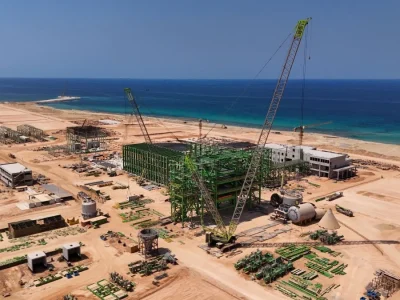
That threat matters because Libya’s western coast includes critical energy infrastructure. The Mellitah complex alone gives the area major economic and strategic value. A maritime incident in that zone can no longer be treated as a narrow technical matter. It affects energy security, investor confidence, and the credibility of the state’s response capacity.
The episode also highlights a familiar governance weakness. Libya often responds to crises only after pressure builds. In this case, several actors have stepped in, including NOC, the municipality of Zuwara, parliamentary bodies, and foreign partners. That may help contain the emergency. It does not yet show the kind of unified strategic framework Libya needs for maritime security.
A stronger response requires more than towing one damaged vessel away from danger. Libya needs clearer coordination between security and civilian institutions. It needs faster monitoring of maritime threats. It also needs a more credible doctrine for coastal sovereignty, especially as regional instability increasingly spills across borders and sea lanes.
The Arctic Metagaz crisis may still end without major environmental or economic damage. But the deeper weakness it has revealed will not disappear with the vessel. Libya’s coastline is more than a commercial asset. It is a national security frontier, and the state will need to treat it that way if it wants to prevent future crises from drifting into its waters unchecked.