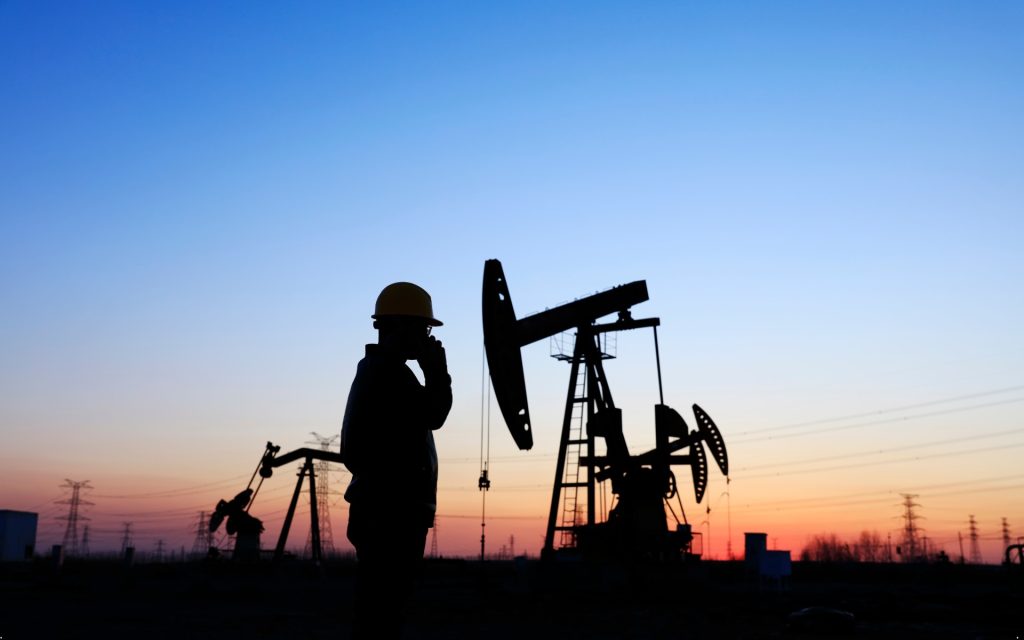
Global energy markets are once again under pressure. Rising prices, driven by geopolitical tensions and supply disruptions, have renewed attention on hydrocarbon-rich states. In this context, Libya stands out not only as one of Africa’s largest oil producers, but also as a country where energy wealth remains deeply linked to political fragility.
More than a decade after the fall of Muammar Gaddafi, Libya’s long-time ruler, the energy sector continues to mirror its evolving political and economic challenges. Amid renewed global energy pressures and rising prices, oil remains the backbone of the economy, accounting for the vast majority of state revenues and exports. However, this dependence has yet to translate into stability or sustainable development.
Instead, it continues to expose and reinforce structural vulnerabilities, leaving Libya’s trajectory closely tied to both internal fragmentation and external market shifts. That said, since the 2020 ceasefire and the establishment of the Government of National Unity (GNU), there have been modest signs of stabilisation, particularly in the partial recovery of oil production and a relative easing of immediate conflict dynamics.
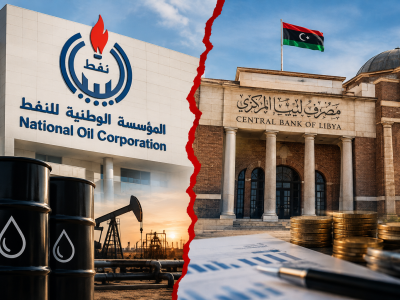
At the core of the problem lies the absence of cohesive state institutions. Libya’s post-2011 transition did not produce a unified political authority capable of managing national resources effectively. Instead, competing governments, fragmented security structures, and local militias have turned oil infrastructure into both an economic asset and a strategic bargaining tool. Control over oil fields, export terminals, and revenue streams has become a central driver of conflict, rather than a foundation for national recovery.
This dynamic has had profound implications. Repeated blockades of oil facilities, often used to exert political pressure, have led to sharp declines in production and billions of dollars in losses. At the same time, disputes over revenue distribution between rival authorities have deepened mistrust and entrenched division. In such an environment, long-term planning whether economic or environmental becomes nearly impossible.
The sustainability dimension of Libya’s energy sector is therefore not simply about transitioning to renewables or reducing emissions. It is fundamentally about governance. Without institutional unity, transparency, and security, even the most resource-rich countries struggle to convert energy wealth into sustainable growth.
Yet Libya’s position also presents clear opportunities. The country holds the largest proven oil reserves in Africa and benefits from relatively low extraction costs. Its geographic proximity to European markets offers a strategic advantage at a time when energy diversification has become a priority for many countries. Moreover, while existing infrastructure despite years of underinvestment provides a foundation that could support both increased production and gradual diversification, prolonged conflict has weakened key oil facilities, highlighting the need to enhance efficiency, modernise infrastructure, and strengthen the sector’s long-term resilience.
In a global context where energy security and sustainability are increasingly interconnected, Libya has the potential to play a constructive role. However, this requires a shift in how energy resources are governed. Oil revenues must move beyond being instruments of political competition and instead become tools for national development. This includes investing in infrastructure, rebuilding institutions, and gradually diversifying the economy to reduce dependence on hydrocarbons.
There is also a growing case for integrating sustainability into Libya’s long-term energy strategy. While hydrocarbons will remain central in the near term, the global energy transition presents an opportunity to rethink economic models. Libya’s solar potential, for example, is significant, and could complement its existing energy portfolio if supported by stable governance and investment frameworks.
Importantly, rising global energy prices add urgency to this discussion. In the short term, higher prices increase Libya’s revenue potential. However, without meaningful institutional reform, these gains risk reinforcing existing patterns of mismanagement and inequality. In such a context, oil revenues may be increasingly leveraged by rival groups to sustain militia networks, undermining prospects for unifying state institutions particularly in the security sector and further entrenching fragmentation. This dynamic also risks fueling illicit economic activities, including the diversion and sale of oil through informal or black-market channels.
Libya’s energy future, therefore, sits at a critical intersection. The country’s vast resources offer undeniable potential, particularly in a period of global uncertainty. Yet without political reconciliation and institutional rebuilding, this potential will remain constrained.
Sustainability in Libya is not simply a technical challenge it is a political one. It requires aligning energy governance with broader efforts to restore state institutions, ensure equitable distribution of resources, and rebuild trust between institutions and society.
The ideas and concepts expressed in this piece are those of the author and do not necessarily reflect the positions of Libya Economic Review. If you would like to contribute to LER, contact us at younis@libyaeconomicreview.com.