Inflation in Libya: Oil Revenues, Subsidies, and Hidden Pressures
Inflation may be a global phenomenon, but in Libya its drivers and consequences are uniquely shaped by oil revenues, import dependence, and state spending. While many economies have struggled with rising prices since the COVID-19 pandemic and the war in Ukraine, Libya’s official inflation figures have remained relatively low. Yet beneath this apparent stability lies a more complex reality, one where exchange rates, subsidies, and hydrocarbon income play a decisive role in shaping price dynamics.
Understanding inflation in Libya therefore requires looking beyond headline figures. It is not only a question of global shocks, but of how oil revenues are managed, how heavily the country relies on imports, and how fiscal policy responds to external pressures. In this context, inflation becomes more than an economic indicator, it becomes a reflection of Libya’s broader economic structure and policy choices.
Libya’s inflation story, however, doesn’t follow the same pattern as many other countries. Official figures placed inflation at around 2 percent in 2024, with the IMF later adjusting it to 2.4 percent for the first quarter of 2025 after addressing measurement gaps. Meanwhile, the Central Bank of Libya maintained relatively low rates: a rediscount rate of 3 percent, 91-day deposit certificates at 1 percent, and an overnight facility at 0.25 percent in early 2025. On paper, inflation appears contained, but beneath the surface, pressures remain.
This is where Libya’s dependence on oil becomes critical. According to the IMF, the economy remains highly exposed to global shocks because of its reliance on hydrocarbon exports and its large import bill. The current account shifted from a strong surplus in 2023 to a deficit in 2024, as export revenues declined while imports stayed broadly steady. Fuel imports alone surged dramatically, from an average of $3 billion between 2016 and 2019 to $9 billion in 2024, based on data from the Libyan Audit Bureau cited by the IMF.
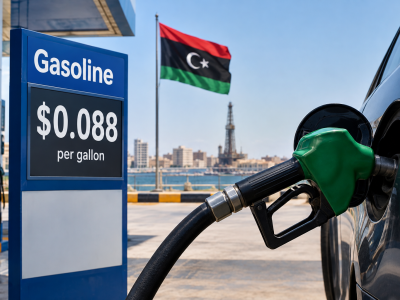
For Libya, inflation is not simply a matter of consumer prices. It is deeply tied to oil revenue cycles, subsidy policies, and broader fiscal pressures. By late 2024, fuel subsidies had reached 12.8 billion Libyan dinars between January and November, even as gasoline remained priced at just 0.150 dinars per liter, among the lowest globally. The IMF estimates that energy subsidies account for roughly a quarter of GDP, underlining the significant strain they place on public finances.
The political dimension of inflation is just as significant. When prices rise, the impact is immediate and visible, and governments face pressure to respond. That response often comes in the form of increased subsidies, cash transfers, or tax relief. While such measures can ease short-term pressure, they also risk widening fiscal deficits over time. In Libya, where political divisions already complicate spending control and reform efforts, the link between inflation and fiscal policy becomes even more pronounced.
Central banks around the world have been navigating a delicate balance: reducing inflation without stifling growth. In many cases, this has meant raising interest rates to cool demand, even though higher borrowing costs affect governments, businesses, and households alike. Libya’s situation differs in structure, but the underlying reality is similar, monetary policy cannot be separated from fiscal constraints and political dynamics.
Exchange rates add another layer to the picture. In April 2025, Libya devalued its currency by 13.3 percent, setting the official rate at 5.5677 dinars to the dollar. For an economy heavily reliant on imports—from food to fuel to consumer goods—such a move has direct consequences. A weaker currency can quickly translate into higher local prices, even when headline inflation figures appear stable.
Globally, energy prices remain central to the inflation story. Brent crude averaged around $80.12 per barrel in 2024, according to the U.S. Energy Information Administration. For oil exporters like Libya, this directly shapes government revenues. For import-dependent economies, it drives inflation. The same market dynamic can therefore strengthen public finances in one country while deepening the cost-of-living crisis in another.
What makes inflation particularly sensitive politically is its uneven impact. Lower-income households are hit hardest, as they spend a larger share of their income on essentials such as food and energy. As a result, inflation often becomes less about macroeconomic indicators and more about fairness, trust, and social stability. When governments fail to cushion the impact, economic strain can quickly evolve into political pressure.
Ultimately, the recent inflation wave has done more than push prices upward. It has exposed structural weaknesses in the global economy, forced countries to rethink energy and food security, and highlighted the risks of overdependence. For Libya, the lesson is clear: inflation is not only driven by global forces but also by domestic choices—how oil revenues are managed, how reliant the country remains on imports, and how resilient its public finances are. Today, more than ever, the line between economics and politics is impossible to ignore.
The ideas and concepts expressed in this piece are those of the author and do not necessarily reflect the positions of Libya Economic Review. If you would like to contribute to LER, contact us at younis@libyaeconomicreview.com.