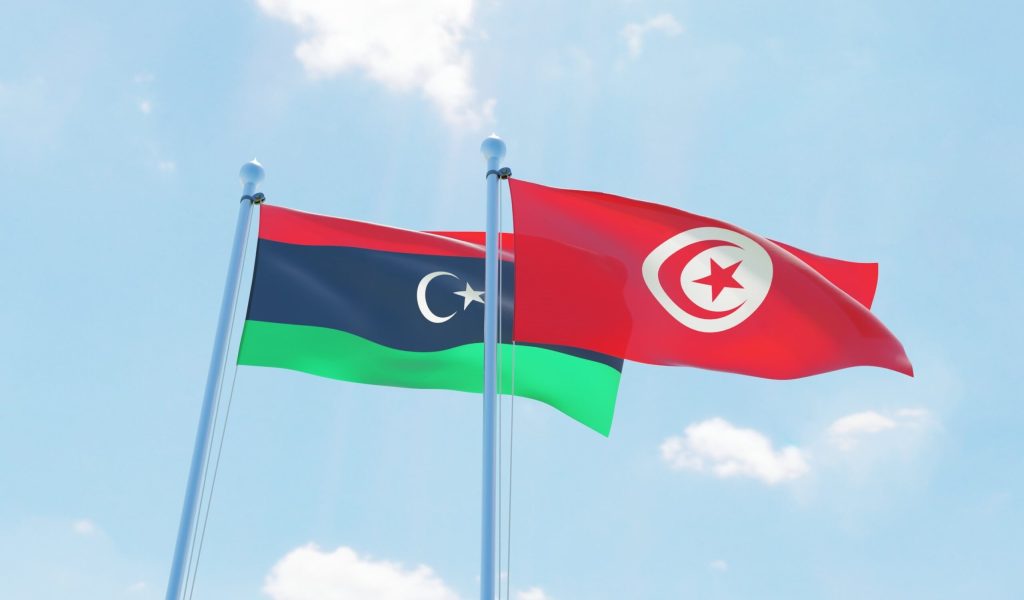
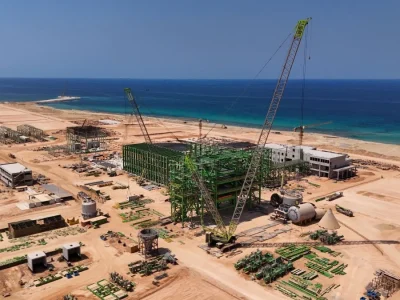
Libya and Tunisia have reopened a major offshore exploration opportunity in the Mediterranean, with Joint Oil launching a new bid round covering around 3,000 square kilometers and the development of the cross-border Zarat oil and gas discovery.
The new round opened on September 7 and will remain open until December 31, 2026. Companies must submit bids by January 8, 2027, with winning bidders expected to be notified by February 26 and formal awards targeted for April 30, according to Joint Oil. The opportunity gives international energy companies access to an offshore area in the Gabes-Tripoli Basin, where water depths range from 80 to 120 meters. The block also comes with a substantial geological dataset, including 6,500 kilometers of 2D seismic and 1,900 kilometers of 3D seismic data.
Zarat adds an existing resource
The bid round combines exploration acreage with the development of Zarat, an oil and gas discovery that extends across the maritime boundary between Libya and Tunisia.
Joint Oil estimates the best-case contingent resources attributable to the Joint Oil Block at Zarat at 158 million barrels of oil equivalent. The company is seeking investors to develop the discovery as a unified oil and gas resource under development, production, unitization and operating agreements. Joint Oil’s development case points to first-year average production of about 37,000 barrels per day of oil, alongside 80 million cubic feet per day of sales gas. These figures are projections rather than current production.
The combination of an existing discovery and additional exploration prospects gives the round a different profile from a frontier licensing opportunity. Investors can evaluate a defined resource while also pursuing additional prospects across the wider block.
Infrastructure strengthens the case
The offshore acreage sits close to established producing fields and energy infrastructure on both sides of the border.
On the Libyan side, the area is near the Bouri, Al Jurf and Bahr Essalam fields. Tunisia’s Hasdrubal, Ashtart, Miskar and Didon fields are also nearby. Joint Oil says this location could provide access to existing infrastructure and export routes.
That proximity matters for the commercial case. Offshore developments require large upfront capital commitments for subsea systems, processing and transportation. Access to existing regional infrastructure could reduce the need to build every part of the supply chain from scratch, although the final economics will depend on the development design, commercial terms and infrastructure available.
The round also gives Libya another opportunity to attract upstream investment as the country seeks more capital for exploration and production. Joint Oil has managed hydrocarbon resources in the shared offshore area since 1988 and is jointly linked to Libya and Tunisia through OLA Energy Holdings and Tunisia’s national petroleum company ETAP.
For investors, the next stage will be the bidding process. Joint Oil plans to present the opportunity at industry events in London in September, while qualified companies can seek access to the virtual data room containing the technical and commercial information needed to assess the block.
The key question now is whether the combination of Zarat’s resource base, existing seismic data and access to nearby infrastructure will be strong enough to bring a major offshore operator into the project and move the long-delayed discovery toward development. Joint Oil’s bid-round announcement provides further details on the timetable and investment opportunity.