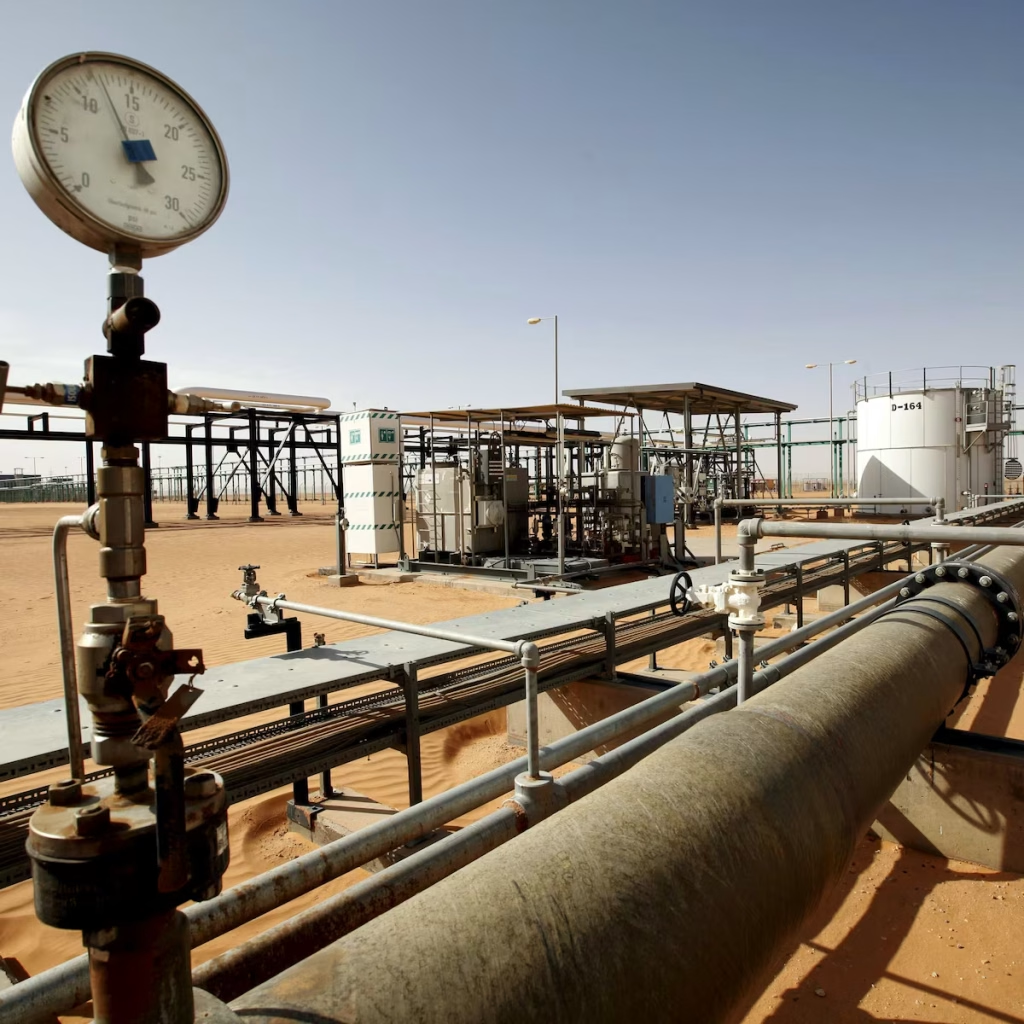
Libya’s Sharara oilfield has cut production sharply after an armed group closed a key valve on the pipeline that carries its crude to Zawiya, creating a new threat to oil exports, refinery operations and state revenues.
The National Oil Corporation (NOC) said on September 21 that an armed group closed Valve No. 7 on the Sharara crude pipeline, causing pressure to build in the system and forcing a significant reduction in production. Reuters reported that the closure has cut output by about 200,000 barrels per day, with production falling to roughly 100,000–105,000 bpd, according to engineers at the field.
The NOC said its technical teams have been unable to reach the area around Valves 6 and 7. It also said it had contacted the Petroleum Facilities Guard in southwest Libya and urged it to secure the pipeline, but those efforts had not produced results.
The corporation warned that if the valve remains closed, Sharara could eventually stop producing altogether. That would also halt the movement and export of its crude and could force the Zawiya refinery to shut down.
The incident comes at a difficult moment for Libya’s oil sector. Sharara had reached around 335,000 bpd in August, according to the NOC, which was targeting further growth to about 355,000 bpd by mid-2027.
A Pipeline Closure That Threatens More Than Oil Output
The immediate loss of roughly 200,000 bpd is significant, but the bigger risk lies in what happens if the pipeline remains closed.
Sharara is operated by Akakus Oil Operations and connects production in Libya’s southwest to the Zawiya area on the Mediterranean coast. The pipeline therefore serves as a critical link between one of Libya’s largest producing fields and infrastructure used to handle crude and refined petroleum products.
The NOC has warned that continued closure would eventually stop Sharara production, transportation and exports. It also said the disruption could force the Zawiya refinery to stop operating, increasing Libya’s need to import fuel from abroad.
That would turn a production problem into a wider supply problem.
Libya already spends heavily on imported refined fuels despite its large crude reserves. A shutdown at Zawiya would add pressure to that bill while the loss of Sharara crude would reduce the amount of oil available to generate export revenue.
The timing also matters. International oil prices have remained high, meaning every prolonged interruption carries a larger opportunity cost for Libya. The NOC itself warned that continued disruption would reduce state revenues at a time of elevated global oil prices.
For a country whose public finances depend heavily on hydrocarbons, the economic impact can therefore extend well beyond the barrels lost at the field.
Sharara Exposes Libya’s Oil Infrastructure Risk
The latest incident also highlights a weakness that Libya has struggled to resolve: the country does not only need more oil production. It needs a more secure and reliable system for moving that production.
Sharara has already faced major infrastructure problems this year. In March, a fire at a valve on its export pipeline forced the NOC to operate the field at reduced capacity while engineers repaired the damaged section. Full production resumed later that month after maintenance and safety tests.
The latest disruption has a different cause, but the economic lesson is similar. Production from a major field can fall sharply when a relatively small part of the transport network becomes unavailable.
That creates a bottleneck between Libya’s upstream ambitions and its ability to turn those ambitions into reliable export revenue.
The NOC has been working with Akakus and its international partners to raise Sharara’s production capacity. Its August technical and financial review identified plans to sustain current production, improve field infrastructure and raise output toward 355,000 bpd by mid-2027.
Those plans become harder to deliver if the infrastructure connecting the field to the coast remains vulnerable to fires, technical failures or deliberate closures.
The problem also extends beyond Sharara. Last week, a separate closure on the Hamada-Zawiya pipeline disrupted production from several western fields and prompted the NOC to warn that it could declare force majeure if the situation continued. Reuters reported at the time that Libya’s overall production remained around 1.4 million bpd, while Sharara itself had not been affected by that incident.
The latest closure changes that picture. If the NOC cannot regain access to Valve No. 7 and restore the flow toward Zawiya, Sharara could become the next major production disruption in a series of incidents affecting Libya’s oil infrastructure.
For now, the priority is clear: reopen the pipeline, allow technical teams to assess the system and prevent further pressure from building in the network.
If the closure continues, however, the consequences will reach far beyond Sharara. Libya could face lower crude exports, reduced state revenue, higher fuel-import costs and another test of the security of the infrastructure that underpins its economy.
The NOC has warned that it may declare force majeure if the shutdown continues.