Libya has the hydrocarbons the global energy crisis needs, but can it deliver?
Libya is conveniently positioned to play a greater role in global energy markets as a series of geopolitical crises threaten hydrocarbon supplies and transport routes around the world. Yet while disruptions around the Strait of Hormuz, the Bab el-Mandeb and key energy infrastructure in Russia, Ukraine and Saudi Arabia are raising concerns over supply security, Libya is struggling to maintain consistent production in its own hydrocarbon sector.
The National Oil Corporation (NOC) warned on September 22 that it may be forced to declare force majeure after the closure of key oil facilities and Valve No. 7 on the Sharara crude pipeline disrupted production and operations around Zawiya. The shutdown of the valve has halted crude flows from the Sharara field towards Zawiya port, with the NOC estimating losses of around 130,000 barrels per day and warning that prolonged disruption could affect refining, domestic fuel supplies and state revenues.
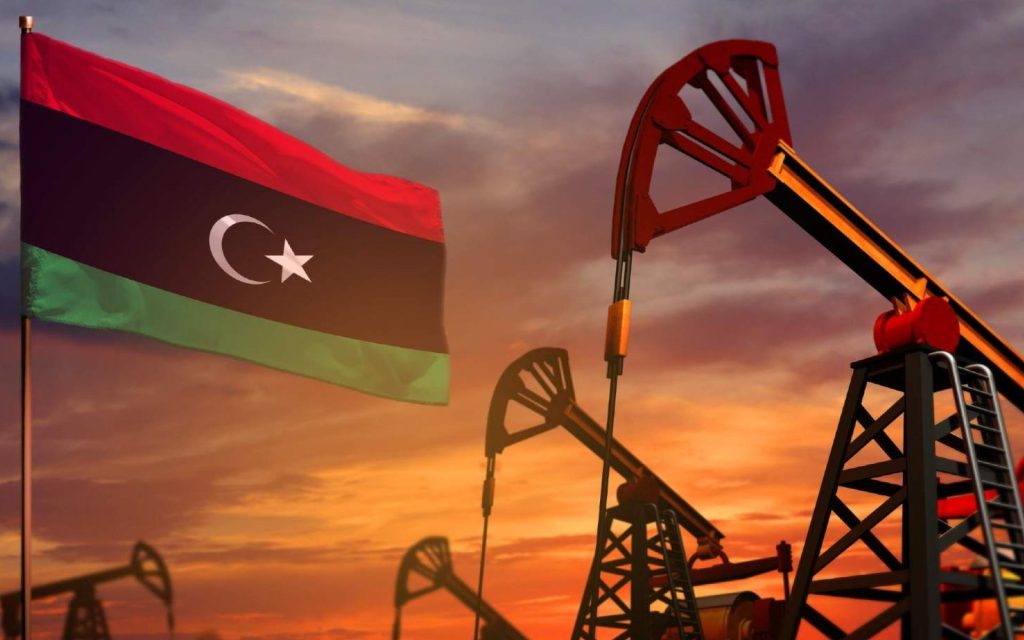
The timing is significant. Global energy markets are entering a period in which additional reliable supplies are becoming increasingly valuable, while Libya possesses some of Africa’s largest proven oil reserves and is already producing around 1.4 million barrels per day. The question is whether Libya can turn that potential into a meaningful contribution to global supply, or whether its own political and security problems will prevent it from taking advantage of the opportunity.
A global energy system under pressure2
The scale of the disruption is becoming clearer as the northern hemisphere approaches winter, when demand for heating fuels traditionally increases.
The International Energy Agency (IEA) reported in September that global oil production fell by 1.6 million barrels per day between July and August, reaching 100.1 million barrels per day. More than 10 million barrels per day of Gulf production remained shut in because of the US-Israeli war on Iran. For the year as a whole, the IEA expects global supply to average 100.7 million barrels per day, 5.7 million barrels per day below 2025 levels.
The more immediate problem, however, is not simply crude oil. Refined products, particularly diesel and gasoil, have become a major source of pressure. Diesel accounts for almost 30% of global oil demand, according to the IEA, while US diesel prices passed $200 per barrel in early September, around 94% above pre-war levels.
Russia has become an important part of this problem. Ukrainian drone attacks have increasingly targeted Russian refineries, reducing the country’s ability to process crude into fuels. In order to calm the global energy markets Donald Trump had previously stated that Ukraine agreed to stop targeting Russian energy infrastructure, however this supposed commitment by Zelenskyy has yet to materialise.
The IEA estimates that Russian refinery throughput fell to 3.8 million barrels per day in June, around 30% below the previous year, while diesel production was nearly 30% lower. In the first eight months of 2026, a Russian refinery was hit by a Ukrainian drone strike roughly once every three days.2
The consequences are being felt beyond Russia. Combined Russian and Middle Eastern diesel exports in August were 1.6 million barrels per day below February levels. Those two regions had accounted for almost 45% of global seaborne diesel trade this time last year.
At the same time, the Strait of Hormuz is effectively closed. Before the current crisis, roughly one-fifth of global oil supplies passed through the waterway. Reuters reported on September 21 that only 17 commodity vessels crossed the strait over the preceding weekend, compared with 37 the week before and a pre-war average of approximately 125 vessels per day.
Traffic through the Bab el-Mandeb has also fallen, while Ansarallah’s recent takeover of Yemen’s entire western coast, including the strategic port of Mokha and the islands of Perim and Zuqar, has given the group effective control over the Yemeni side of the critical shipping route. The development raises the prospect of further disruption to a waterway linking the Red Sea and Suez Canal with the Gulf of Aden and the wider markets of Europe and Asia.
Saudi Arabia’s East-West pipeline, designed precisely to provide an alternative to Hormuz and Bab el-Mandeb, has also demonstrated the vulnerability of alternative routes. The 1,200-kilometre pipeline was shut following drone attacks reportedly launed from Iraq and had been carrying approximately 4–5 million barrels per day, equivalent to around 4–5% of global supply.
The result is a market with increasingly limited buffers. The pressure is particularly significant for diesel and other middle distillates, which account for around 30% of global oil demand and are essential to transport, industry, agriculture and heating. As winter approaches, heating demand rises, increasing consumption of middle distillates. The IEA expects seasonal middle-distillate demand between August and November to increase by almost 1.2 million barrels per day as markets prepare for the winter heating season. This comes as global inventories are already being depleted, with stocks falling by 95 million barrels in August alone and by around 507 million barrels since February. Higher winter demand therefore comes at the same time as lower available inventories, leaving markets with less capacity to absorb further supply disruptions. This means that any additional loss of refinery output or disruption to major oil supply routes could have a disproportionate impact on diesel availability and prices.
That leaves little room for further supply side shocks as winter approaches.
Where Libya could fit
This environment creates an unusual opportunity for Libya.
The country produced around 1.4 million barrels per day in August, according to the IEA, while the NOC reported in June that crude production had reached 1.44 million barrels per day, its highest level since 2013. The corporation has been targeting production of 1.5 million barrels per day by the end of 2026
Libya is also geographically well placed to supply European markets. Its crude can reach Mediterranean refineries without passing through the Strait of Hormuz or the Bab el-Mandeb, giving Libya’s hydrocarbon reserves a strategic geographic advantage when those routes are disrupted.
That does not mean Libya can replace the millions of barrels of oil that have been wiped off of the market. Its production is small compared with the volumes normally transported through traditional routes from the Middle East and the Gulf, and increasing output requires investment, functioning infrastructure and political stability.
Nevertheless, additional Libyan barrels could become increasingly valuable at the margin. If European and Mediterranean buyers are competing for fewer available supplies, a stable Libyan export stream could provide an alternative energy source.
The same applies to refined products. Libya’s Zawiya refinery has a capacity of around 120,000 barrels per day and produces petrol, diesel, jet fuel, LPG, fuel oil and other products for domestic consumption. Its location and existing infrastructure mean that a functioning refining system could help Libya reduce its dependence on imported petroleum products while supporting regional supply.
Libya’s own energy vulnerability
The problem is that Libya is struggling to maintain precisely the stability that global markets increasingly require.
The latest warning from the NOC demonstrates the contradiction.
This vulnerability is not confined to the latest shutdown. In August, drone attacks targeted fuel storage tanks at the Zawiya complex. One tank containing approximately 4.5 million litres of petrol was damaged, while repeated attacks also affected nearby electricity infrastructure. Zawiya is particularly important because it sits at the intersection of crude production, oil transportation, refining and domestic fuel distribution.
What this creates is a particularly damaging feedback loop. Libya needs reliable energy infrastructure to increase production and exports, but insecurity around that infrastructure can reduce production, damage facilities and increase the country’s reliance on imported fuel, which is crucial given that Libya is suffering from its own domestic fuel crisis.
The country’s dependence on refined-product imports makes the situation more acute. Even with the Zawiya refinery operating, Libya remains reliant on imported fuels for domestic consumption. A prolonged disruption could therefore simultaneously reduce crude exports and increase the amount of refined petroleum products that Libya needs to purchase from abroad.
An opportunity constrained by instability
The global energy crisis therefore presents Libya with both an opportunity and a warning.
International markets are entering a period of tighter supply, depleted inventories and severe pressure on refined products. The closure of the Strait of Hormuz has exposed the vulnerability of Gulf exports; threats around Bab el-Mandeb have placed another major shipping route under pressure; attacks on Russian refineries have reduced diesel supplies; and Saudi Arabia’s East-West pipeline has shown that even infrastructure specifically designed to bypass a major chokepoint can itself become a target.
Even the United States is considering measures to retain more diesel domestically. Reports on a possible 90-day export ban emerged this week, although the White House has denied that a blanket ban is being prepared. The fact that such a measure is being considered nevertheless illustrates the extent of pressure in international fuel markets. US diesel prices reached $6.529 per gallon in the week ending September 21, according to the US Energy Information Administration.
For Libya, this should represent an opening. Its crude is close to major European markets, its production has recovered towards 1.5 million barrels per day, and its hydrocarbon sector has significant scope for further development.
But the latest NOC warning demonstrates the problem lying at the heart of the Libyan state. Libya cannot benefit fully from a global shortage of reliable energy if its own energy infrastructure remains vulnerable to armed groups, political disputes and operational shutdowns.
The international market may be looking for additional barrels, but Libya’s challenge is first to ensure that the barrels it already produces can reliably reach such markets. If it can effectively safeguard its infrastructure, maintain production and expand refining capacity, Libya has the potential to be a crucial supplier to an increasingly strained Mediterranean and European energy market. If it cannot, the country risks remaining a paradox of the global energy crisis — possessing substantial resources at precisely the moment they are most valuable, but unable to guarantee their reliable delivery.