Libya and Senegal have discussed expanding bilateral cooperation and restoring the role of a regional African organization headquartered in Tripoli, as Libya seeks to strengthen its engagement with African partners.
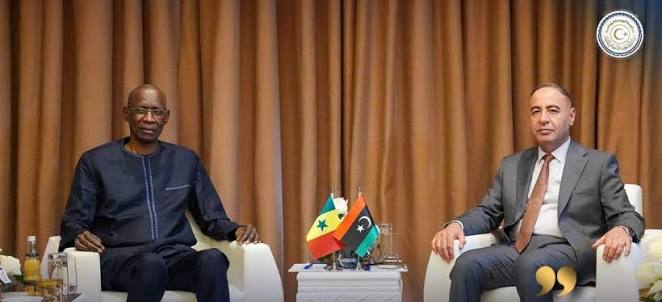
Taher al-Baour, acting foreign minister in Libya’s Government of National Unity (GNU), met Senegalese Foreign Minister Cheikh Niang on October 10 on the sidelines of an African Union ministerial meeting in Tripoli. The talks covered regional security, economic cooperation and efforts to revive the Community of Sahel-Saharan States (CEN-SAD), according to The Libya Observer.
Libya Seeks to Restore Tripoli’s Regional Role
The two officials discussed plans to reactivate CEN-SAD and return its executive secretariat to its original headquarters in Tripoli. Founded in 1998, the organization brings together African states to promote regional cooperation and integration.
Libya is working to complete the institutional arrangements needed to restore the secretariat. The two sides also backed plans to hold CEN-SAD’s next ministerial council meeting in Tripoli in November, ahead of a summit of member states’ leaders.
Restoring the organization’s operations would give Tripoli a stronger platform for diplomatic engagement across the Sahel and North Africa. It could also create opportunities for Libya to deepen ties with African governments on trade, investment and regional development.
However, the immediate priority remains institutional. The planned meetings will need to translate diplomatic commitments into functioning structures and practical cooperation between member states.
Security and Economic Cooperation
Al-Baour and Niang also discussed how African countries could coordinate more closely on political, economic and security challenges. Their talks included efforts to address terrorism, organized crime and irregular migration.
These issues have direct economic implications for Libya. Insecurity across the Sahel can disrupt cross-border trade, complicate transport routes and increase the risks facing businesses operating across the region. Greater coordination between governments could help improve the conditions for legitimate commerce and regional investment.
Closer ties with Senegal could also broaden Libya’s engagement beyond its immediate neighbors. However, the meeting produced no publicly announced trade agreements, investment commitments or specific economic projects.
For now, the discussions signal an intention to strengthen bilateral relations rather than a concrete shift in commercial ties.
November Meeting Will Test Progress
The planned CEN-SAD ministerial meeting in Tripoli will provide an early test of Libya’s efforts to restore the organization’s role. Progress will depend on whether member states agree on the institutional steps needed to resume its work and establish a clear agenda for cooperation.
For Libya, the potential benefits extend beyond diplomacy. A more active role in African institutions could help strengthen its regional partnerships and create channels for future trade and investment.
The next step is to turn those ambitions into measurable results, including functioning regional institutions and practical agreements that support economic cooperation.