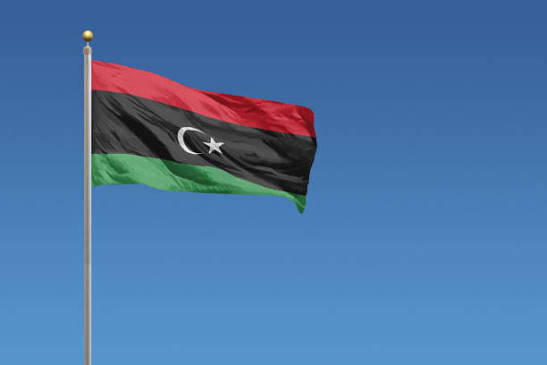
Libya’s flag has changed several times since the country gained independence in 1951. The current red, black and green flag with a white crescent and star first represented the Kingdom of Libya under King Idris I. Muammar Gaddafi replaced it after taking power in 1969, first with a red, white and black flag and later with a plain green banner. Libya restored its original independence-era flag in 2011, making it a symbol of the country’s break with Gaddafi’s rule. The flag’s history reflects Libya’s struggle for independence, changing political alliances and search for national identity.
What Did the Libyan Flag Look Like Before 2011?
The answer depends on which period of Libya’s history you mean. Before the 2011 uprising, Libya had used two different national flags under Gaddafi, while the red, black and green flag had represented the country before his rule.
Libya adopted its first national flag upon independence on 24 December 1951. The flag featured three horizontal stripes: red at the top, black in the middle and green at the bottom. The central black stripe was twice the height of either outer stripe. A white crescent and five-pointed star sat at its center.
Omar Faiek Shennib, a Libyan official who served under King Idris, designed the flag. The design drew on the historical symbols of the Senussi movement, which played a major role in eastern Libya and the country’s independence struggle.
The flag represented the Kingdom of Libya from 1951 until a military coup overthrew King Idris in September 1969. For many Libyans, it remains closely associated with the country’s independence and its early years as a sovereign state.
How Did Gaddafi Change Libya’s Flag?
Gaddafi’s rise to power brought a series of changes to Libya’s national symbols. After the 1969 coup, the new government replaced the monarchy’s flag with a red, white and black horizontal tricolor. The design reflected the pan-Arab political movement that Gaddafi supported.
Libya adopted another flag in 1972 when it joined the Federation of Arab Republics alongside Egypt and Syria. This version retained the red, white and black colors but added a golden hawk emblem.
The most dramatic change came in 1977. After Libya withdrew from the federation and Gaddafi pursued his own political project, the country adopted a plain green flag. It contained no symbols, stars, crescents or other designs.
The green flag remained Libya’s national flag for 34 years, from 1977 until 2011. It became closely associated with Gaddafi’s political ideology and his system of government, which he later called the Great Socialist People’s Libyan Arab Jamahiriya. For people searching for the Libyan flag before 2011, the green banner is therefore an important part of the answer. It was the flag displayed on government buildings, official documents and state institutions during the final decades of Gaddafi’s rule.
Why Did Libya Bring Back Its Old Flag in 2011?
The red, black and green flag returned during the uprising against Gaddafi in February 2011. Protesters raised it across Libyan cities as demonstrations developed into an armed conflict that eventually ended his rule.
The choice was deliberate. The flag had represented Libya before Gaddafi came to power, so its return offered a visible alternative to the symbols of his government. It also connected the uprising to the country’s independence in 1951.
The National Transitional Council adopted the independence-era design in 2011. The flag became the national symbol of the new authorities as they sought to establish a political order after Gaddafi’s fall.
Libya’s flag therefore changed not simply because a new government wanted a different design. Its restoration marked a rejection of the political system that had ruled the country for more than four decades.
What Do the Colors of the Libyan Flag Mean?
The red, black and green stripes have several historical interpretations. They are commonly associated with Libya’s three historic regions: Fezzan in the south, Cyrenaica in the east and Tripolitania in the west.
The colors also carry meanings linked to the country’s struggle for independence. Red is associated with the sacrifices made during the fight against Italian colonial rule. Black recalls the Senussi banner and the historical role of the movement in eastern Libya. Green is often linked to agriculture, prosperity and hope for the country’s future.
The white crescent and star are traditional Islamic symbols. Their inclusion also connects the national flag to the Senussi movement and the history of King Idris.
These interpretations help explain why the flag has remained significant beyond its official status. Its design brings together regional identities, religious symbolism and memories of the independence struggle.
Is the Libyan Flag Today the Same as the Flag Before 1969?
Yes. Libya’s current national flag uses the same basic design as the flag adopted at independence in 1951. The red, black and green stripes, along with the white crescent and star, returned in 2011 after more than four decades of Gaddafi’s rule.
The distinction matters because searches for the old Libyan flag can refer to two different designs: the independence-era tricolor used from 1951 to 1969, or the plain green flag used from 1977 to 2011.
Libya’s flag has changed with its political history, but the restoration of the 1951 design gave the country a national symbol that predates Gaddafi. More than a decade after its return, the flag remains a reminder of Libya’s independence and the political upheaval that reshaped the country in 2011.