Libya needs at least $20 billion in investment to increase oil production from around 1.4 million barrels per day (bpd) to two million bpd, National Oil Corporation (NOC) Chairman Masoud Suleiman has said. The target would strengthen Libya’s position in international oil markets, but achieving it will require more than new drilling. The country must also attract foreign capital, rehabilitate ageing infrastructure and develop oilfields that have remained untapped for years.
Speaking to CNBC Arabia on the sidelines of the Libya International Energy Conference and Exhibition (LIBYES 2026) in Tripoli, Suleiman said the NOC would spread the investment across several phases. The corporation will assess projects through feasibility studies, technical evaluations and global oil price trends.
The announcement highlights the scale of the challenge facing Libya’s energy sector. Production has recovered to around 1.4 million bpd, but the next 600,000 bpd will require substantial investment in exploration, field development and existing production facilities.
Libya looks to international companies to finance production growth
The NOC is looking to international energy companies to help finance the expansion. Five international companies have secured exploration blocks, with seismic surveys and drilling operations expected to begin in early 2027.
However, exploration alone will not deliver the production increase. Libya also has discovered oilfields that have yet to enter production. Developing these resources could provide a faster route to additional output than relying entirely on new discoveries.
The NOC has identified several opportunities across its existing operations. Waha Oil Company aims to increase production to 650,000 bpd through the development of North Jalo, Jalo 3, Dahra and other fields. The corporation also sees opportunities to raise output at Harouge, the Arabian Gulf Oil Company (AGOCO) and Mellitah Oil and Gas.
Contract terms will play an important role in attracting the required investment. The NOC is reviewing its production-sharing agreements and introducing new partnership models to make projects more attractive to international operators.
This is particularly important because the NOC has faced funding constraints that can delay development projects. Allowing international partners to provide more upfront capital could accelerate investment, although Libya will need clear contractual terms to protect its long-term interests.
Ageing infrastructure remains a major obstacle
Increasing production will also require improvements across Libya’s oil infrastructure. Pipelines, storage facilities and export terminals must handle higher volumes reliably. Without these upgrades, additional production capacity could remain vulnerable to technical failures and operational disruptions.
Recent interruptions demonstrate how quickly infrastructure problems can affect national output. The temporary closure of the Sharara pipeline, for example, highlighted the exposure of major oilfields to disruptions along critical transport routes.
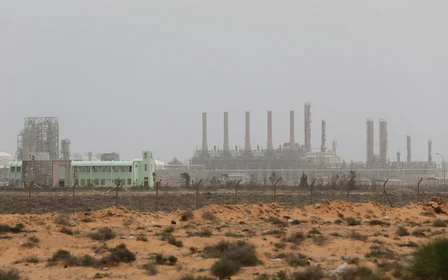
The NOC has also placed refinery development on its investment agenda. Work at the Ras Lanuf refinery is expected to support a return to operations in the second half of 2027, while upgrades at the Zawiya refinery aim to increase domestic fuel production by 2030.
These projects address another weakness in Libya’s energy sector. Despite its substantial crude production, the country continues to rely heavily on imported refined fuels. Expanding domestic refining capacity could reduce import costs and ease pressure on foreign currency reserves.
Can Libya turn its production ambitions into reality?
Libya’s two million bpd target represents a significant opportunity, but attracting $20 billion will require sustained confidence from international investors.
The country has considerable advantages, including large proven oil reserves, established production basins and access to European energy markets. However, investors will also assess operational security, political stability, payment arrangements and the reliability of agreements with the NOC.
The corporation’s ability to maintain stable production will be just as important as its ability to increase capacity. Repeated shutdowns and export disruptions undermine investor confidence and make long-term investment decisions more difficult.
If Libya can combine new foreign investment with infrastructure rehabilitation and more reliable operating conditions, the two million bpd target becomes more achievable. The real test will be whether the country can maintain the stability and financing needed to turn its oil potential into sustained production growth.