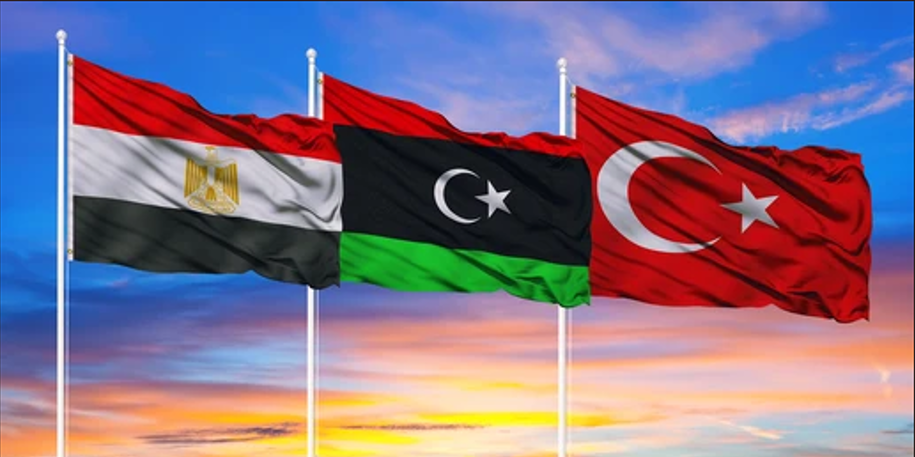
Ankara–Cairo Engagement and the Next Phase of Libya’s Transition
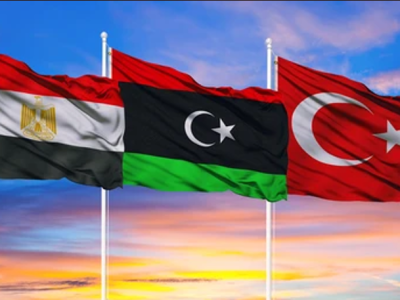
The ongoing crisis in Libya forms a focal point for regional geopolitics in North Africa and the Eastern Mediterranean. As the two most influential neighboring powers, Egypt and Turkiye are no longer just observers, they are actively competing to shape Libya’s trajectory. Each pursues its own national priorities, yet they share a convergence around the need for stability. Egypt, in particular, remains deeply invested in Libya’s trajectory, seeking to balance domestic security concerns, economic opportunity, and regional influence.
Türkiye’s interests in Libya revolve around securing its geopolitical influence in the central Mediterranean, expanding economic ties through energy, infrastructure, and trade. Ankara has a variety of interests in Libya. However, its primary motivations for involvement are safeguarding its economic and geostrategic interests in Libya and the Eastern Mediterranean region.
Libya represents a valuable market on its own. The fact that Türkiye had contracts worth between $19 and $25 billion in Libya when the 2011 uprising occurred shows the significant commercial interests involved. Therefore, it is crucial to preserve its economic interests in the country. With its strategic location and abundant natural resources, Libya has the potential to be a key player in the global economy.
Ankara is working to stabilize Libya by engaging both western and eastern factions to promote security consolidation. However, Turkish officials remain wary of persistent military tensions, fragile alliances, and unpredictable shifts in Libyan leadership. Ankara’s outreach to eastern Libya represents not a withdrawal from Tripoli but a calculated strategy, a means to safeguard and expand Türkiye’s influence across Libya’s divided political terrain while seeking nationwide legitimacy for its enduring presence.
The process of political normalisation with the east accelerated after the end of Haftar failed offensive on the capital Tripoli in 2020, marked by high-level visits to Ankara from prominent eastern figures, including House of Representatives Speaker Aqila Saleh and the sons of General Khalifa Haftar, Saddam Haftar. Turkish President Erdoğan’s meetings with Aguila Saleh, the Tobruk-based parliament speaker and a Haftar supporter, in August 2022 and December 2023 signify Türkiye’s willingness to engage with the country’s eastern region. These exchanges helped to improve diplomatic relations between both sides, lessen existing imbalances, and lay the groundwork for pragmatic cooperation on parallel tracks.
Türkiye is presenting itself as a stabiliser, bridge-builder, and security provider in a region marked by fragmentation and conflict. Its role in Libya exemplifies this: through military cooperation agreements and training programs. In this regard, Ankara has sought to build common ground between eastern and western Libya, promoting dialogue over conflict. For instance, in September 2025, the head of Türkiye’s National Intelligence Organization (MIT), İbrahim Kalın, held a surprise meeting with Khalifa Haftar, leader of the self-styled Libyan National Army (LNA), in Benghazi. This marked the first high-level contact between Ankara and eastern Libya in years, underscoring Türkiye’s intention to maintain channels of communication with all major Libyan actors.
Egypt’s Interests and Concerns
Egypt’s approach to Libya is shaped by a mix of security, economic, and political concerns. Above all, Cairo is focused on its own national security. Libya’s ongoing instability, marked by armed groups, criminal networks, and a porous 1,150 km border, is a direct threat to Egypt’s territorial integrity. Since Gaddafi’s fall, this poorly controlled border has become a dangerous hub for smuggling weapons, drugs, and militants. With Libya remaining so volatile, Egyptian authorities are deeply concerned about extremist spillover, especially since certain Libyan factions maintain ties to groups that are openly hostile to Cairo.
Economically, Libya has long been a lifeline for millions of Egyptians seeking employment and for Egypt’s own energy and trade sectors. Before Libya’s 2011 revolution, roughly two million Egyptians worked in Libya, sending remittances home and finding opportunities in oil, construction, and other industries. Libya also offered Cairo cheap oil and interest-free loans and invested billions in Egyptian sectors. With Egypt’s perennial need for cash, affordable energy, and job creation, restoring stability in Libya and with it, economic cooperation is a strategic priority.
Politically, Egypt seeks to shape Libya’s post-conflict order in a manner that secures its interests, limits the rise of hostile or Islamist factions, and enhances its regional stature. Cairo’s repeated calls for an inclusive “Libyan-Libyan” solution underscore resistance to perceived external imposition, especially from actors with divergent aims.
Türkiye as a Key Actor: Rivalry and Rapprochement
Türkiye’s involvement in Libya has frequently placed it at odds with Egypt, as Ankara has backed internationally recognized governments in Tripoli, and has deployed military and logistical support to its allies in Western Libya. This rivalry has been a major fault line in the conflict, with each country supporting different factions and pursuing their own strategic interests from securing access to oil and gas resources to advancing regional influence.
Ankara and Cairo have decided to strengthen their ties in response to the region’s challenging economic and political conditions. They understand that collaboration is more beneficial than confrontation for their countries’ interests, which has resulted in a renewed focus on improving diplomatic relations and addressing shared concerns through joint efforts. Since 2021, Türkiye and Egypt have engaged in historic rapprochement efforts, recognizing that a protracted stalemate in Libya benefits neither. Both have shown openness to dialogue, with a shared interest in preventing the fragmentation of Libya and mitigating risks of regional destabilization.
Türkiye and Egypt have the potential to collaborate in maintaining security and stability by using their influence over the conflicting factions in Libya. They share a common goal of reinitiating the political process and endorsing democratic elections. Libya is in dire need of a new constitution, which has been a major hindrance to enhanced security nationwide, necessitating the unification of military institutions. The unification of military institutions is crucial for stability and peace in the country.
Libya’s path to stability remains shaped by the delicate interplay between Egypt and Türkiye, whose evolving cooperation signals hope for national unity and peace. Yet, significant obstacles persist: various militia groups, deep political and social divisions, and the influential roles played by other external actors most notably the UAE and Russia continue to complicate efforts. While the unification of military institutions and the drafting of a new constitution offer a framework for progress, lasting peace will require navigating these complex internal and external dynamics. True stability depends on inclusive dialogue, concerted cooperation, and sustained regional and international commitment.
Ferhat Polat is a researcher and analyst specialising in North African geopolitics and security, with a particular focus on Libya. He holds an MA in Middle East Studies from the Institute of Arab and Islamic Studies at the University of Exeter.
@Ferhattpol