As Hormuz Remains Unstable, Libya’s Oil Is Becoming More Strategic Again

As Hormuz Remains Unstable, Libya’s Oil Is Becoming More Strategic Again

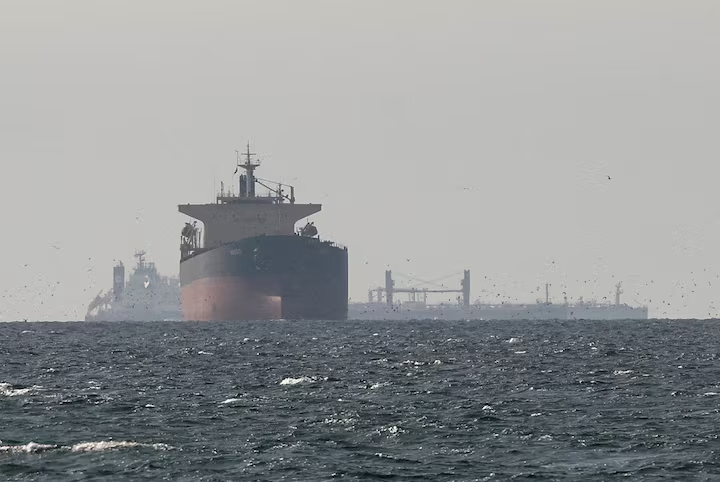
Global oil markets now operate under a new assumption. The shipping route through the Strait of Hormuz no longer functions normally. Tankers avoid predictable schedules. Insurance costs stay elevated. Traders price in continuous geopolitical risk rather than a short disruption.


At the same time, tensions involving Iran and its regional adversaries keep the risk of renewed escalation alive. Energy markets now react less to confirmed events and more to the probability of escalation. In this environment, Libya’s oil sector gains new strategic relevance. Libya increases production while global buyers search for non-Gulf supply options. The result does not change global supply dominance, but it shifts trade flows and pricing psychology.


Hormuz disruption changes how oil markets think


The Strait of Hormuz remains one of the most important oil transit corridors in the world. A large share of seaborne crude exports from the Gulf passes through this narrow passage. When normal operations break down, global buyers adjust quickly. In 2026, markets no longer treat Hormuz instability as a short shock. They now treat it as a structural risk factor. This shift matters more than the actual volume of disrupted barrels.


Traders now price oil with a permanent geopolitical premium. Shipping firms reroute cargo when possible. Refiners in Europe and Asia diversify suppliers even if that increases short-term costs. This behavior creates a second-order effect. It increases demand for alternative supply sources that sit outside Gulf chokepoints. Libya benefits directly from this shift.


Libya increases output during a tight market cycle


Libya continues to raise production capacity in 2026 after previous periods of disruption and shutdowns. The country does not match Gulf producers in scale, but it improves its export consistency compared to earlier years. This recovery arrives at a sensitive moment. Global supply chains already operate under strain due to Hormuz instability. As a result, even moderate increases in Libyan output gain attention from traders and refiners.


Libyan crude flows mainly into Mediterranean markets. This route avoids exposure to Gulf maritime risks. That creates a direct logistical advantage during periods of Middle Eastern instability. Refiners in southern Europe respond first. They look for secure, short-haul supply chains. Libya fits that requirement better than distant suppliers that depend on long maritime routes through high-risk zones.


Risk premiums reshape trade flows, not just prices


Oil markets no longer respond only to supply and demand fundamentals. They now respond to route security.


When shipping through the Strait of Hormuz becomes uncertain, traders reassess entire supply chains. They calculate not only cost per barrel but also delivery risk per barrel. This shift creates a structural advantage for producers outside the Gulf system. Libya sits outside the main chokepoint network. It exports through the Mediterranean, which currently faces fewer geopolitical disruptions compared to Gulf routes.


As a result, Libyan oil does not need to increase dramatically in volume to gain importance. It only needs to remain stable while other supply routes face uncertainty. This dynamic explains why markets now treat Libya as a “strategic marginal supplier” rather than just a medium-sized producer.


Internal constraints still limit Libya’s upside


Despite improved output, Libya still faces internal constraints that limit its full potential. Production stability remains uneven. Infrastructure requires continuous maintenance and investment. Political divisions continue to affect long-term planning in the energy sector.


These factors prevent Libya from fully capitalizing on global supply stress. Buyers still price Libyan crude with a risk discount compared to more stable exporters. Security concerns also affect investor confidence. Oil fields and export terminals depend on local arrangements that can change quickly. This uncertainty reduces the speed of capacity expansion.


So while global conditions favor Libyan exports, domestic conditions limit how far that advantage can extend.

Europe quietly shifts attention toward Mediterranean supply


European energy strategy continues to evolve in response to repeated supply shocks over the past few years. First, Europe reduced reliance on Russian energy. Now, it reassesses exposure to Middle Eastern shipping corridors. The Hormuz disruption accelerates this shift. European refiners and governments now evaluate supply chains based on geopolitical resilience, not just price efficiency.


This change increases interest in Mediterranean producers. Libya stands out because of geography. It sits close to major European refining hubs. It offers shorter shipping times and lower transport risk compared to Gulf suppliers. This does not create immediate large-scale contracts. Instead, it creates gradual structural interest. European buyers diversify portfolios to reduce exposure to single chokepoints.


Over time, this trend strengthens Libya’s relevance in regional energy planning.


Iran tensions keep risk premium elevated


Markets also continue to monitor escalation risks involving Iran. Even without full-scale conflict, uncertainty drives pricing behavior. Energy traders react to signals, not just outcomes. Diplomatic breakdowns, naval incidents, or regional proxy escalations all feed into oil price volatility. As long as these tensions persist, markets maintain a high risk premium on Gulf-linked supply routes. That premium indirectly supports alternative suppliers, including Libya.


This creates a feedback loop. Higher Gulf risk increases demand for non-Gulf oil. Increased demand strengthens Libya’s short-term export position. But it also increases pressure on Libya to maintain stability.


Outlook: Libya gains relevance without replacing Gulf supply


Libya will not replace Gulf oil producers in global supply volume. The scale difference remains too large. However, the current crisis does not require replacement. It requires diversification. The Hormuz disruption forces buyers to rethink concentration risk. Libya benefits from that shift because it offers accessible barrels outside the main chokepoint system.


If instability continues through 2026, Libya will likely retain elevated strategic attention from European and Mediterranean buyers. If tensions ease, Libya may lose some of that urgency but still keep improved structural relevance compared to pre-crisis levels. In both scenarios, Libya’s oil sector moves into a more strategic category than it occupied before. Not because it dominates production, but because it sits in the right place at the right time in a fragmented global energy map.


Energy Brent crude energy geopolitics energy security global oil markets Hormuz Crisis Iran conflict Libya oil Libya production Mediterranean oil oil supply 2026 OPEC geopolitics Strait of Hormuz