As the Gulf burns, can Libya capitalize on rising energy prices?
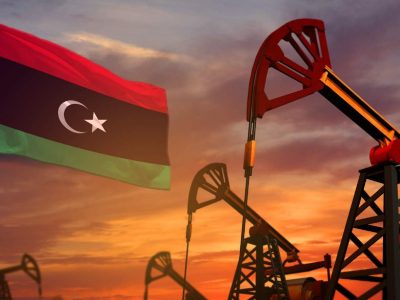
Since the United States and Israel launched joint strikes on Iran on February 28, global energy markets have been reeling in response to Iran’s retaliatory strikes across the Gulf, oil has hit its highest price in over 2 years with Brent crude oil rising by 9% on March 5 alone. Libya, alongside other alternative hydrocarbon producing countries, stand to benefit from what could be a seismic shift in the global flow of energy.
The significance of this for Libya is not only economic but also political, with implications for the country’s trajectory toward institutional unity, as international actors who previously prioritized the UN-led political process may increasingly place greater emphasis on energy security.
Libya’s revenues from its energy sector remains hotly contested between rival administrations in Tripoli and Benghazi. Libya’s National Oil Corporation, along with other institutions central to sale of Libya’s crude on the global market, are all located in Tripoli, under the authority of the UN-backed Government of National Unity. While the primary institutional infrastructure lies in Libya’s west, the hard infrastructure, whether it’s the oil fields themselves, the major ports along the coast or other pipelines and export terminals, nearly all fall under areas controlled by Khalifa Haftar’s Libyan National Army. Libya’s hydrocarbons and its revenues are therefore caught in the nexus of Libya’s fragmented political landscape, as it is the country’s principal source of national income, it acts as critical political and economic leverage in the struggle for political dominance.
Any major influx of income or investment into Libya’s energy sector, in the absence of unified national institutions, could deepen existing divisions between rival administrations while also strengthening the political influence of actors who control key energy infrastructure. The reshuffling of global energy flows could bring significant capital into Libya’s economy, but these revenues may also reshape the balance of power among Libya’s competing political and military actors. European policymakers may face growing pressure to engage with institutions across Libya’s political landscape as the continent navigates heightened energy insecurity.
While Libya’s state revenues could benefit from rising oil and gas prices alongside any shift away from Gulf supplies, the country would still need to contend with higher global prices for basic goods driven by energy inflation. Libya is already suffering with a falling currency alongside rampant inflation. The additional pressure on import and transportation costs could push Libya’s economy over the edge.
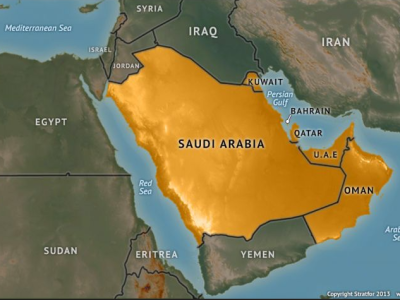
Iran has committed to enforcing the closure of the Strait of Hormuz, through which 20% of the worlds oil supply flows. The closure of this critical artery in the global trade network alongside its strikes on energy infrastructure across the Gulf, have led to rising oil and gas prices alongside fears of a complete shutdown of hydrocarbon exports from the Gulf.
Qatar’s state-owned petroleum company, QatarEnergy, already declared force majeure on its gas exports on March 4, with European consumer companies already receiving notice that their gas deliveries expected next month could delayed or cancelled. With Iran’s persistent attacks on refineries and other infrastructure across the Gulf, many other major energy companies, such as Saudi’s Aramco, could soon follow suit in the cancellation of gas export contracts.
This isn’t just a supply side restriction which would lead to higher prices but instead signals a complete breakdown in the traditional flow of energy and its corresponding markets.
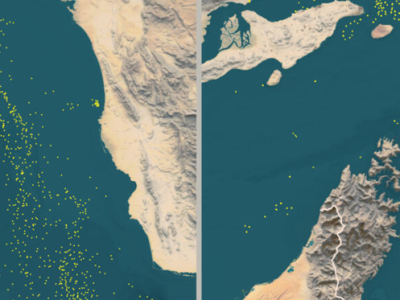
Major shipping companies such as Maersk and Hapag Lloyd have announced that they are not only stopping transit through the Strait of Hormuz, but are completely avoiding the region altogether, by rerouting shipments around the Cape of Africa, away from the Suez Canal and the Bab el-Mandeb Strait.
Although Libya would not be able to meet the volume of demand that the Gulf nations provided, the country’s geographic positioning in the central Mediterranean could prove to be vital as global shipping companies calibrate the cost of transport through the Middle East as shipping insurance premiums skyrocket.
Libya’s oil and gas sector is experiencing a strong recovery after years of instability following the NATO-backed uprising in 2011. Major international companies such as TotalEnergies, ConocoPhillips, Chevron and Eni are returning to Libya. New investment deals, from $20 billion deals to expanded gas projects, are boosting production to its highest levels in over a decade, signaling growing confidence in Libya’s energy sector.
The resurgence is driven by rising oil output, new exploration licensing rounds, and major infrastructure projects that could significantly increase both oil and gas production while strengthening Libya’s role in global energy supply.
While many leaders from the Europe and the West reiterate their commitment to the United Nations political roadmap for Libya, increasing energy instability may force their hand as material needs take priority over international moral standards. Previously, many from the West had been reluctant to engage with Haftar or the eastern-based administration under his control, due to UN frameworks and other institutions tying the political roadmap to the GNU in Tripoli.
Other international actors such as Russia, the UAE and Turkey have expanded their engagement with authorities in eastern Libya as geopolitical and economic interests increasingly shape external involvement in the country. The GNU lacks the ability to project hard military power whilst also suffering from an absence of control of strategic regions for oil exports and migrant smuggling.
European and Western governments may find their policy priorities shifting as immediate energy concerns begin to compete with long standing diplomatic commitments to Libya’s UN supported political framework.
At present stage this change in priority is already taking shape, before the impacts of the US-Israeli escalation on Iran have had a chance to take effect. Massad Boulos, adviser on Africa and the Middle East to US President Donald Trump, has advanced a new political dialogue in Libya, one that is based on commercial diplomacy and investment, as per Trumps diplomatic doctrine.
At the same time, on March 4, he has expressed U.S. support for the UN-led political process in Libya, emphasizing that lasting stability requires a credible, Libyan-led effort to unify state institutions and revive the economy. In the same statement he also reaffirmed Washington’s backing of the work of Hanna Tetteh and the United Nations Support Mission in Libya, however his courting of major international oil firms directly contradicts these statements. While Libya’s economy faces significant pressures, the sequencing of institutional reform and large scale energy investment remains a subject of debate among policymakers and international stakeholders.
Until there is broader clarity among international actors regarding Libya’s distribution of political and military authority, calls for a unified national transition are likely to remain difficult to translate into practice. The turmoil in the Gulf and the resulting shifts in global energy flows may increase revenues for Libya, though the distribution of those resources will inevitably influence the country’s internal balance of power.
The ideas and concepts expressed in this piece are those of the author and do not necessarily reflect the positions of Libya Economic Review. If you would like to contribute to LER, contact us at younis@libyaeconomicreview.com.