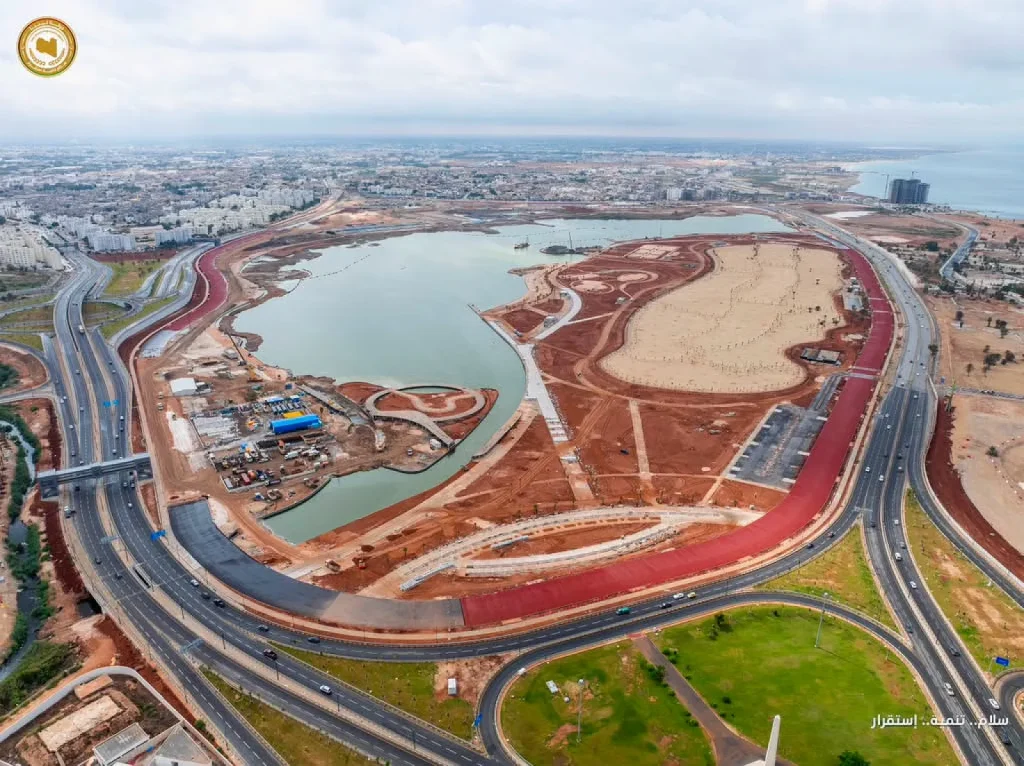
Benghazi is continuing work on the development of Lake Julyana and its surrounding waterfront, with the project covering more than 1.6 million square meters as the city expands its urban infrastructure and public spaces.
The Benghazi-based Libya Development and Reconstruction Fund (LDRF) says the project combines the rehabilitation of the lake and its banks with new public facilities, green areas and recreational infrastructure.
The development includes a 5.5-kilometre sports walkway, a bicycle track and several playgrounds. Around 678,000 square meters will go toward landscaping and green spaces, linking the waterfront with sports and recreational facilities.
The scale of the project places Lake Julyana among Benghazi’s larger urban development schemes. Rather than focusing only on the lake itself, the plan connects the waterfront with the surrounding city and creates a wider public-use area.
Julyana Development Expands Beyond the Lake
The latest phase builds on wider infrastructure work in the Julyana district. In May, the LDRF inaugurated the first phase of the district’s development, including five new bridges designed to improve traffic movement and connect central Benghazi with major roads.
That infrastructure work gives the waterfront project a broader economic role. Better road connections can improve access to commercial and recreational areas, while new public spaces can support restaurants, retail, leisure activities and other services around the waterfront.
The Julyana area has also attracted private investment. In August, Libya’s Enmaa Company and Egypt’s Waterway, part of the Elsewedy Group, signed an agreement for a tourism and urban development project in the area. The plan includes a coastal club, serviced residential units, hospitality facilities and other services.
That combination of public infrastructure and private development could make Julyana an important part of Benghazi’s expanding property and tourism market.
Benghazi’s Urban Investment Push
The Julyana project also reflects a wider shift in Benghazi’s development priorities. The city has seen major spending on roads, bridges, public facilities and other infrastructure as reconstruction efforts expand.
For businesses and investors, the key issue will be whether new infrastructure creates a sustainable commercial ecosystem around it. Large waterfront projects can generate demand for hospitality, food and beverage, retail, entertainment, property development and maintenance services, but those benefits depend on consistent access, utilities and long-term management.
The project’s emphasis on green space and public recreation also gives it a role beyond commercial development. The planned landscaping covers an area larger than many individual urban projects, while the walking and cycling infrastructure could create a new public corridor along the waterfront.
The Libya Development and Reconstruction Fund’s Julyana project therefore sits at the intersection of infrastructure, real estate, tourism and public-space investment.
For Benghazi, the next stage will show whether the investment around Lake Julyana can develop into a connected commercial and recreational district rather than a collection of separate projects. The combination of transport links, waterfront facilities and private investment gives the area the potential to become one of the city’s main new urban destinations.