Libya and South Korea reopen a broader economic conversation
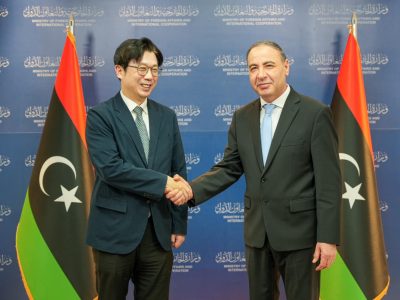
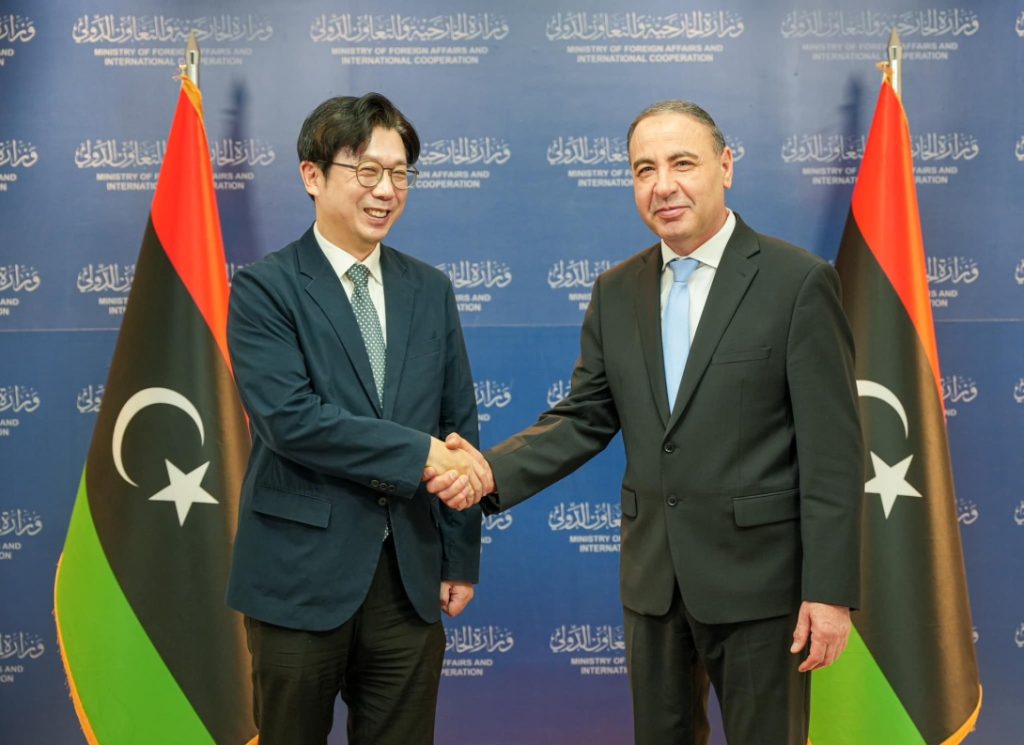
Libya’s latest talks with South Korea may have focused publicly on education, technology, and health, but the wider significance lies in what those sectors can unlock. During the meeting between Acting Foreign Minister Taher Al Baour and South Korean Ambassador Jang Ji hakh, both sides discussed ways to strengthen cooperation across several fields while also pointing toward deeper political and economic coordination. That makes the meeting more than a routine diplomatic exchange. It suggests that both countries want to widen the relationship and test whether sector cooperation can evolve into a more meaningful economic partnership.
For Libya, that matters. The country does not need partnerships that stop at statements of goodwill. It needs relationships that can produce training, skills, infrastructure, investment, and practical institutional support. South Korea stands out in that respect. It offers experience in industrial development, digital systems, technical education, healthcare management, engineering, and manufacturing, all areas where Libya continues to face major gaps. If the relationship develops seriously, those same sectors could support reconstruction, private sector growth, and a gradual expansion beyond Libya’s heavy dependence on oil revenues.
Education may seem like the softest part of the agenda, yet it may carry some of the most lasting value. Libya’s labor market still suffers from a mismatch between formal education and the technical skills that employers actually need. Cooperation with South Korea could open space for vocational training, university partnerships, technical exchange, curriculum development, and specialist training in engineering, medicine, information systems, and industrial operations. That would give the education file a direct economic dimension. Libya’s next stage of growth depends not only on state spending or foreign capital, but also on whether it can build a workforce capable of supporting modern services, construction, logistics, energy operations, and digital administration.
The technology angle also deserves more attention than the headline first suggests. South Korea built much of its economic success on industrial discipline, digital capability, innovation, and strong state private sector coordination. Libya, by contrast, still struggles with inefficient administration, uneven digital infrastructure, weak productivity, and limited integration between public systems and commercial activity. Technology cooperation between the two countries could support more than innovation in the abstract. It could help Libya improve e governance, modernize administrative systems, expand digital services, strengthen telecommunications related capacity, and create better conditions for private investment. Even modest progress in these areas would carry broader economic benefits because more reliable systems make it easier to do business, approve projects, manage services, and connect institutions to markets.
Health, too, has a larger economic meaning than is often acknowledged. A discussion framed around health cooperation may point toward training, hospital management, equipment supply, medical technology, and specialist services. These are not peripheral issues in Libya’s economy. Health system weakness pushes spending abroad, drains household resources, and adds pressure to the public sector. Better cooperation in this area could support both human development and commercial exchange, especially if it leads to procurement, technology transfer, maintenance contracts, and long term investment in medical infrastructure.
Taken together, education, technology, and health form a practical development package rather than a symbolic diplomatic list. Each one speaks to a structural weakness in Libya’s economy. Each one also aligns with areas where South Korea has a credible record. That is why the meeting deserves attention beyond its official wording. It may reflect an attempt to build a wider economic relationship through sectors that offer visible public value and lower political friction than more sensitive investment files.
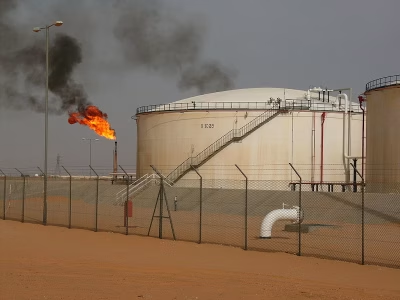
Beyond education and health, the talks also carry a quiet energy logic. South Korea still depends heavily on Middle Eastern crude, while Libya wants new partners for production, infrastructure, and downstream upgrades. That does not yet amount to a new energy pact, but it does give the bilateral relationship a clear economic rationale.
That point matters because energy remains the backbone of Libya’s economy, whether policymakers want diversification or not. Any serious external relationship with Libya eventually touches oil, gas, electricity, industrial supply, or infrastructure. South Korea’s interest in stable energy flows and Libya’s interest in raising output, improving facilities, and upgrading downstream capacity create an obvious area of overlap. Even if this particular meeting did not produce an energy announcement, the strategic logic sits clearly in the background. South Korean expertise in industrial systems, plant engineering, heavy equipment, and technical maintenance could fit naturally with Libya’s long term energy and infrastructure needs.
This gives the relationship a dual character. On one side, education, technology, and health offer an entry point that feels constructive, developmental, and politically manageable. On the other, those same areas can support a deeper economic relationship that extends into investment, project execution, industrial cooperation, and energy linked activity. In other words, the softer files may serve as the foundation for harder commercial outcomes later.
The challenge, as always in Libya, lies in execution. Diplomatic goodwill alone will not bring in sustained foreign participation. Libya still needs a more predictable commercial environment, clearer procedures, stronger institutions, and better confidence on contracts, payments, and implementation. Without that, even interested partners will move cautiously. South Korea may have the technical depth and commercial capacity to play a useful role in Libya, but that role will only grow if Libya can convert dialogue into projects and projects into delivery.
Still, the latest meeting points in a promising direction. It signals that the Libya South Korea relationship may be entering a broader phase, one that links development cooperation with economic opportunity. Education can strengthen human capital. Technology can support modernization and productivity. Health can improve service quality while opening room for investment and procurement. Energy adds strategic weight to the relationship and gives it a clearer commercial foundation.
That is why this week’s talks matter. On the surface, they focused on education, technology, and health. In reality, they may mark the reopening of a broader economic conversation, one that could eventually tie together reconstruction, skills, digital modernization, industrial cooperation, and energy. If both sides follow through, the meeting may come to look less like a narrow diplomatic exchange and more like the early shape of a deeper bilateral partnership.