Libya announces new oil and gas discoveries with major international energy companies
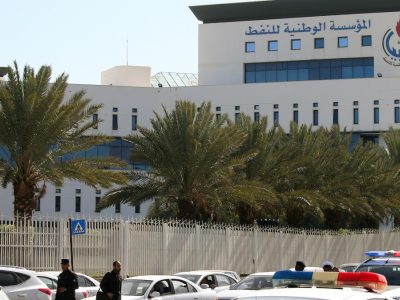
National Oil Corporation has announced new oil and gas discoveries in partnership with several international energy companies, signaling renewed exploration momentum in Libya’s upstream sector.
The discoveries involve cooperation with Eni, BP, and OMV. Officials say exploration activity in several licensed blocks has produced new hydrocarbon finds, reinforcing Libya’s long-term potential as a major producer in the Mediterranean energy system.
Libya holds the largest proven oil reserves in Africa, with an estimated 48 billion barrels. The country also possesses significant natural gas resources. However, exploration activity slowed sharply after 2011 as political divisions and security risks disrupted operations across the oil sector.
Many international operators scaled back exploration programs during that period. Some companies suspended drilling campaigns or reduced their presence while infrastructure disruptions and security concerns affected field operations.
The new discoveries suggest that exploration activity has started to recover. International partners have resumed drilling programs in several areas where geological surveys previously indicated strong potential. Early results from these programs now point to additional hydrocarbon accumulations.
Officials have not released detailed reserve estimates for the discoveries. However, the announcement signals that exploration campaigns have begun to deliver results after several years of limited upstream investment.
The renewed exploration activity also reflects a broader effort by the National Oil Corporation to attract international partners and revive Libya’s upstream sector. The corporation has encouraged foreign companies to expand exploration programs while also preparing new licensing rounds to increase investment in untapped basins.
International companies have maintained long-standing relationships with Libya’s oil sector. Eni has operated in Libya for decades and plays a major role in both oil production and natural gas development. The company manages several projects that supply gas to European markets through pipelines across the Mediterranean.
BP has also retained exploration interests in Libya and has periodically resumed seismic surveys and drilling activity as operating conditions improved. OMV continues to operate exploration and production assets in the country as well, particularly in areas with promising geological structures.
Their involvement in the new discoveries highlights continued interest in Libya’s resource base. Geological studies have long suggested that large areas of Libya remain underexplored compared with other mature producing regions. New discoveries could therefore emerge as companies expand drilling activity across these basins.
The announcement also comes at a time when Libya has already achieved a significant recovery in oil output. Production recently approached 1.4 million barrels per day, the highest level recorded in more than a decade. This recovery followed a period of improved operational coordination across major fields and export terminals.
New discoveries could support that recovery over the longer term. Additional reserves provide the foundation for future development projects that can sustain production levels as older fields gradually mature.
Many of Libya’s largest producing fields began operations several decades ago. These fields continue to deliver substantial volumes, but natural decline rates eventually require new developments to maintain output. Exploration therefore remains essential for the long-term stability of Libya’s oil sector.
The timing of the announcement also carries regional significance. Energy markets across the Mediterranean have faced shifting supply dynamics in recent years. European buyers have increasingly diversified supply sources while seeking reliable producers close to regional refining centers.
Libya’s crude oil fits that demand profile. The country exports light and sweet crude grades that many Mediterranean refiners prefer because they require less complex refining processes.
New discoveries could strengthen Libya’s position within these markets. Additional reserves create opportunities for future field developments that expand export capacity and support regional supply stability.
At the same time, the pace of development will depend on operational conditions inside Libya. Political divisions between competing institutions continue to affect governance structures in the oil sector. Security risks around key infrastructure can also influence exploration schedules and investment planning.
Despite these challenges, international companies continue to monitor Libya’s upstream potential closely. The scale of the country’s reserves and the relative proximity to European markets create strong incentives for long-term engagement.
The National Oil Corporation has repeatedly emphasized the importance of restoring exploration activity as part of its broader strategy for the sector. Officials aim to increase production capacity over the coming years while also expanding gas development to meet domestic demand and export opportunities.
New discoveries represent an early step toward that objective. Exploration successes help rebuild confidence in Libya’s upstream potential and encourage additional investment in geological surveys and drilling campaigns.
If exploration activity continues to expand, Libya could gradually unlock resources that have remained untapped for decades. That process would require sustained cooperation between the National Oil Corporation and international partners, alongside stable operating conditions across the country’s energy infrastructure.
For now, the latest announcement highlights the continued strength of Libya’s geological potential. It also underscores the strategic role that the country’s hydrocarbon sector plays in both domestic economic stability and regional energy supply.