IMF Warns Libya Dinar Exchange Rate Gap Is Widening Amid Political Division and Fiscal Imbalance
In mid-November 2025, a team from the International Monetary Fund met with Libyan officials (in Tunis) and issued a stark warning: the gap between Libya’s official dinar exchange rate and the parallel market rate is growing, despite ample foreign reserves and low inflation. According to the IMF mission’s report, Libya’s economy may grow thanks to higher oil production, but internal fractures are undermining the currency. The central concern is that political divisions and unfettered spending are feeding dual deficits and putting steady pressure on the dinar. In short, the widening rate gap is seen as a symptom of Libya’s deeper fiscal and institutional challenges.
Political Schism and Fiscal Imbalance
Libya’s two rival administrations – one in Tripoli (West) and one in Benghazi (East) – still operate separate budgets. Without a unified national budget, each side has spent freely on its own priorities. In 2024 the combined budgets of the two governments totaled about 224 billion dinars (roughly $46 billion), including some 42 billion dinars spent on crude-for-fuel swaps. This sprawling, unregulated spending has driven Libya’s public debt toward record levels and created “twin deficits” in both the budget and trade accounts. The IMF report bluntly noted that political splits meant there was “continued unrestrained spending,” which kept deficits large and “underpin[ed] the gap between the official and the parallel exchange rates”. In practice, funds tied up in unmonitored projects and subsidies drain central bank reserves and force the dinar onto a dual track: a tame official rate and a weaker black-market rate.
For now, Libya’s reserves still look comfortable and consumer prices have remained unusually stable, but that can be deceptive. The April 2025 devaluation of the dinar – the first in four years – left the official rate at about 5.57 dinars per dollar, while local traders were exchanging around 7.20 to the dollar. That gap of roughly 30% has persisted, signaling that confidence in the currency is eroding. An IMF economist explained that the dual expenditures of the rival governments have “put pressure on the exchange rate and central bank reserves,” making it hard for the central bank to defend a single peg. In other words, even though Libya still exports plenty of oil, every dinar printed in Tobruk or Tripoli increases the strain on the currency.
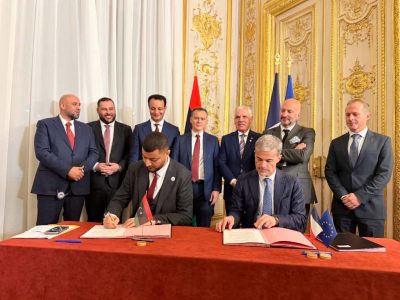
The costs of this split system are visible in the streets. Long lines at petrol stations and rationed subsidies reflect the messy way fuel import bills are being paid. Fuel subsidies alone account for around 20 percent of GDP. As the CBL’s own report noted, these subsidies and other structural imbalances are unsustainable without reform. Libya’s divided parliaments seem to recognize the danger: just days after the IMF mission, lawmakers in the east and west signed a rare agreement on a “unified development programme” to coordinate major spending. The central bank hailed this deal as a proactive and necessary step to protect the economy from larger crises by uniting spending channels. The IMF has likewise urged officials to finally agree on a single budget and follow strict spending limits, warning that only such fiscal discipline will rein in the deficits driving the currency gap.
Central Bank Measures and Reform Prospects
Against the backdrop of high spending, Libya’s Central Bank (CBL) has launched technical measures to support the dinar. In recent months the CBL has injected dollars into commercial banks, licensed dozens of new foreign exchange bureaus, withdrawn counterfeit notes, and raised reserve requirements for lenders. It even introduced short-term Islamic investment certificates designed to lock away excess liquidity. These moves have helped stabilize the official market, and the IMF mission praised them as positive steps toward narrowing the rate spread. Last year the Fund had specifically commended a UN-brokered deal that resolved the central bank’s leadership crisis, finally unifying the CBL’s board. With one governor now in charge (rather than rival boards), monetary policy can operate more coherently than in past years.
Still, the IMF report made clear that technical fixes are no substitute for policy fixes. One of their statements put it plainly: “the lack of spending restraint remains the overarching policy challenge”.
To that end, the Fund highlighted recent institutional reforms that could help. In particular, the authorities have rolled out a new electronic salary-payment platform for government workers. IMF staff called the centralized payroll system “a welcome step” for reducing corruption and controlling the wage bill. They recommended expanding this system to cover all public salaries, and urged more transparent multi-year investment planning and subsidy reform. Taken together, these changes – if sustained – could shrink the hidden leakages that now undermine the dinar.
Libya still faces uncertainty. The economy’s heavy reliance on oil means that volatile prices or output disruptions pose ongoing risks. The IMF cautioned that even with current oil-driven growth, Libya’s twin deficits will endure unless reforms stick. In its words, adequate investment in energy is needed “to maintain production levels,” but more importantly a broad reform program is required to diversify growth. Without political unity and budgetary discipline, each boost in oil revenue will be partly eaten by more spending, and the dinar will keep weakening on the streets.
The IMF’s Tunis visit thus sends a clear message: closing the currency gap means closing the political gap. Central bank actions can only go so far when the underlying finances are split. Libya’s road to stability now hinges on bridging its east‑west divide and enforcing agreed spending limits. Otherwise, any gains from higher oil output or new banking tools will be offset by basic policy disarray. The IMF’s warnings – backed by facts on the ground – underline a simple conclusion: lasting monetary stability requires unified governance and fiscal control. Only then can Libya’s dinar be anchored, and its economy set on a sustainable path.