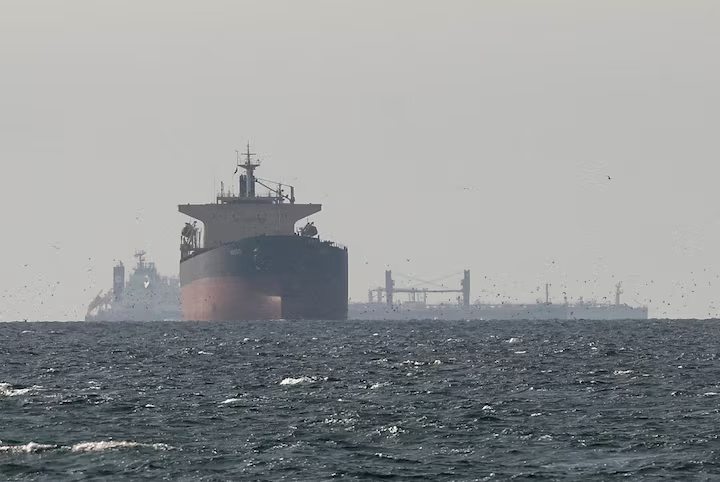
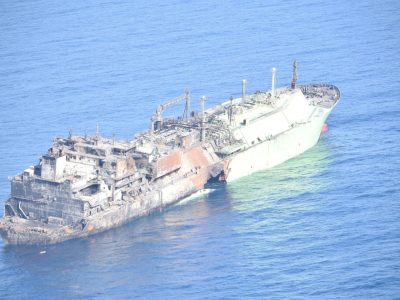
Energy crises usually start with crude. Brent jumps, traders panic, and governments start counting lost barrels. But the real economic pain often arrives somewhere else, in the fuels people cook with, the diesel that keeps freight moving, and the refined products that quietly hold together daily life. That is what the current Strait of Hormuz crisis is now making impossible to ignore.
India offers the clearest example. Reuters reported earlier this month that the war involving Iran had triggered India’s worst LPG squeeze in decades, after disruption in the Strait of Hormuz sharply slowed supplies from the Middle East, which normally provides roughly 85% to 90% of the country’s LPG imports. Sales by India’s three state fuel retailers fell 17.3% in the first half of March from a year earlier and 26.3% from the previous month, forcing the government to cut LPG allocations to industrial users in order to protect households. Bloomberg and other outlets have since reported that Indian flagged LPG carriers are again attempting the passage, a sign of both how acute the shortage has become and how desperate buyers are to keep cooking fuel moving.
Australia is feeling the same shock through a different channel. Fortescue warned iron ore miners could face billions of dollars in extra fuel costs because the war has pushed diesel prices sharply higher. A 10 cent increase in diesel prices alone adds about $70 million in costs for Fortescue, while diesel prices have nearly doubled from $92.50 to above $180 a barrel. That is not a niche problem for miners. It is a reminder that when Hormuz tightens, the cost spreads quickly through transport, freight, and industrial activity, even in countries far from the Gulf itself.
The same logic now runs across Asian fuel markets more broadly. Reuters reported today that disrupted crude and product shipments from the Middle East have pushed European and American gasoline cargoes toward Asia as buyers search farther afield for supply. Asian gasoline margins have jumped to around $37 a barrel, some refiners have cut runs because of crude uncertainty, and export restrictions in parts of Asia have started to tighten the market further. What began as a shipping and war risk story has turned into a wider repricing of usable fuels.
That is the part of the crisis Libya should study closely.
Libya cannot solve India’s LPG shortage, and it is not about to become a substitute for the Gulf’s lost volumes. But the events of the past few weeks have made one point brutally clear: when a single chokepoint starts to fail, the world begins placing a much higher value on nearby suppliers, shorter routes, and energy systems that can offer some shelter from the Gulf’s military risk. That is where Libya’s unrealized strategic value comes into view. This is an inference from the documented disruption to Hormuz dependent trade and the resulting scramble for alternative cargoes and routes.
Libya sits in the Mediterranean, close to European refining centers and outside the Gulf’s most dangerous maritime corridor. It has large oil reserves, existing export infrastructure, and a gas position that could become more valuable as Europe keeps searching for supply that avoids Hormuz. The National Oil Cooperation in Libya announced earlier this year that the country aims to raise gas production over the next five years and increase exports to Europe by the early 2030s, while Eni this month confirmed new offshore gas discoveries near existing infrastructure that could speed development. In purely geographic terms, Libya has much of what a stressed energy market should want.
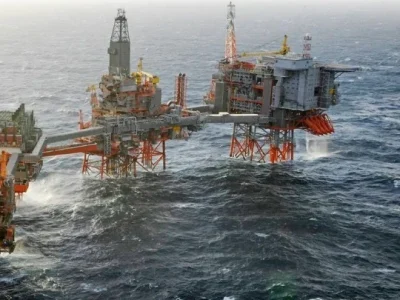
Yet Libya’s opportunity remains conditional, and that is where the harder truth begins. Geography alone does not create commercial power. The country still needs the political will, the institutional consistency, and the infrastructure reliability to convert location into dependable supply. Recent developments at Sharara, where a pipeline fire did not halt production because flows were redirected through alternative routes, show that parts of the system retain useful flexibility. But they also underline how much Libya still depends on redundancy, maintenance, and the strength of the network behind the barrels.
This is why the current Hormuz shock matters so much for Libya’s long term positioning. India’s LPG squeeze and Australia’s diesel pain show what happens when fuel security depends too heavily on one corridor. They also show that the next energy premium will not belong only to the biggest producers. It will belong to suppliers that can offer reliability, route diversity, and enough spare infrastructure to help absorb localised crises before they spiral into broader shortages. That is an analytical inference drawn from the supply responses now visible across India, Asia, and Australia.
In that sense, Libya’s potential role is larger than simple export arithmetic. A more stable and better connected Libyan energy system could ease pressure on Mediterranean fuel balances, support Europe’s search for nearby oil and gas, and make the region slightly less exposed each time the Gulf slips into conflict. None of that makes Libya a savior. But it does make the country more strategically important than its current political and operational condition allows. This is an inference based on Libya’s location, reserves, and the market behavior now visible during the Hormuz disruption.
That may be the real lesson of this moment. The world is not only relearning the cost of oil shocks. It is relearning the cost of concentration. India is discovering that in household gas. Australia is discovering it in diesel. Asia is discovering it in gasoline cargoes rerouted across oceans. Libya, meanwhile, is sitting on a strategic position that could make it part of the answer to future localized energy crises, but only if domestic politics and energy facilities allow the country to act like the alternative supplier its map suggests it could become.