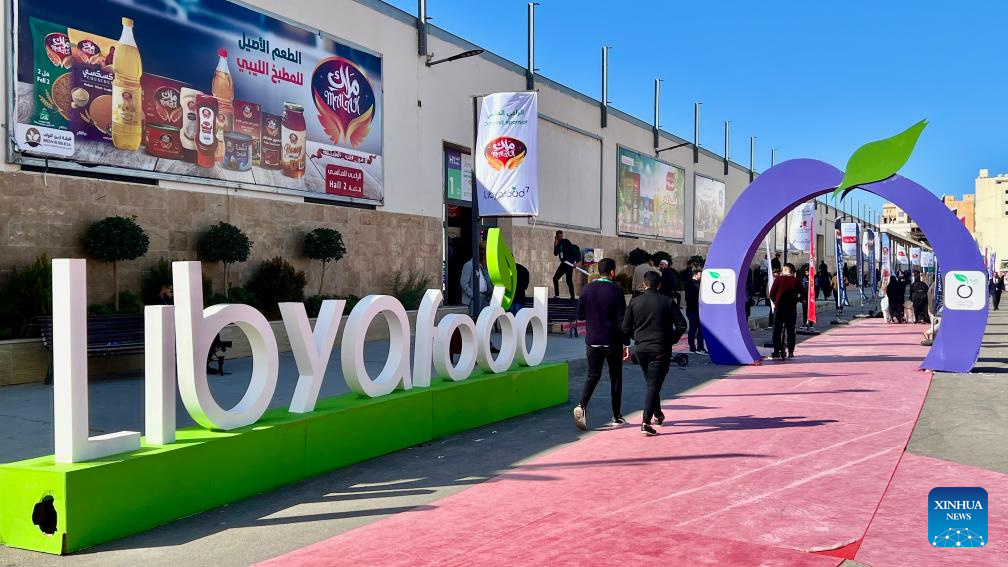
The seventh Libya Food Expo opened in Tripoli this week with a message that goes well beyond product displays and exhibition halls. Libya wants to show that its market can still attract regional and international business. It also wants to turn that interest into something more lasting: stronger food industry capacity, deeper trade ties, and less dependence on imports over time.
The event opened on March 29 and runs through April 1. It brought together 98 international companies from 14 countries, along with more than 100 Libyan firms. Turkey, Egypt, and Tunisia led the foreign presence, giving the expo a clear regional shape. That matters because these are not distant markets making tentative moves. They are Libya’s closest commercial partners, and each already holds a visible position in the country’s food supply chain, consumer goods trade, and industrial links.
That alone gives the expo economic weight. Libya remains a large consumer market with strong import demand, especially in food and packaged goods. Even with political fragmentation and macroeconomic pressure, foreign firms still see room to expand their presence. The turnout in Tripoli reflects that reality.
Yet the bigger story lies in what Libya wants to do with this interest. Officials used the opening to frame the expo as part of a broader push to support local production, improve competitiveness, and build practical commercial partnerships. That ambition matters because Libya’s food economy still relies heavily on imports. The country imports most of its cereal needs and a large share of its broader food basket. That leaves households and businesses exposed to global price swings, shipping disruptions, and exchange rate pressure.
In that context, a food expo is not just a commercial event. It is also a reminder of how much Libya still needs to build at home.
The key question is whether the country can convert exhibition diplomacy into actual industrial gains. If the event simply brings foreign brands into Libya for marketing and distribution, its effect will remain limited. But if it helps attract investment in food processing, packaging, storage, logistics, and cold chain infrastructure, then the value becomes much larger. Libya does not only need more imported products on shelves. It needs stronger domestic capacity behind those shelves.
That point has become more urgent in recent months. Libya still relies on oil exports to generate foreign currency, while importing much of what it consumes. This model leaves the economy exposed on two fronts. It depends on energy revenues to finance imports, and it depends on global trade routes to keep goods flowing into the domestic market. Any disruption in freight costs, shipping routes, or the exchange rate can feed directly into prices at home. Food sits at the center of that risk.
This is where the Tripoli expo matters most. It offers a glimpse of how Libya might start reducing some of that vulnerability. A stronger local food industry will not replace imports overnight. But over time, better processing, better logistics, and stronger local partnerships can reduce pressure on the import bill and improve resilience in the domestic market.
The regional mix of participants also tells its own story. Turkey, Egypt, and Tunisia do not just export to Libya. They compete for position in one of North Africa’s most important consumer markets. That competition can work in Libya’s favor if policymakers use it well. It can create leverage for better supply deals, stronger industrial cooperation, and more technology transfer. It can also create room for Libyan companies to enter joint ventures that move them higher up the value chain.
This matters because Libya often appears in economic analysis only through oil, budgets, and the dinar. Those themes remain central, but they do not tell the whole story. Trade fairs like this one reveal another part of the economy. They show how Libya tries to rebuild commercial normality and attract business activity outside the hydrocarbons sector. Food deserves special attention because it touches inflation, consumer welfare, supply security, and industrial development at the same time.
Still, Libya should not confuse turnout with transformation. A successful expo does not fix the business environment on its own. The country still needs predictable regulation, smoother customs procedures, better infrastructure, and more support for local producers. Without those conditions, foreign participation will generate headlines but not enough follow through. Libya has hosted business events before. The harder task always comes after the speeches end and the stands come down.
For now, the signals look encouraging. International companies still see Libya as a market worth entering. Regional players still want a stake in its food economy. Libyan officials want to use that interest to support local industry. Those facts do not amount to an economic breakthrough on their own. But they do point toward a more useful direction.
For a country that still imports much of what it consumes, that direction matters. Libya does not only need more trade. It needs trade that helps build domestic capacity, strengthen food security, and support a more balanced economy. This week’s Food Expo in Tripoli offered a glimpse of what that could look like.