Libya rarely appears in conversations about renewable energy. That seems strange for a country that enjoys more than 3,200 hours of sunshine every year and some of the highest solar irradiation levels in the Mediterranean. Instead, Libya remains known almost exclusively for oil and gas.
That creates an economic contradiction.
Yet every summer, households and businesses endure electricity shortages while the country burns valuable hydrocarbons to generate domestic power. At the same time, policymakers continue to pursue higher oil and gas exports to Europe. Those two objectives increasingly compete with each other.
Solar energy will never replace Libya’s oil industry. Nor should it. Oil and gas will remain the backbone of the economy for decades. However, renewable energy could strengthen that industry rather than compete with it. The question is no longer whether Libya has enough sunshine. The question is why one of the world’s best solar resources still produces so little electricity.
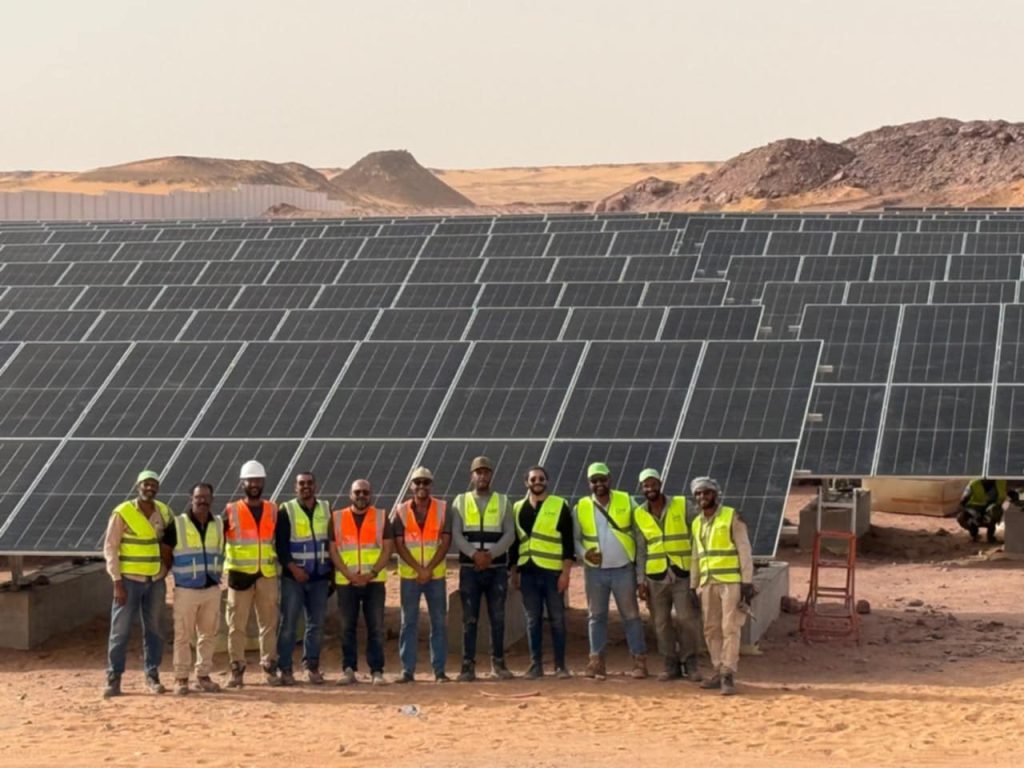
Libya receives average solar radiation between 5 and 7.5 kWh per square meter per day, with even higher levels in the southern desert. Studies estimate that the country possesses one of Africa’s largest solar resources, giving it exceptional conditions for utility-scale solar generation.
An Economic Opportunity, Not Just an Environmental One
Renewable energy often enters the political debate through climate targets. Libya’s case looks different. The strongest argument for solar is economic.
Libya generates almost all of its electricity from natural gas and oil products. Every additional megawatt produced by solar power reduces the amount of fuel needed for domestic electricity generation. That creates an opportunity to redirect more hydrocarbons toward export markets where they generate hard currency.
This logic becomes even more important as Libya seeks to increase natural gas exports to Europe during the coming decade. Higher domestic electricity demand could otherwise consume gas that would generate greater value overseas.
Solar also offers another advantage. Electricity shortages carry real economic costs. Manufacturing slows, businesses invest in expensive backup generators and operating costs rise across the economy. More reliable electricity would improve productivity while reducing dependence on diesel generation.
For investors, energy reliability matters almost as much as tax policy. Countries with stable electricity systems attract more industrial investment because businesses can plan production without constant disruption.
Libya already possesses one ingredient that many developing economies lack: abundant land. Vast areas in the south receive some of the strongest solar radiation anywhere in North Africa. Large-scale projects would not face the same land constraints seen in more densely populated countries.
Across Africa, governments have started turning that natural advantage into investment. Solar installations reached record levels in 2025 as equipment costs continued to fall and battery storage became increasingly competitive. Countries including Egypt, Morocco and South Africa continue expanding utility-scale projects while attracting international capital. Libya, despite arguably enjoying even better solar conditions, remains well behind.
The Plans Exist. Execution Does Not.
Libya has not ignored renewable energy entirely.
The National Strategy for Renewable Energy and Energy Efficiency aims for renewables to provide 20% of the country’s electricity mix by 2035, with cumulative renewable capacity reaching around 4,000 MW. The strategy includes solar photovoltaics, concentrated solar power, wind energy and solar water heating.
Earlier this year, the National Oil Corporation and the Renewable Energy Authority signed a cooperation agreement to develop renewable projects, particularly solar installations serving oil facilities. Officials described the partnership as part of a broader energy transition strategy. International interest also continues to grow.
Chinese companies have expressed interest in renewable energy partnerships, while Libyan authorities have promoted investment opportunities in the sector. Yet implementation remains limited.
Most existing solar deployment focuses on relatively small systems supplying remote communities, water wells and security facilities rather than utility-scale generation. The Renewable Energy Authority has installed hundreds of standalone systems, proving that the technology works under Libyan conditions. However, those projects barely scratch the surface of Libya’s potential.
The gap between strategy and execution reflects broader challenges. Political instability complicates long-term infrastructure planning. Financing large renewable projects requires regulatory certainty, stable power purchase agreements and confidence that contracts will survive political changes. Grid infrastructure also requires significant investment before large solar farms can connect reliably to the national network.
Those obstacles explain the slow progress, but they do not reduce the opportunity.
Libya already attracts billions of dollars into upstream oil and gas development. International companies continue signing exploration agreements because they recognize the country’s geological potential. Applying that same investment logic to renewable energy could create another growth sector alongside hydrocarbons.
Solar should not become an ideological project. It should become an economic one.
Every barrel of oil or cubic meter of gas used to generate domestic electricity represents export revenue that disappears. Every avoided blackout improves business confidence. Every solar project creates engineering jobs, construction activity and new opportunities for local suppliers.
Libya’s future energy mix does not require choosing between oil and solar.
The country’s hydrocarbons will continue funding the economy for years to come. Renewable energy simply offers a way to use those resources more efficiently while strengthening long-term energy security.
Libya already possesses the sunlight. The next challenge involves turning that natural advantage into economic value.