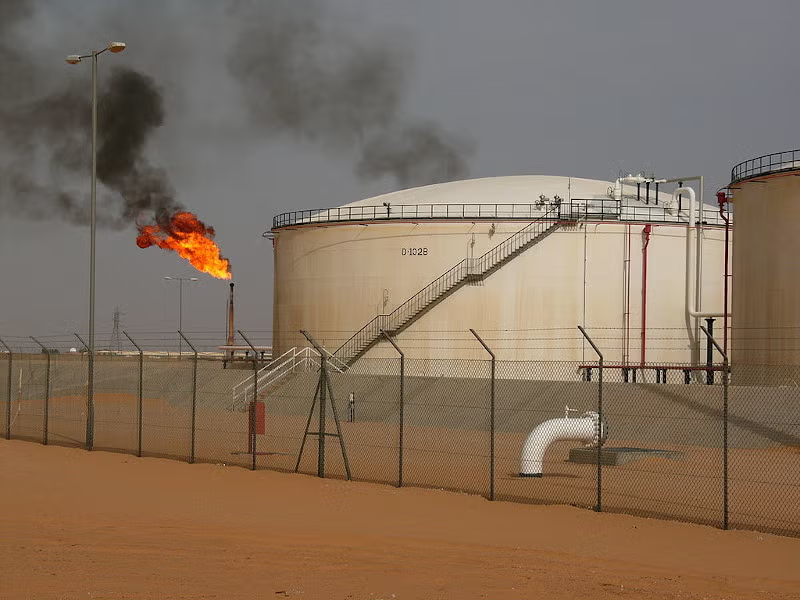
Security Incidents Disrupt Libya’s Oil Output and Exports
Operational Impact on Production and Exports
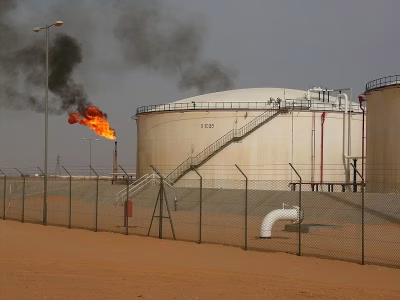
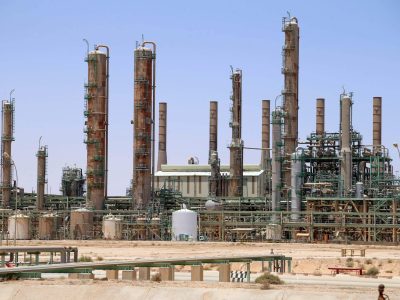
The Sharara complex, with capacity of about 300–320 kbpd, and nearby El Feel, with about 80–90 kbpd, account for a large share of Libya’s output. As of March 2026, Libya’s total crude production stood at roughly 1.3–1.4 mbpd, well above previous levels, according to IEA data. A pipeline fire, caused by a valve leak, forced NOC to split flows at Sharara. It diverted some oil via the 18 inch Hamada line to Zawiya storage, and routed some through El Feel’s pipeline toward Mellitah port. After the fire, Sharara produced at about half its normal capacity. At the same time, the use of El Feel’s pipeline forced El Feel itself offline. Engineers said it had shut since March 18. Combined, these shifts cut Libya’s output by about 150–200 kbpd, or roughly 10–15 percent, from around 1.3–1.4 mbpd to 1.1–1.2 mbpd.
The incidents also affected exports. Before them, Libya exported roughly 0.8–0.9 mbpd of crude, or about two thirds of production. Sharara’s crude normally feeds Zawiya refinery rather than international tankers. El Feel, by contrast, supplies exports via Mellitah port. With El Feel offline, exports likely fell by about El Feel’s capacity, or around 0.08–0.1 mbpd. The table below summarizes approximate pre incident and post incident flows, based on capacity and NOC statements.
Both figures remain approximate. Libya’s NOC confirmed that Sharara kept producing during the incident, though at reduced levels, and aimed to restore full capacity quickly. Engineers said Sharara output was expected to normalize within two days, by March 31. They projected El Feel’s resumption within 7–10 days, which means exports could recover by early April if repairs proceed smoothly.
NOC and Stakeholder Responses
The Tripoli based NOC moved quickly to manage the crisis. On March 18, it notified the public of the Sharara valve leak, confirmed that no casualties occurred, and said firefighting teams were on site. By March 19, NOC said the fire was “fully under control” thanks to national and municipal support. A detailed NOC update that day said production “did not stop completely.” About half of Sharara’s flow continued through alternate pipelines. NOC also praised coordination among its subsidiary companies, including Akakus, Mellitah, and Nafusa Oil, as well as safety forces that managed the blaze.
Officials did not issue a force majeure declaration. Still, the Interior Ministry’s March 24 statement, after the discovery of missile debris, suggested the damage was severe and subject to criminal investigation. NOC also addressed other sector challenges. For example, on March 27 and 28, Libya’s Presidential Council and the national Development Fund, headed by Haftar’s cousin, met on reconstruction and budgets. That meeting underscored the importance of stable oil income for Libya’s economy.
Regional governments also took note. Egypt and Libya reportedly held talks on shipping additional Libyan oil to Egypt, as Egyptian refineries face Gulf supply disruptions. This underscores how Libya’s production, if it remains reliable, can support neighboring states. OPEC+, where Libya remains a special case, was preparing to decide on output policy in early April. Libya remains exempt from cuts and could theoretically expand output, but only if security improves.
Militias and Security Actors
As of late March 2026, no group had publicly claimed responsibility for the Sharara pipeline attack. The Interior Ministry found a Russian M-62 missile and a 130 mm rocket at the site. That discovery strongly suggests deliberate sabotage. Armed groups in Libya’s south and west have targeted oil infrastructure before, often to press local demands. In 2019, for example, a coalition of tribes shut Sharara while demanding services. Foreign mercenaries or radical cells may also seek to undermine Libyan stability.
Without direct evidence, analysts can only speculate on motives. The attack came amid bitter political infighting, with rival governments in Tripoli and Haftar’s east still at odds. Militias may exploit that division. Some groups act on local grievances such as water, payments, and jobs, and may strike if authorities ignore them. Others reflect wider security vacuums. Libya’s Petroleum Facilities Guard once stood divided, and some factions joined or opposed Haftar. The rocket strike on Sharara may reflect these divided loyalties.
At Sharara specifically, NOC had already routed production through El Feel and Hamada pipelines to mitigate risk. The discovery of munitions, along with the priority given to pumping, suggests heightened vigilance by NOC and security forces. International actors, including the UN and EU, and Libya’s Presidential Council continue to emphasize oil sector neutrality. Still, unless authorities integrate all militias under a unified guard, similar incidents will likely recur.
Regional Implications: Gulf Energy Crisis and OPEC+
The attacks on Libya’s pipelines come as global energy markets remain under stress from a wider Middle East crisis. In March 2026, renewed conflict, including a U.S./Israel operation on Iran and a Houthi strike, severely disrupted shipping through the Strait of Hormuz. Prices jumped, with Brent briefly rising above $108 per barrel, on fears of a wider war. In that context, Libya’s 48 billion barrels of reserves and its spare production capacity have drawn attention as a potential alternative supply source.
Industry analysts note that Libya can increase production and exports to partially offset Gulf losses, but political instability remains a major obstacle. Libya’s current output, at around 1.3–1.4 mbpd, remains far below its formal OPEC target of about 2 mbpd. Any sustained increase would require heavy investment and stable security. In the short term, Libya’s immediate shutdowns move in the opposite direction by removing available barrels at a moment of high global risk.
At the same time, OPEC+, to which Libya remains loosely tied, met on March 1 amid tight markets. Sources said the group was considering a small production increase of 137 kbpd for April. Libya, officially outside the voluntary cuts, could nominally raise output to offset Middle East losses. In practice, however, Libya’s own supply constraints, with Sharara and El Feel under repair, limit that option. Still, Egypt’s plan to import more Libyan oil illustrates the regional pivot, as Mediterranean neighbors increasingly view Libya as an energy partner. International stakeholders, including the EU and US, have also flagged Libya’s potential role, but they continue to stress that only a unified political solution can fully unlock it.
Conclusion
The March 2026 Sharara and El Feel incidents highlight the persistent vulnerability of Libya’s oil sector. In the short term, Libya can contain losses by rerouting flows and speeding repairs, but production and exports have still fallen by around 10–15 percent. In a global context already shaped by Middle East conflict, even that modest drop adds to supply anxiety, especially after oil rose above $108 on regional war fears. The real challenge remains systemic. Without stability and unity, every technical failure or militia action can trigger a national economic crisis. Libya’s authorities therefore need to combine security measures with political and economic reform, while external powers must support, rather than undermine, a cooperative Libyan solution. Only then can Libya move from crisis response to a reliable long term oil industry that serves both its people and global energy markets.
The ideas and concepts expressed in this piece are those of the author and do not necessarily reflect the positions of Libya Economic Review. If you would like to contribute to LER, contact us at younis@libyaeconomicreview.com.