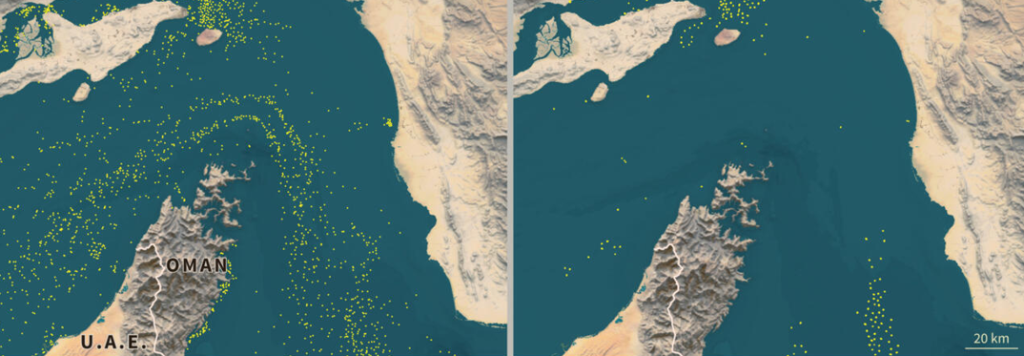
Seven days ago, the world’s energy map was rewritten overnight. As the conflict between the U.S, Israel and Iran escalated into direct confrontation, the Strait of Hormuz, also known as the jugular vein of global oil, clamped shut.
Today, the numbers tell a harrowing story for the global economy. Over 15 million barrels per day, roughly 20% of the world’s supply, are currently stranded behind the blockade. Brent crude, which began the year at $60, erupted this morning to a peak of $119,50, a staggering 100% increase in just over two months. Insurance premiums for Gulf tankers have essentially vanished as underwriters withdraw coverage entirely for the region. But while the Persian Gulf faces a de facto blockade, a different story is unfolding on the southern shores of the Mediterranean.
For the first time in a decade, the “Libyan Risk” is being overshadowed by a much larger global crisis. In fact, this isn’t just a moment of stability for Libya—it’s the country’s time to thrive.
The Logistics of Survival
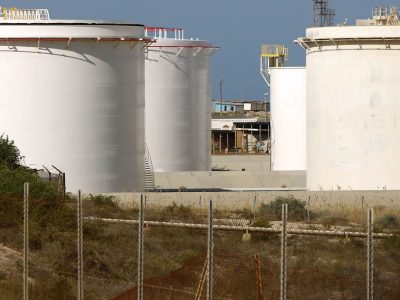
The most immediate advantage Libya holds today is simple: Geography. While tankers in the Gulf are facing drone threats and “Notice of Cancellation” insurance clauses, Libyan terminals like Es Sider and Ras Lanuf are operating in a “safe zone.”
We call this the “Zero-Chokepoint Premium.” Because Libyan oil moves directly into the Mediterranean, it bypasses the current naval war zone entirely. For a European refiner, a barrel of Libyan crude isn’t just energy; it’s a shipment that doesn’t have to run through a barrage of missiles. In a week where other oil shipments are being forced to take the ‘long way’ around the entire continent of Africa—adding nearly 20 days to their journey—Libya’s 48-hour ‘hop’ to Italian and Greek refineries is a massive competitive edge.
A “Sweet” Solution to a “Sour” Problem
It isn’t just about how the oil gets out, but what is inside the barrels.
Much of the oil currently trapped in the Gulf is “sour” (high sulfur). Libya, however, is famous for its light, sweet crude. This type of oil is the “gold standard” for refiners because it’s easier and cheaper to turn into gasoline and diesel.
With a global deficit of 20 million bpd hitting market balances this week, refiners are desperate for “plug-and-play” oil. Libya’s crude fits this need perfectly, making our exports—which averaged 1.375 million bpd in 2025—the most sought-after barrels on the planet right now.
The Timing of the Renaissance
The true “shining moment” for Libya comes from a string of recent domestic successes that now feel like a masterstroke of timing:
- The Mabruk Field Restart: On March 1, the NOC officially resumed production at the Mabruk field, targeting an initial 25,000–30,000 bpd. After a decade-long shutdown, its return at the exact moment the world lost its primary supply route is a massive symbolic victory.
- The $20 Billion Waha Deal: The landmark 25-year agreement signed in late January with TotalEnergies and ConocoPhillips is already bearing fruit. The deal aims to push production at the Waha concessions from 400,000 bpd toward a massive 850,000 bpd.
- Aggressive Targets: The National Oil Corporation (NOC) has set a clear path: 1.6 million bpd by the end of 2026 and 2.0 million bpd by 2030. With $3–4 billion in short-term rehabilitation capital already being deployed, these aren’t just dreams; they are active projects.
The Bottom Line: From Wildcard to Anchor
For years, the world looked at Libya as the “unstable” producer—the one that might shut down tomorrow due to internal politics. But as of March 2026, the tables have turned. Compared to the total war unfolding in West Asia, Libya’s current “Tripoli-Benghazi detente” looks like a beacon of relative stability.
If the NOC can keep the momentum and reach that 1.6 million bpd target, Libya won’t just be a participant in the oil market, it will be its Mediterranean anchor. The world needs oil that can travel safely, and Libya is one of the few places left that can deliver it. It is time for the sector to step up and show the world that Libya is no longer the risk: it is the solution.