Libya Security Sector Reform Talks Resume as UN Pushes Military Unification
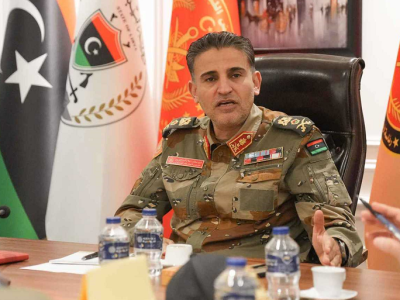
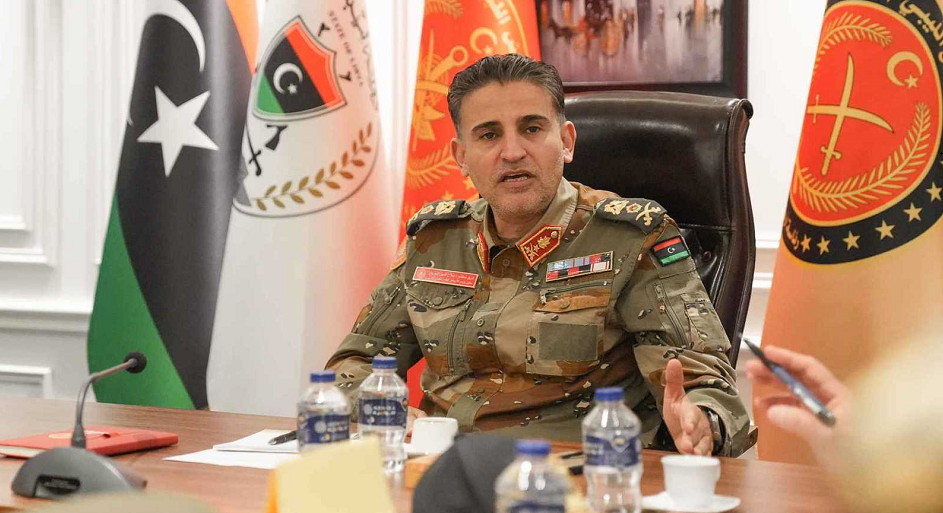
Libya’s Chief of General Staff, Gen. Salah al-Din al-Namroush, met Jan. 21 with the U.N.’s head of Security Sector Reform to discuss the UN-backed “security track” for Libya. In a brief press release, the Libya Observer reported that the meeting addressed U.N. and international efforts aimed at unifying the military institution and enhancing border security, and that al-Namroush reaffirmed his full support for continued cooperation on those initiatives. The official statement gave no details on concrete steps.
Road Map and the Security Track
Libya remains split between two rival administrations. The UN-recognized Government of National Unity (GNU) in Tripoli and an eastern-based Government of National Stability (GNS), backed by Gen. Khalifa Haftar’s Libyan National Army, are still deadlocked over elections, budgets and a planned interim unity government. In fact, the standoff has persisted since the indefinite postponement of a 2021 national election. In effect, the country operates as separate states with parallel security forces, each suspicious of the other. To bridge this gap, UNSMIL and international partners promoted a three-track “roadmap” last year, covering security, economic and governance dialogues.
Within that framework, the Tripoli meeting was intended to jump-start progress on the security track. A recent UN strategic review specifically urged that the security track be refocused from enforcing a ceasefire toward “confidence-building and reunification of military and security institutions”. Al-Namroush’s public backing of the UN effort suggests he is, at least officially, on board with that agenda. Still, past UN-sponsored military dialogues have often faltered, and observers note that much work remains before any real change appears.
Economic and Institutional Challenges
Libya’s economic crisis casts a long shadow over any security initiative. In mid-January the Central Bank devalued the dinar by about 15%, citing the “adverse effects of ongoing political divisions, declining oil revenues, and persistent economic challenges,” including “the lack of a unified general state budget”. The IMF notes that the rival administrations have yet to agree on a single budget, leading to unchecked spending and large fiscal and current-account deficits. In practical terms, Libya’s economy remains starved for investment, with public salaries and services squeezed.
Indeed, a UN strategic review last year stressed that economic reforms are equally “essential” to Libya’s transition and urged that this track be strengthened. Yet ordinary Libyans have seen little relief: hospitals and schools are underfunded and salaries often delayed. Without tangible improvements – for example, reliable utilities or safer highways – many citizens may view the security dialogue as distant from daily needs and begin losing patience with the peace process.
Against this backdrop, Libyan officials have moved to show that politics will not freeze the economy. Tripoli is hosting an international Energy & Economy Summit Jan. 24–26 to attract foreign investment into oil, gas and renewable energy projects. Its program includes ministerial panels, project roundtables and the signing of agreements on energy infrastructure. But the summit also underscores a key reality: foreign investors will closely watch Libya’s security and governance before committing major funds.
Libya’s security and economy are intertwined in concrete ways. A unified border force or national police campaign could curb rampant fuel smuggling and migrant trafficking, which cost Libya billions annually. Similarly, a single command might better protect oil facilities, pipelines and ports – the lifelines of the economy. Conversely, if elections and budgets remain in limbo, many militias and local strongmen will feel little pressure to demobilize. Experts say that without parallel progress on political, security and economic tracks, efforts at stability will falter.
For now, Libya’s political stalemate is unchanged. Gen. al-Namroush’s support for the UN process is a positive symbol, but by itself it yields no institutional changes. There is still no unified government to implement a military integration plan or manage a consolidated budget, and no agreed timetable for national elections. U.N. officials report that other tracks – including economic reform – are similarly stalled by mutual distrust. The true test of this meeting’s significance will be whether it is followed by tangible steps such as unified payrolls, joint military exercises or a consolidated budget.
The Tripoli meeting was a modest sign that Libya’s army leadership is at least engaging with the U.N.’s roadmap. It also highlighted how incomplete Libya’s state still is. Without parallel progress on budgeting, rule of law and economic reform – the very tracks identified by UNSMIL and the Security Council’s roadmap – a military unification effort can only be partial. Libyan analysts emphasize that security cannot improve without institutional and economic reforms being advanced in parallel. In practical terms, this means future stability will be judged not only by military integration, but by whether Libya ends up with a unified budget, effective institutions and better public services. For ordinary Libyans, the coming months will test whether these high-level talks start yielding everyday benefits, such as restored salaries or safer streets.