A Strategic Window Opens
The recent ceasefire between the United States and Iran, which reopened the Strait of Hormuz, triggered a notable drop in oil prices. For Libya, this represents a potential strategic opportunity: the Gulf crisis has left a temporary gap in global supply that Tripoli could fill. Yet, this window also intensifies scrutiny on Libya’s ability to deliver consistently.
Libya’s production has reached 1.43 million barrels per day, its highest level in more than a decade. As global oil prices softened, European buyers began recalculating their sourcing strategies, eyeing Libyan crude for its proximity, high quality, and ease of refining. The question now looms: can Libya establish itself as a reliable supplementary supplier during periods of instability?
The announcement of the truce contributed to a 13-16% drop in Brent crude prices, pushing it below the $100-per-barrel mark, while West Texas Intermediate (WTI) experienced a similar decline. Energy trading desks across Europe and Asia are revising their risk assessments, weighing the likelihood of a sustained peace against the potential resumption of conflict.
Libya’s oil, known for its light, sweet grade, is increasingly attractive to European refiners seeking alternatives to Russian supply. The temporary easing of Gulf tensions has calmed the panic that gripped markets in recent weeks, but it also redirects attention to Libya’s deeper challenge: sustaining production and market confidence over the long term.
Production Surge vs. Stability Risks
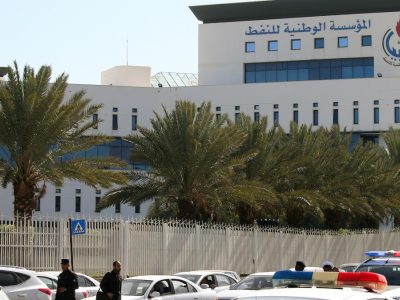
The surge in Libyan output underscores the country’s potential to capitalize on regional disruptions. The National Oil Corporation (NOC) reports daily production reaching 1.43 million bpd, compared with 1.28 million bpd last February. This marks the highest output in over ten years and signals operational improvements at key fields and ports.
This rise aligns with the NOC’s ambition to hit 2 million bpd by 2030, a target that has sparked renewed interest from international majors including Eni, Total, and BP. The prospect of tapping Libya’s high-quality crude in a period of market volatility positions the country as an attractive, if temporary, alternative supplier.
Yet the truce presents a double-edged sword. With Gulf oil flows restored, the so-called “risk premium” that previously elevated Libyan crude prices diminishes. Libya now faces sharper competition, forcing it to demonstrate not only production capacity but reliability and consistency.
Former Oil Minister Mohamed Aoun highlights that the obstacles are not purely technical. “The main issues are transparency gaps and revenue management,” he argues, warning that corruption within Libya’s oil sector signals structural weaknesses that could threaten supply sustainability. Traders remain cautious, seeing Libyan crude as a stopgap rather than a stable long-term option.
Political fragmentation adds further complexity. Division between Tripoli and Benghazi has long impeded major investment and infrastructure development. According to Aoun, this institutional split is the “real valve” limiting Libya’s potential, keeping production and investment hostage to fragile political consensus.
The Oil Paradox and Available Opportunities
The Hormuz truce may offer a temporary reprieve for global markets, but its limited duration—only a few weeks—means uncertainty remains. About 30% of global seaborne oil still depends on Gulf stability, highlighting the fragility of global supply chains.
Libya’s internal risks run deep. Political and security fragmentation, coupled with factional control over key fields and ports, could quickly reverse production gains. Ongoing judicial disputes and competing claims over revenue could see output fall back to previous lows. This volatility reinforces the perception among traders that Libyan crude is an emergency option rather than a dependable supply.
While Libya holds geographic and operational advantages—proximity to European refineries, high-quality crude, and improving field stability—structural challenges persist. Temporary crises like the Hormuz disruptions create openings, but without institutional reform and political agreement, Libya’s role remains short-lived.
The truce illustrates a broader paradox: countries most poised to benefit from global disruptions often lack the institutional capacity to transform opportunities into sustainable gains. For Libya, this means that high production levels could remain a fleeting window rather than a permanent shift in market position.
To become a globally influential energy player, Libya must stabilize its political landscape and reform its institutions. Only then can the country convert temporary advantages into long-term credibility and secure a consistent market share in a sector that rewards reliability as much as volume.
The ideas and concepts expressed in this piece are those of the author and do not necessarily reflect the positions of Libya Economic Review. If you would like to contribute to LER, contact us at younis@libyaeconomicreview.com.