
The African Union’s Future in Conflict Management
Since its establishment in 2002, succeeding the Organization of African Unity, the African Union has sought to move beyond the strict non intervention doctrine that defined the post independence era. In its place, it adopted the principle of non indifference, asserting the right of the continent to act in cases of war crimes, genocide, and serious threats to constitutional order.
This shift reflected a growing awareness that Africa cannot achieve sustainable development and stability without building its own mechanisms to manage crises rather than relying primarily on external intervention. Yet the gap between institutional ambition and realities on the ground remains significant, making the Union’s future role in conflict management an urgent question.
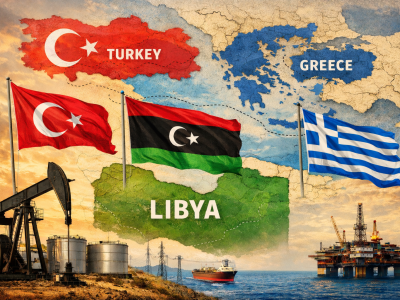
Libya offers one of the clearest illustrations of what is at stake. Since 2011, the country’s fragmentation, cross border arms flows, and prolonged political division have embodied precisely the type of conflict environment the African Union seeks to address. At the same time, the Union’s limited influence in the Libyan file has raised important questions about its reach in North Africa and its capacity to shape outcomes in complex crises.
Over the past two decades, conflicts across Africa have ranged from protracted civil wars and recurring military coups to cross border insurgencies and the expansion of armed groups in the Sahel and the Horn of Africa. This diversity has consistently tested the Union’s capacity for timely and effective action while exposing internal political divisions and financial constraints.
Institutionally, the African Union has developed a relatively sophisticated architecture for conflict management, including the Peace and Security Council, the Continental Early Warning System, and the framework for peace support operations. Efforts to establish an African Standby Force under the African Capacity for Rapid Response to Crises reflect serious intent. Still, these mechanisms have often been limited by uneven political commitment among member states and heavy reliance on external funding, particularly from the United Nations and the European Union.
The future of the Union’s conflict management role depends first on closing this funding gap. Dependence on external financing constrains decision making autonomy and undermines long term operational sustainability. The proposed 0.2 percent import levy was designed to generate predictable internal resources, yet implementation remains incomplete. Securing stable, self generated funding would significantly enhance credibility, strategic planning capacity, and operational independence.
Libya’s prolonged institutional division underscores these limitations. While the United Nations has led the primary mediation track, the African Union has often appeared secondary despite Libya’s geographic and political centrality to the continent. A more financially autonomous Union could contribute to a more balanced mediation architecture, one that integrates African security concerns such as Sahel spillover, migration flows, and regional economic integration.
Political will represents the second decisive factor. Responses to military coups have revealed inconsistencies across member states. In some cases, the Union has suspended memberships and imposed sanctions. In others, its leverage has been limited. These variations reflect the complexity of Africa’s political landscape, where sovereignty concerns, regional alignments, and economic interests intersect.
At the same time, there is growing recognition across the continent that the cost of instability now exceeds the cost of preventive engagement. Conflicts rarely remain confined within borders. Arms trafficking, irregular migration, and extremist movements quickly spill into neighboring states. This awareness may encourage more coherent collective action in the years ahead.
The relationship between the continental body and sub regional organizations is equally critical. Groupings such as ECOWAS in West Africa and IGAD in East Africa often possess deeper contextual knowledge and faster response capacity. However, coordination between continental and regional levels must be strengthened to avoid fragmented or competing initiatives.
Africa’s rising geopolitical importance adds another layer of complexity. The continent has become central to global energy, resource, and market calculations. This presents both opportunity and pressure. Effective conflict management would reinforce the Union’s standing as a credible partner and reduce the risk of external rivalries translating into security competition on African soil.
Perhaps the most transformative challenge lies in shifting from reactive crisis response to genuine conflict prevention. Intervening after violence erupts is costly in political, financial, and human terms. Investing in early warning systems, strengthening national institutions, and promoting accountable governance offers a more sustainable path. Linking security to development and addressing root causes such as economic marginalization, state fragility, and resource disputes remains essential.
From a Libyan perspective, this preventive dimension is not abstract. Instability in the Sahel directly affects Libya’s southern borders, oil infrastructure, trade corridors, and investment climate. A more proactive continental security framework would reduce risk exposure, support regional transport connectivity, and reinforce Libya’s potential role as a commercial bridge between North Africa and sub Saharan markets.
Engaging civil society, research institutions, and traditional leadership structures can also enhance the durability of mediation efforts. Contemporary conflicts involve layered local dynamics that require inclusive approaches to achieve sustainable outcomes.
Ultimately, the African Union’s future in conflict management will be determined not only by its ability to deploy missions but by its success in cultivating a continental understanding that security is a shared responsibility. For Libya, whose prosperity depends on regional stability and predictable governance frameworks, revitalizing the Union is not simply a continental aspiration. It is a strategic necessity. A coherent and self reliant African security architecture would contribute directly to Libya’s economic recovery, effective border governance, and deeper reintegration into African markets.