Tripoli Port Upgrade Signals Shift in Libya’s Logistics Strategy
Modern Equipment and Digital Upgrades Are Streamlining Tripoli Port Operations
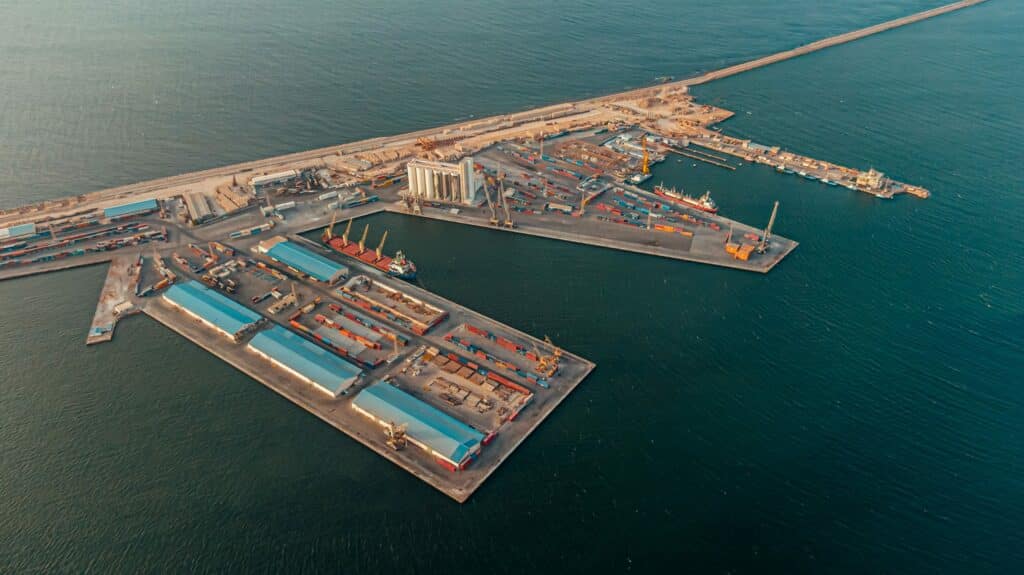
As part of ongoing Libya port modernization efforts, Tripoli Port has received a specialized Kone crane-type grab, delivered via the Turkish branch of Portunus. While technical at first glance, this upgrade signals something practical: the port is moving beyond stopgap repairs and toward incremental capacity building. Together with ongoing customs digitization, the port is gradually transforming into a more efficient gateway for Libya’s national market.
In a Mediterranean logistics market defined by speed and efficiency, equipment like this is not cosmetic. It determines how quickly bulk cargo is discharged, how long vessels wait offshore, and ultimately how much importers pay to land goods. For an economy still heavily exposed to Brent crude, reducing friction at the ports is one of the few immediate levers available to ease supply bottlenecks and price pressures.
The upgrade is modest in scale but targeted in impact. Tripoli has long struggled with discharge delays that raise storage costs and slow distribution into the capital. Improving turnaround times will not transform Libya into a transshipment hub overnight, but it can stabilize supply chains serving the country’s largest consumer base.
The contrast with Misurata is instructive. The $2.7 billion expansion of the Misurata Free Zone, with its ambition to handle up to 4 million TEUs, is designed to reposition Libya within regional trade networks. Tripoli’s modernization, by comparison, is more immediate and domestic in focus: upgrading existing berths, improving handling equipment, and gradually digitizing customs processes to reduce clearance times.
Viewed together, these efforts suggest a clearer division of roles among Libya’s ports. Misurata is being shaped into a high-volume industrial platform. Tripoli is evolving into a more efficient gateway for the national market. In the east, Benghazi continues to build heavy-lift and reconstruction capacity, linking eastern Libya more directly to Egypt and Greece.
What stands out is the growing involvement of foreign technical partners, particularly Turkish and European firms. Hardware is arriving alongside procedural reforms. Customs digitization and energy integration projects indicate that policymakers understand that infrastructure today extends beyond cranes and quays.
Libya’s port zones are gradually becoming economic laboratories. If they succeed, the country’s competitive advantage will rest less on hydrocarbons alone and more on geography: positioned between Europe, North Africa, and the Sahel.
The new grab in Tripoli will not, by itself, reshape Mediterranean trade routes. But if it reduces congestion and improves reliability, it marks the beginning of something more consequential: a shift toward operational discipline. In a country long defined by volatility, consistency may prove the more valuable upgrade.