Most of western Libya suffered a major electricity blackout overnight after a technical fault at the Zawiya power station triggered a wider disruption across the western grid.
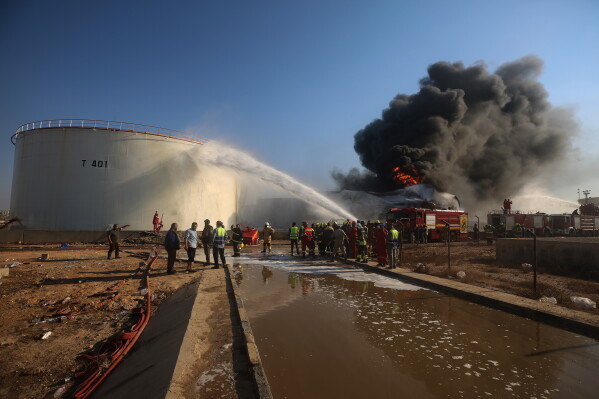
The General Electricity Company of Libya (GECOL) said specialized teams were working to identify the cause of the incident and restore supply. Electricity began returning gradually to several areas, with the company expecting the grid to stabilize within a short period. Libya Herald reported that the initial reports of an explosion raised concerns about another attack, but officials and emergency responders said there was no evidence that the latest incident resulted from a military strike.
The distinction matters. Zawiya has faced repeated attacks on its energy infrastructure over the past week, but the latest blackout appears to have resulted from a technical failure rather than a new attack.
Zawiya Has Become a Critical Point of Failure
The latest outage highlights a deeper problem for Libya’s power sector: the western grid remains heavily exposed to disruptions at a small number of major facilities.
The Zawiya power station has a generation capacity of about 1,300 megawatts and plays a major role in supplying the western electricity network. Earlier this week, an attack on the South Zawiya substation caused widespread outages, while more than 700 MW of the Zawiya plant’s capacity remained unavailable. U.S. engineering company GE also suspended work and withdrew its technical teams because of security concerns.
That means the latest technical failure did not occur in isolation. The plant and surrounding grid infrastructure were already operating under severe pressure.
Zawiya also hosts Libya’s largest operating refinery, with a capacity of 120,000 barrels per day, making the city an unusually important concentration of both electricity and oil infrastructure. Recent attacks on fuel storage facilities and power assets have therefore created risks that extend beyond electricity supply and into Libya’s wider energy system.
The sequence illustrates the problem clearly: when generation capacity, transmission infrastructure and oil facilities are concentrated in the same area, disruption at one point can quickly spread through the wider energy system.
Libya’s Electricity Problem Is Bigger Than One Blackout
The immediate priority remains restoring stable electricity to households and businesses. But the latest incident also raises questions about the resilience of Libya’s power network. The World Bank has identified maintenance constraints, insufficient investment and weaknesses in GECOL’s operational performance as longstanding problems for Libya’s electricity sector. It also noted that load shedding has remained a tool for preventing wider grid failures.
Security now adds another layer to those structural problems. A plant can have sufficient nominal generation capacity on paper and still fail to deliver reliable electricity if generating units remain offline, maintenance is delayed or transmission infrastructure becomes unavailable That is precisely the risk facing western Libya.
Indeed , the recent attacks already removed substantial generation capacity from the system. The latest technical failure then triggered a much broader blackout, demonstrating how little room the network has to absorb another disruption. For Libya’s economy, that matters well beyond household inconvenience. Power interruptions affect industrial activity, fuel distribution, water infrastructure, telecommunications, commercial operations and the ability of companies to plan production.
The country’s push to raise oil output and attract international investment also depends on reliable infrastructure around its energy sector.
Libya has made progress on crude production and is seeking billions of dollars in new investment across oil and gas. But investors will also look at whether the infrastructure supporting those assets can operate reliably.
The latest blackout therefore sends a straightforward message: Libya does not only need more electricity generation. It needs a power system capable of absorbing failures without taking large parts of the western economy offline.
Zawiya’s experience shows how difficult that remains.