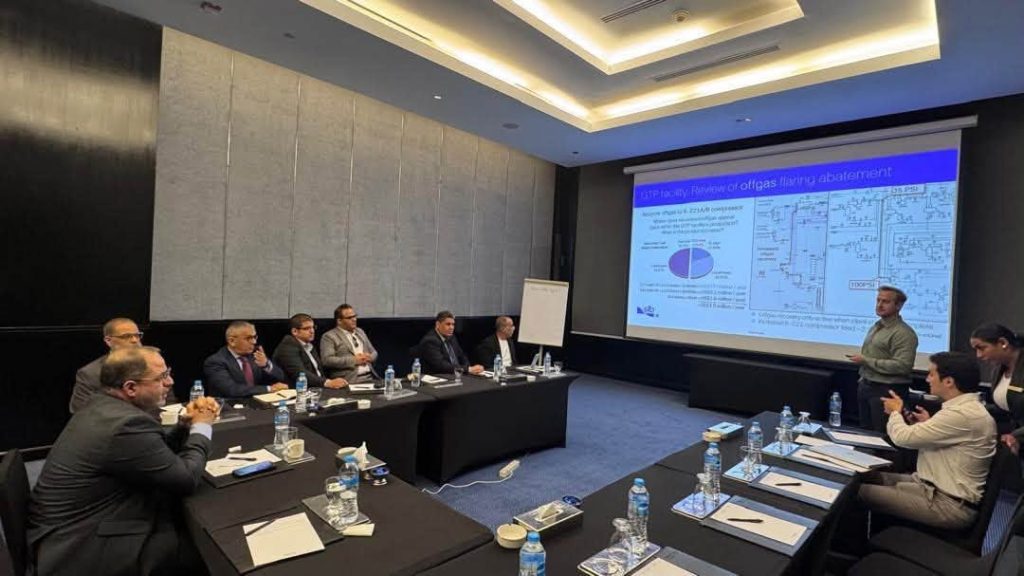
Libya’s National Oil Corporation (NOC) is advancing plans to capture around 34 million cubic feet of gas per day at the Messla and Sarir oil fields, as the country seeks to reduce gas flaring and make better use of its energy resources.
The NOC held discussions with US oilfield services company SLB and a technical team from the Arabian Gulf Oil Company (AGOCO) to review the first phase of an engineering study for a gas system at the two fields. AGOCO operates both fields.
The project aims to capture associated gas that operators currently flare and redirect it towards productive use. The parties agreed to move into the second phase of the study, which will produce a detailed technical assessment by the first quarter of 2027.
According to the NOC’s announcement, the study will provide the basis for a comprehensive plan ready for implementation.
Libya looks to reduce gas flaring
The project forms part of the NOC’s 2030 Initiative, which aims to reduce gas flaring across Libya’s oil and gas sector.
Oil production often brings associated natural gas to the surface. When operators lack the infrastructure to collect, process or transport this gas, they may burn it at production sites. This practice wastes a potentially valuable energy resource and releases carbon dioxide and other pollutants into the atmosphere.
Capturing 34 million cubic feet per day at Messla and Sarir would allow Libya to recover a significant volume of gas that currently goes unused. The recovered gas could support domestic energy supply and create additional economic value, although the NOC has not yet detailed the project’s final processing arrangements or intended end users.
The initiative also reflects a wider challenge for Libya’s energy sector. The country needs investment in gathering systems, processing facilities and pipelines to make better use of its gas resources. Without this infrastructure, higher oil production can also mean higher volumes of associated gas that operators struggle to utilize.
SLB partnership moves into the next phase
SLB, formerly known as Schlumberger, brings international engineering and oilfield technology expertise to the project. Its initial study has provided the technical basis for the next stage, while AGOCO will contribute operational knowledge from the two fields.
The second phase will examine the technical requirements in greater detail and prepare an implementation-ready plan by early 2027. This will help determine the infrastructure and investment needed to move from engineering studies to actual gas recovery.
For the NOC, the project offers an opportunity to advance its flaring reduction targets while increasing the value Libya extracts from existing oil production. It also gives SLB a role in supporting the country’s efforts to modernize its energy infrastructure.
However, the project remains at the study stage. The next milestone will be the completion of the detailed technical assessment, followed by decisions on implementation, financing and construction.
If the project moves forward, Messla and Sarir could become an important example of how Libya can reduce waste, improve energy efficiency and turn associated gas into a more productive resource.