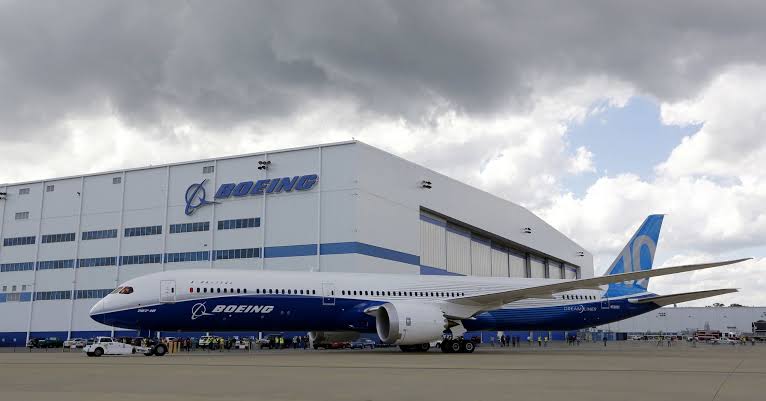
Libya is turning to Boeing to help develop the workforce for its planned new national carrier, Libyan United Airlines (LUA), as the government moves forward with plans to modernize the country’s aviation sector. The discussions highlight a challenge that extends beyond acquiring aircraft: building the technical expertise, management capacity and skilled workforce needed to operate a competitive airline.
On November 5, Mustafa Al-Mana, head of the Executive Team for the Prime Minister’s Initiatives and Strategic Projects, held a virtual meeting with Boeing representatives to discuss human resource development for the new airline. The talks focused on identifying the professional, administrative and technical skills required to establish and operate the company.
Boeing representatives included Ibrahim Alfarhan, Marketing Director, Karim Freund, Account Director for the Middle East and Africa at Boeing Global Services, and Michael Castle, a senior aviation consultant.
According to the government, the discussions explored specialized training program that would transfer Boeing’s technical and operational knowledge to Libyan personnel. The objective is to develop a national workforce capable of managing the airline and meeting international aviation standards.
Libya’s New Airline Needs More Than Aircraft
The latest discussions reflect a broader challenge facing Libya’s aviation ambitions. Launching a new airline requires more than securing aircraft and establishing routes. Airlines depend on trained pilots, aircraft maintenance engineers, flight operations specialists, safety managers and experienced administrative teams.
Developing these capabilities locally could reduce the airline’s dependence on foreign expertise over time while creating skilled employment opportunities for Libyans. It could also strengthen the country’s wider aviation industry by expanding the pool of qualified personnel available to airlines, airports and maintenance operators.
However, the government has yet to disclose the number of Libyans who will enter the proposed training programmes, the qualifications they will receive or the timetable for implementation.
The distinction matters. Discussions with an international manufacturer can provide access to valuable expertise, but the long-term benefits will depend on whether Libya translates that cooperation into structured training, internationally recognized qualifications and practical experience.
Boeing Partnership Faces a Wider Aviation Challenge
The workforce discussions form part of a broader cooperation framework between Libya and Boeing. In May 2026, the Tripoli-based government announced a strategic agreement with the American aerospace company covering support for modern aircraft acquisition, technical cooperation and the development of aviation infrastructure.
The partnership reflects the government’s ambition to establish Libyan United Airlines as a modern carrier with a sustainable operational and financial model. Yet the project must address several challenges before it can achieve that objective.
Libya’s aviation sector continues to face infrastructure constraints, institutional weaknesses and the consequences of years of disruption. Safety oversight and regulatory capacity will also play a central role in determining the country’s ability to expand international operations.
The government therefore needs to connect workforce development with improvements in aviation regulation, airport infrastructure, maintenance capabilities and operational management. Without progress across these areas, training alone will not deliver a competitive airline.
Libya has recently taken steps to restore international air connections. Air Algérie resumed direct flights between Algiers and Tripoli on October 28, after a 12-year suspension, highlighting the potential for stronger regional connectivity. Read more about the return of Air Algérie flights to Tripoli.
For Libyan United Airlines, the next test will be turning government ambitions and international partnerships into a functioning business. Boeing’s expertise could help build the technical foundations, but the airline’s success will ultimately depend on effective management, consistent investment, regulatory progress and the development of a skilled Libyan workforce.