Libya has lost more than $30 million in potential oil revenue after an armed group shut down the Hamada pipeline for over 20 days, highlighting the financial cost of disruptions to the country’s energy infrastructure.
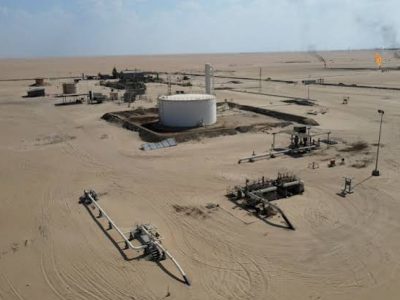
The National Oil Corporation (NOC) said the closure has prevented the production and transport of 302,778 barrels of crude oil, with losses reaching $30.79 million. The disruption has affected the Al-Hamada fields (NC5 and NC8) and the Al-Tahara field (NC4), which Arabian Gulf Oil Company (AGOCO) operates.
According to the NOC, the affected fields have lost an average of 14,418 barrels per day, equivalent to around $1.47 million in daily oil revenue. These figures do not include the additional fixed operating costs that the companies continue to face.
Pipeline disruption adds pressure to Libya’s oil sector
The NOC condemned the attack on the pipeline and called on the relevant authorities to restore operations and protect the country’s oil infrastructure.
The closure comes as Libya works to increase crude production and attract international investment. The NOC has made higher production capacity a central priority, while international energy companies have shown renewed interest in exploration and development opportunities.
However, repeated disruptions to pipelines and oil facilities continue to threaten these ambitions. Even when fields have the capacity to produce, security problems and access restrictions can prevent crude from reaching export terminals.
The latest incident also demonstrates how quickly an infrastructure disruption can translate into significant financial losses. At the reported rate of $1.47 million per day, every additional day of closure adds considerable pressure to public revenue.
Oil security remains central to production growth
Libya depends heavily on oil exports to finance public spending, making stable production and uninterrupted exports essential to the country’s economic outlook.
The Hamada pipeline closure highlights the gap between Libya’s production ambitions and the infrastructure security needed to achieve them. For potential investors, the ability to maintain reliable operations remains an important consideration alongside reserves, licensing terms and development costs.
Restoring the pipeline and preventing further attacks will therefore be important not only for the affected fields but also for Libya’s wider efforts to expand oil production and strengthen revenue.