Libya holds Africa’s largest proven oil reserves, yet years of instability have kept much of its potential untapped. That may be starting to change. TotalEnergies, ConocoPhillips, Chevron and Eni are expanding their presence in the country, signalling renewed interest from major international energy companies. Despite persistent risks, a new wave of investment could reshape Libya’s oil sector.
Major oil companies are making long-term commitments
One of the strongest signs of renewed international interest came in January 2026, when Libya signed a 25-year development agreement with France’s TotalEnergies and US-based ConocoPhillips covering the Waha oil concessions.
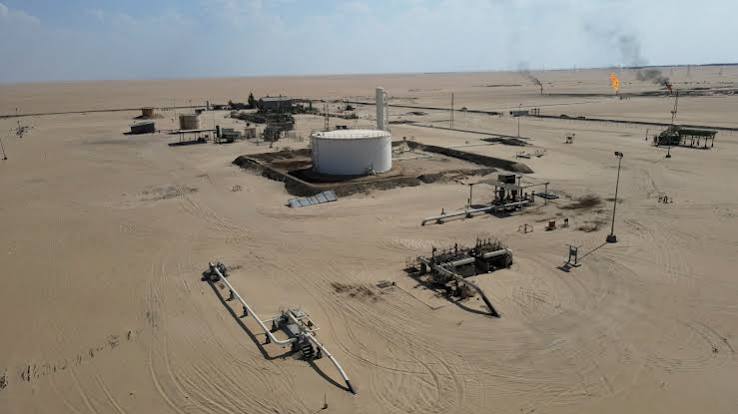
The agreement involves more than $20 billion in foreign-financed investment and extends the concessions until 2050. It also creates opportunities to increase production across the Waha fields, which currently produce around 370,000 barrels of oil equivalent per day. One of the first priorities is the development of the North Gialo field, which TotalEnergies expects to add approximately 100,000 barrels of oil equivalent per day.
The deal gives both companies a longer investment horizon in one of Libya’s most important producing areas. It also focuses on expanding existing assets rather than simply acquiring new exploration acreage. This could deliver production gains sooner than projects that still require years of exploration and development.
TotalEnergies has operated in Libya since 1956 and averaged 113,000 barrels of oil equivalent per day in the country during 2025. ConocoPhillips holds a 20.42% interest in the Waha concessions alongside TotalEnergies, while the National Oil Corporation (NOC) retains a 59.16% stake.
The agreement is particularly important because it demonstrates that major Western companies are willing to commit substantial capital to Libya despite the country’s political and security challenges.
Chevron, Eni and Repsol expand their positions
The country’s first oil and gas licensing round since 2007 provided another indication of international interest. In February 2026, the NOC announced five successful bids across the Sirte and Murzuq basins and offshore areas of the Mediterranean.
US oil major Chevron secured the onshore S4 exploration block in the Sirte Basin, marking a return to Libyan exploration. The company subsequently signed a production-sharing agreement with the NOC in August, establishing a framework for exploration and development activities.
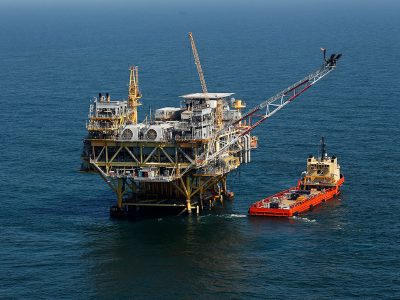
Italy’s Eni and QatarEnergy secured offshore Area 01 in the Sirte Basin. The consortium plans to conduct seismic surveys and drilling during the initial five-year exploration period, with Eni acting as operator.
Spain’s Repsol also secured new acreage through partnerships with Hungary’s MOL and Türkiye’s TPAO. The companies received interests in offshore and onshore exploration areas, adding to Repsol’s existing operations in Libya.
Repsol already holds interests in the Sharara oil field through Akakus Oil Operations, alongside the NOC, TotalEnergies, OMV and Equinor. Its latest agreements provide opportunities to expand its exploration activities and strengthen its position in the country’s upstream sector.
The NOC moved these projects forward in June, signing three production-sharing agreements with the Eni-QatarEnergy consortium, the Repsol-TPAO-MOL partnership and Repsol and TPAO.
These developments also build on Eni’s wider presence in Libya’s energy sector. The Italian company has operated in the country since 1959 and remains a major player in its natural gas industry. Its continued investment in offshore gas infrastructure could also strengthen Libya’s position as a supplier to European markets. LER previously examined the company’s Libya offshore gas subsea tender.
However, the latest licensing round also revealed the limits of international interest. Only five of the 22 available blocks attracted successful bids, despite 37 companies qualifying to participate. Shell, BP and ExxonMobil did not submit binding bids, while TotalEnergies also stayed out of the round despite its separate long-term investment in the Waha concessions.
This distinction is important. The licensing round did not produce the broad participation that Libyan authorities had hoped for, but it does not capture all the investment taking place across the country’s oil sector.
Political and security risks remain the biggest obstacle
Despite renewed investment, Libya still faces challenges that could limit the pace of development. Political divisions between eastern and western authorities, disputes over oil revenues and recurring security incidents continue to create uncertainty for international operators.
Oilfield shutdowns remain a particular concern. In September, the closure of a pipeline valve disrupted flows from the Sharara oil field, forcing the NOC to warn of potential production losses. The incident demonstrated how quickly local disputes can affect national output and export operations. LER covered the disruption and subsequent reopening in its report on the resumption of Sharara oil flows.
These risks help explain why some international companies remain cautious. Offshore exploration can take years to deliver commercial discoveries, while investments in existing producing fields require confidence in long-term operating conditions, export access and contractual stability.
Libya also needs substantial capital to achieve its production ambitions. The NOC has set a longer-term target of raising production capacity to 2.1 million barrels per day, compared with current crude production of around 1.4 million bpd. Reaching that level will require more than new exploration licences. The country must rehabilitate mature fields, upgrade infrastructure, improve recovery rates and secure reliable funding for development projects.
The NOC has estimated that developing Libya’s oil and gas sector will require approximately $36 billion in investment. International partnerships will therefore remain essential, particularly as the corporation seeks to attract technical expertise and financing from companies with experience in large-scale field development.
Libya’s 48 billion barrels of proven reserves, light crude grades and proximity to European markets continue to offer a substantial commercial opportunity. However, companies will measure those advantages against the risks of operating in a country where production and exports remain vulnerable to political disputes.
The latest agreements do not mean that Western oil majors have returned in full force. The limited response to the licensing round shows that major companies still want greater confidence before committing to new exploration projects. Nevertheless, the Waha development agreement, Chevron’s return to exploration and new partnerships involving Eni, Repsol and ConocoPhillips show that international investment is continuing.
The challenge for Libya is to turn these commitments into sustained production growth. Its reserves have attracted international attention for decades. Providing the stability, financing and operating conditions needed to develop them will determine whether the latest investment cycle delivers a lasting expansion of the country’s oil industry.