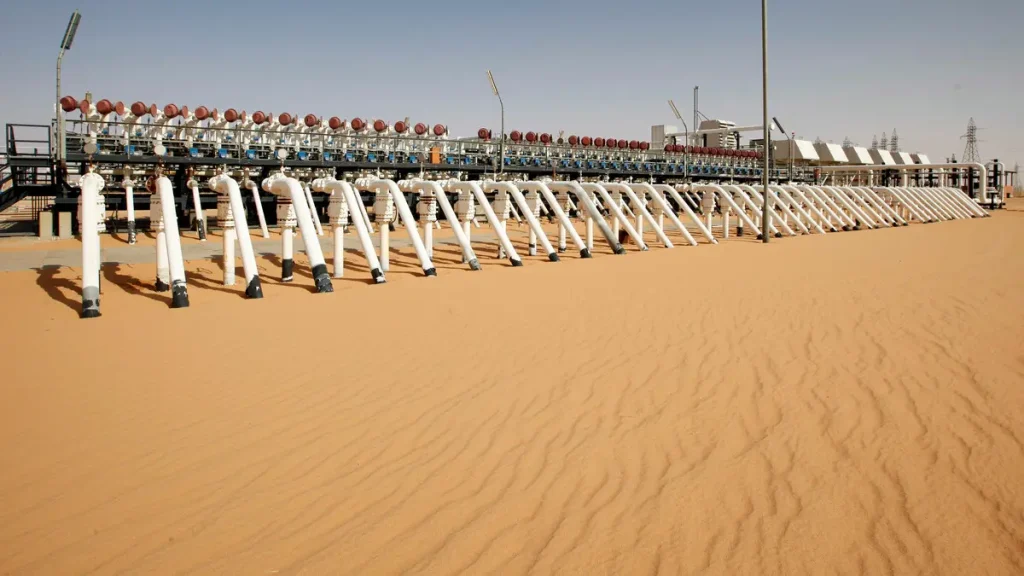
Libya has reopened a key valve on the Sharara Zawiya crude pipeline, allowing pumping operations to resume after a closure disrupted one of the country’s most important oil routes.
The National Oil Corporation (NOC) said Valve No. 7 on the main crude transportation line operated by Akakus Oil Operations reopened following joint efforts by several parties. Technical and operational teams immediately began work to restart pumping safely and gradually restore crude flows to normal levels.
The pipeline carries crude from the Sharara oil field in southwestern Libya towards the Zawiya refinery and export infrastructure. The reopening removes an immediate disruption to crude supplies and allows operations to move back towards normal levels.
The NOC said teams were implementing engineering and precautionary measures to ensure stable pumping operations towards the Zawiya refinery and export ports.
The development follows several days of disruption that raised concerns over falling production, lost revenue and potential pressure on the Zawiya refinery.
Sharara disruption highlights Libya’s oil infrastructure risk
The reopening is positive for Libya’s oil sector, but the incident also highlights how quickly disruptions around key infrastructure can affect production and exports.
Sharara is one of Libya’s largest oil fields, with production capacity of around 340,000 barrels per day. Its crude depends on pipeline infrastructure connecting the southwestern oil fields with western Libya’s refining and export network.
Before the reopening, the NOC warned that the continued closure of Valve No. 7 could significantly increase production losses and threaten crude supplies to the Zawiya refinery. By September 24, the corporation estimated cumulative production losses at more than 720,000 barrels and direct financial losses above $75 million.
The latest reopening limits the immediate impact of the disruption, but it also underlines a broader challenge for Libya. The country depends heavily on oil production to generate state revenue, while much of its export and refining system relies on a limited number of critical infrastructure routes.
For the NOC, restoring stable flows will now be the priority as technical teams gradually return the pipeline to normal operating levels.
The incident also shows why protecting Libya’s oil infrastructure remains central to maintaining production, exports and government revenue. A single disruption at a key valve can quickly extend beyond the field itself, affecting refineries, exports and the wider economy.