
Chevron Returns to Libya as U.S. Backs New Energy Investment
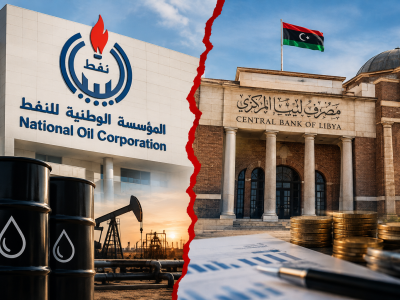
U.S. energy major Chevron is deepening its return to Libya, with Washington welcoming the company’s renewed cooperation with the National Oil Corporation (NOC) and linking the partnership to higher production, infrastructure investment and wider U.S. business opportunities.
The U.S. Embassy in Libya said Chevron’s partnership with the NOC could contribute to increased oil production, modernization of infrastructure and job creation, while creating opportunities for further American investment across the Libyan economy.
Chevron Expands Exploration
Chevron’s return is tied to Contract Area 106 in the Sirte Basin, where the company was selected as the winning bidder in Libya’s 2025 licensing round. The company has moved beyond the initial award. Chevron and the NOC signed a production-sharing agreement covering the area, giving the U.S. major a formal framework to begin exploration and development activities.
Chevron has also expanded its cooperation with the NOC offshore. The two companies agreed to conduct a technical study of offshore Block NC146, an area that remains largely unexplored but has geological indicators that could support future discoveries.
The partnership has also moved into unconventional resources. Chevron and the NOC agreed to assess shale oil and gas potential in the Sirte, Murzuq and Ghadames basins. The NOC has cited preliminary estimates of around 18 billion barrels of unconventional oil resources and 123 trillion cubic feet of gas in these areas. Those figures are resource estimates, not confirmed commercial reserves, and further technical work will be needed to determine their development potential.
A Stronger U.S. Energy Presence
Chevron’s return matters because Libya needs foreign capital, technology and technical expertise to raise production and develop new resources. The NOC has been targeting higher output, with plans to push production toward 1.5 million barrels per day. Reaching that level will require investment not only in new exploration but also in existing fields, pipelines, terminals and other oil infrastructure.
Washington’s response also gives the Chevron deal a wider economic dimension. The U.S. Embassy has pointed to infrastructure modernization, employment and additional American investment as potential benefits of the partnership.
That could encourage other U.S. companies to look more closely at Libya, particularly if Chevron can establish a stable operating base and make progress on its exploration acreage. For Libya, the potential upside is straightforward. Successful exploration could add new reserves and eventually increase production and export capacity. Higher oil output would also strengthen government revenues in an economy that remains heavily dependent on hydrocarbons.
But the investment cycle will take time. Licensing an area does not immediately translate into new barrels. Exploration, seismic work, drilling, appraisal and field development can take years before a discovery reaches commercial production.
For international investors, the more important signal may be the return of a major U.S. energy company after years away from the Libyan upstream sector. Chevron will now have to turn its new acreage and technical studies into exploration spending and drilling results. If that process progresses smoothly, Libya could see more international companies commit capital to its underexplored basins. The immediate question is therefore no longer whether Chevron is returning to Libya. It is how quickly the company can move from agreements and studies to drilling, discoveries and eventually new production.