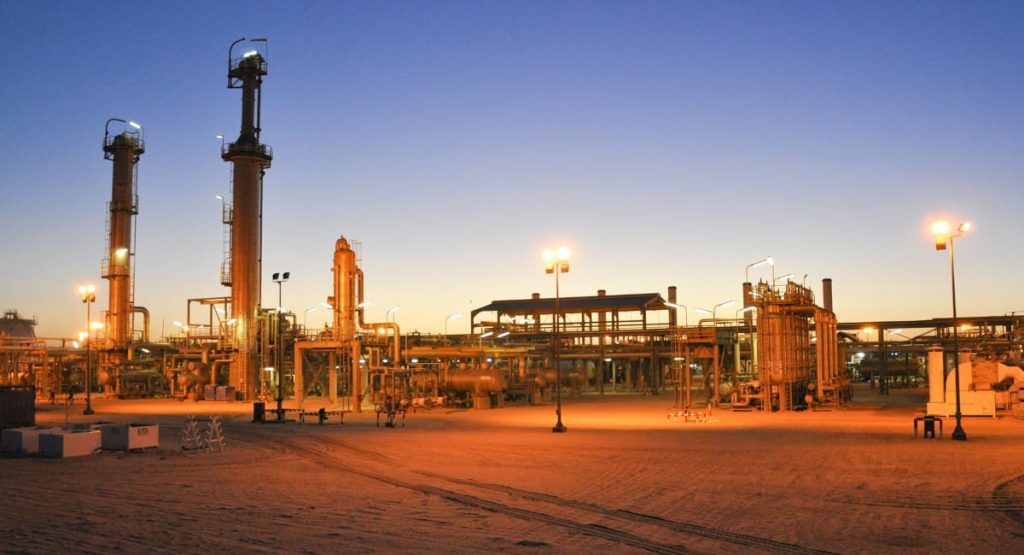
Libya’s crude oil production has climbed to 1,438,560 barrels per day, marking the highest output level since 2013, according to the National Oil Corporation (NOC). The latest figure signals a continued recovery in the country’s upstream sector, even as operational and political challenges persist across the energy system.
The NOC confirmed that total hydrocarbon production, including condensates, reached approximately 1.49 million barrels per day, reinforcing Libya’s position as one of Africa’s key oil suppliers. The increase reflects steady output from major producing fields and improved operational performance across several subsidiaries.
The milestone comes as Libya’s oil sector continues to rebuild capacity lost during years of disruption following the 2011 conflict. Despite repeated shutdowns in previous years due to security incidents, infrastructure constraints, and investment gaps, production has gradually recovered toward pre-crisis levels.
Industry officials within the NOC highlighted that the current production level brings Libya closer to its medium-term target of 1.5 million barrels per day, a threshold widely viewed as a benchmark for stabilising fiscal revenues and strengthening foreign exchange inflows.
The recovery also reflects renewed activity across key oil regions, particularly in the Sirte Basin and western onshore fields, where output stability has improved compared to earlier years of volatility. However, analysts continue to note that Libya’s production trajectory remains highly sensitive to local security dynamics and infrastructure bottlenecks.
Libya holds Africa’s largest proven oil reserves, but production has historically fluctuated due to political fragmentation and repeated force majeure events. The latest output increase highlights both the resilience of the sector and the structural limitations that still constrain long-term growth.
Production gains highlight fragile recovery path
While the current production level marks a significant technical achievement, the broader outlook for Libya’s oil sector remains mixed. Infrastructure degradation, delayed maintenance cycles, and uneven investment continue to limit the country’s ability to sustain consistent output above the 1.5 million barrels per day mark.
At the same time, global energy market conditions continue to support Libya’s export relevance, particularly as European buyers seek diversified supply sources outside traditional producers. This dynamic has contributed to stronger commercial interest in Libyan crude, even amid domestic uncertainties.
The NOC has repeatedly signaled ambitions to lift production further in the coming years, but industry experts stress that sustained growth will depend on stable governance conditions and expanded upstream investment.
For now, the latest production figure underscores a clear trend: Libya’s oil sector is regaining momentum, but its long-term stability remains tightly linked to the country’s broader political and security environment.