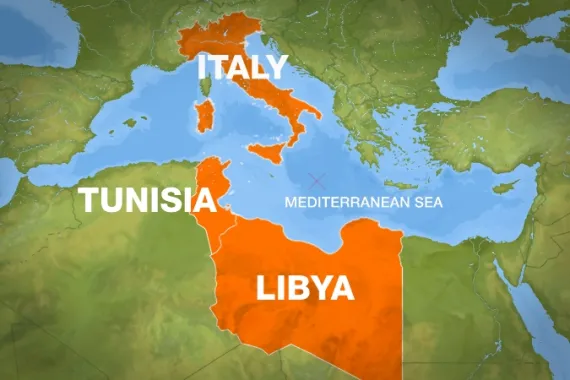
Tunisia has launched a new maritime freight route connecting its ports to both Italy and Libya, marking a significant step toward strengthening trade flows across the central Mediterranean.
The new shipping line links the Tunisian ports of Zarzis and Rades with Italy’s Gioia Tauro and Libya’s Tripoli port. Officials say the corridor aims to improve logistics, reduce shipping costs, and accelerate cargo movement between North Africa and southern Europe.
A New Trade Corridor Across the Mediterranean
Authorities in Tunis confirmed the start of operations after the port of Zarzis received its first container vessel under the new route. This development places the southeastern Tunisian port on the map of international maritime trade for the first time.
The route creates a direct commercial link between three key markets. It allows exporters and importers to move goods more efficiently without relying on longer and more expensive land transport routes.
The initiative reflects a broader push to deepen regional connectivity. Tunisian officials have emphasized the role of maritime logistics in boosting trade integration between North Africa and Europe.
Lower Costs and Faster Delivery Times
The new corridor targets one of the main barriers facing exporters in southern Tunisia: high transport costs. Companies in the region previously depended on distant northern ports, which increased delivery times and reduced competitiveness.
By using Zarzis as a logistics hub, the route shortens supply chains. It reduces transit time for goods such as agricultural products and seafood, which require faster delivery to remain competitive in European markets.
Officials also expect the route to streamline cargo flows into Libya, where demand for imported goods remains strong. The connection with Tripoli provides a direct maritime alternative to land crossings, which often face delays and disruptions.
Strategic Implications for Libya
For Libya, the new route offers more than just improved logistics. It strengthens access to European supply chains at a time when the country seeks to expand trade and stabilize imports.
Tripoli’s inclusion in the corridor enhances its position as a gateway for goods entering western Libya. It also supports private sector activity by offering more predictable shipping schedules and lower transport risks.
The route could also encourage competition among shipping providers, potentially reducing freight costs over time. That dynamic may benefit Libyan importers and consumers, especially in sectors that depend heavily on foreign goods.
Boosting Investment in Southern Tunisia
Tunisian authorities view the project as a catalyst for regional development. Zarzis has long remained underutilized despite its strategic location near Libya and key Mediterranean routes.
The new shipping line aims to change that. It encourages investment in port infrastructure and logistics services while creating opportunities for local businesses.
Plans are already underway to expand the port’s capacity. Officials intend to deepen the harbor to accommodate larger vessels and increase cargo volumes.
These upgrades could transform Zarzis into a multi-purpose hub serving both commercial shipping and tourism in the coming years.
Part of a Broader Regional Strategy
The maritime route aligns with wider efforts to strengthen economic ties between Tunisia, Libya, and European partners. Policymakers increasingly view transport connectivity as a key driver of growth and regional integration.
In recent years, discussions around Mediterranean logistics corridors have intensified. Governments and private operators have explored new shipping links to support trade diversification and reduce reliance on traditional routes.
The launch of this corridor signals a shift from planning to implementation. It demonstrates how targeted infrastructure and logistics projects can reshape trade patterns across the region.
Outlook
The long-term success of the route will depend on consistency, demand, and continued investment. If volumes grow and operations remain stable, the corridor could become a permanent feature of Mediterranean trade networks.
For Libya, Tunisia, and Italy, the new maritime link offers a practical step toward closer economic integration. It provides a faster and more cost-effective channel for goods, while opening the door to future expansion in regional logistics.
As trade dynamics evolve, this corridor may play a growing role in connecting North Africa to European markets.