Turkey Deepens Its Stake in Libya’s Energy Revival
Turkish Energy Minister Alparslan Bayraktar recently announced that Turkey’s state oil company (TPAO) has acquired a 40% share in two Libyan oil blocks – one onshore and one offshore – awarded in Libya’s first licensing round in nearly two decades. Bayraktar made the comments at a Feb. 15 ceremony in southern Turkey, framing the awards as part of Ankara’s overseas energy expansion. He said that TPAO will explore the fields together with Spain’s Repsol, reflecting the outcome of Tripoli’s recent bidding round.
Libya’s National Oil Corporation (NOC) unveiled the licensing results in mid-February as part of a drive to revive its war-damaged industry. The round saw Spain’s Repsol win two of the offered blocks: the onshore C3 field and the offshore Area 07 field. In each case Repsol will operate with partners, Turkey’s TPAO (holding 40%) and Hungary’s MOL on the offshore block. Other winners included U.S. supermajor Chevron in the Sirte Basin and a consortium of Italy’s Eni with QatarEnergy on a different offshore block. The round was intended to attract overseas investors after years of conflict-related isolation.
Historic Bid Round Ignites Production Hopes
Libya sits on vast oil wealth, with roughly 48 billion barrels of proven reserves – among the world’s largest. Yet its industry has long been constrained by instability. NOC chairman Masoud Suleiman praised the bid round as “a major turning point for reviving Libya’s oil sector and doubling the country’s production,” saying that success would foster an “economic renaissance”. Production is already climbing: Libya pumped about 1.25 million barrels per day in January (its highest level in a decade) and is targeting 2.0 million bpd by 2028. Oil and gas still account for roughly 95% of Libya’s export earnings and over 90% of government revenue, meaning that even modest output gains could significantly boost the budget and jobs.
The new contracts tie major international firms to Libya’s recovery. For example, Repsol – already operator of the giant Sharara field – confirmed it will run both the C3 and O7 blocks, working with TPAO and MOL. Chevron, returning after a 16-year absence, called its new licence “a good fit” with its North Africa strategy.
Meanwhile, Tripoli has been courting additional big-ticket investments: in January the government announced a 25-year, $20+ billion agreement with TotalEnergies and ConocoPhillips to raise capacity by 850,000 bpd. It also signed memoranda with Chevron (and Egypt’s oil ministry) to deepen cooperation. Together, these deals form part of a broad push to bring foreign capital and technology into Libya’s oil sector.
Balancing Ambitions with Risks
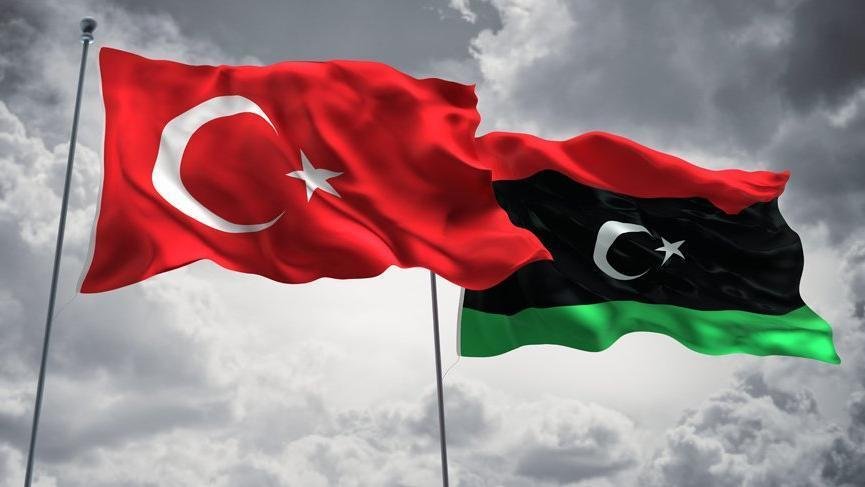
Turkey’s growing involvement is part of a closer partnership between Ankara and Tripoli. In recent years, the two sides have strengthened their cooperation in the energy sector. A 2019 agreement on maritime boundaries and a 2022 framework deal allowed them to start working together on oil and gas exploration. In June 2025, they took another step by signing a memorandum of understanding that sent Turkish research ships to operate in Libyan waters. Holding a 40% stake in the new blocks helps Ankara diversify its energy supplies and solidify ties with the Government of National Unity in Tripoli, which is seeking steady partners to bolster its fragile economy.
At the same time, analysts caution that many international firms remain wary of Libya’s still-fragile institutions. Only five of the 20 offered blocks received bids – a “limited response” attributed to “lingering uncertainty” about Libya’s divided governance and local security. Another analyst called the outcome “a considerable disappointment,” noting that companies are still wary of “above ground” risks and whether Libya’s institutions can reliably enforce contracts. Indeed, Libya remains split between the UN-backed Tripoli government and a rival eastern administration, and recent protests and blockades have repeatedly shown how quickly production can stall. These realities suggest that winning a licence is only part of the challenge: the real test is turning it into consistent output.
For Libyans, the Turkish announcement is thus a mixed signal. On one hand, it confirms that major investors are willing to take concrete stakes – a crucial step toward higher output, jobs and government income. On the other hand, it highlights how much still hinges on politics and transparency. The NOC chairman has framed the bid round’s success as tied to rebuilding trust: he hailed it as a victory “in restoring the world’s confidence in Libya’s ability to recover and develop its institutions”. Converting each contract into steady production and fair revenue-sharing will be the true measure of Libya’s recovery.
In the coming years, strong performance in these fields could significantly aid Libya’s fragile economy – but only if production lives up to targets and proceeds are well-managed. Libya’s oil riches have long been described as “both a blessing and a burden” in the absence of strong institutions. The new Turkish stake highlights that tension: the opportunity is large, but the payoff depends on Libya’s ability to convert contracts into consistent growth and shared prosperity. As Suleiman and others have emphasized, attracting major energy firms to Libya must go hand in hand with building the governance needed to turn hydrocarbon wealth into a sustained economic renaissance.