Libya Maritime Crisis Deepens as Russian LNG Tanker Arctic Metagaz Faces Ongoing Drift and Safety Risks
Libya faces a renewed escalation in the Russian tanker crisis as authorities maintain a high state of alert over the drifting LNG carrier Arctic Metagaz. The situation exposes ongoing weaknesses in Libya’s maritime security, increases environmental concerns, and reinforces the country’s growing exposure to geopolitical competition in the Mediterranean.
Eastern Libyan authorities continue to monitor the vessel after earlier claims that they had secured and towed it away from coastal waters. Recent updates challenge that position. Maritime sources confirm that the tanker remains unstable at sea after towing operations failed due to severe weather and technical limitations.
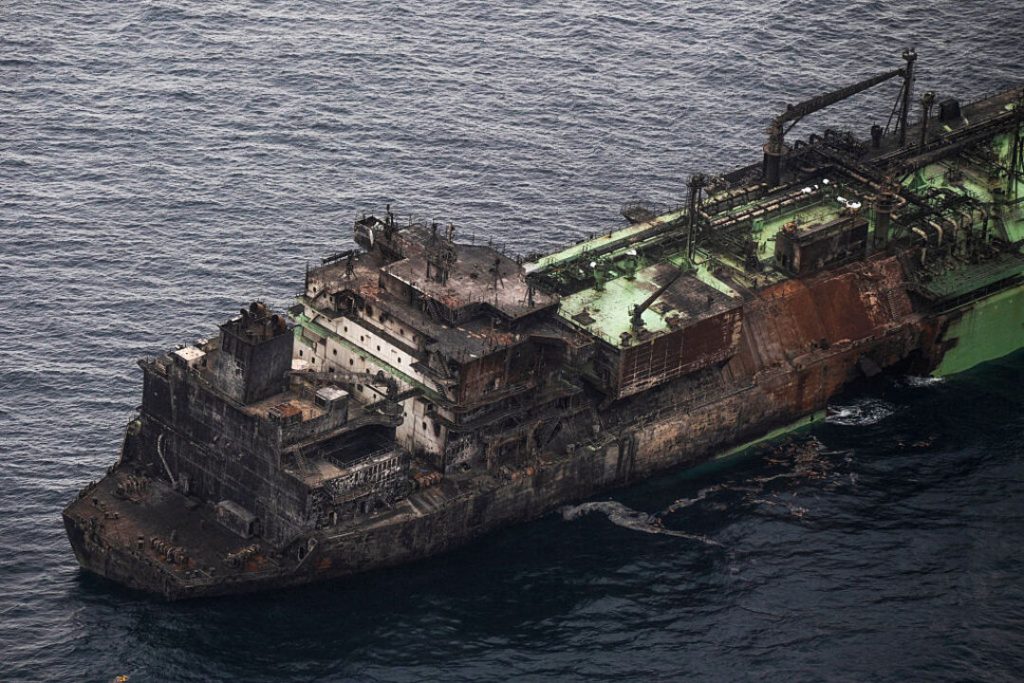
The crisis committee in eastern Libya confirms that the vessel still requires continuous surveillance. Tugboats continue to track its position to prevent renewed drift toward sensitive coastal zones. Officials also confirm that the tanker remains structurally damaged, with engines inoperable and full power loss affecting onboard systems. They report no confirmed leaks so far, but they continue to treat the situation as high risk.
Libya’s maritime authorities now describe the situation as unresolved rather than contained. They maintain navigation warnings and restrict vessel movement near the tanker’s estimated position. This shift reflects continued operational uncertainty despite earlier attempts to stabilize the vessel.
Libya initially attempted to stabilize the Arctic Metagaz through a towing operation coordinated by coastal and naval units. The operation succeeded in moving the vessel away from immediate coastal proximity at first. However, worsening sea conditions disrupted control and forced the towing team to disengage.
Officials confirm that strong winds and high waves prevented safe reattachment. The tanker broke free during the operation and drifted back into open waters with limited control.
This setback highlights Libya’s limited capacity to manage large-scale maritime emergencies involving hazardous cargo. The vessel carries liquefied natural gas and residual fuel products, which require specialized containment systems and sustained towing capability. Libya’s current maritime infrastructure struggles to maintain control under adverse weather conditions and extended operational timelines.
The failure also raises questions about coordination between regional maritime actors involved in the operation, including naval units and technical partners. Libya engaged external support mechanisms earlier in the crisis, but the latest developments expose persistent gaps in capacity and coordination.
Libyan maritime authorities continue to stress that no confirmed leaks have occurred. However, technical teams maintain high alert due to structural damage onboard the vessel. The tanker carries both LNG and diesel fuel, which creates dual environmental risk exposure. LNG increases ignition risk under pressure instability, while diesel and heavy fuel products create longer-term marine pollution threats if containment fails.
Environmental agencies across the Mediterranean continue to monitor the situation due to the potential for cross-border impact. European monitoring bodies previously warned that the vessel could trigger a regional environmental incident if structural conditions worsen. Those concerns remain active as sea conditions continue to affect towing stability and vessel trajectory.
Libya’s National Oil Corporation continues to coordinate with maritime partners and salvage operators. However, authorities have not yet secured a permanent stabilization plan for the vessel. The situation remains dependent on weather conditions and available maritime support capacity.
The Arctic Metagaz incident now extends beyond a maritime emergency. It increasingly reflects broader geopolitical competition in Libya and the Mediterranean region. Reports link the vessel’s earlier damage to naval incidents involving suspected drone activity, although no party has officially confirmed responsibility. The situation highlights the growing overlap between maritime infrastructure, energy transport, and hybrid security risks.
Libya now sits at the center of a sensitive energy and sanctions-related shipping network. The vessel forms part of what analysts describe as a “shadow fleet” used to move sanctioned Russian energy exports. This position places Libya in a difficult space between competing international interests. Western actors focus on environmental and security risks, while Russia maintains strategic interest in cargo and logistics continuity. European states track the vessel due to proximity concerns near key shipping corridors.
Internal coordination challenges add further pressure. Authorities in eastern Libya claim operational control over the stabilization process, while national maritime bodies continue to issue independent warnings and risk assessments. This parallel structure complicates decision-making and increases uncertainty over responsibility in case of escalation.
The crisis also unfolds alongside broader political and economic developments in Libya, where institutions continue efforts to unify fiscal and governance structures. However, maritime emergencies like the Arctic Metagaz case expose fragmentation in security governance and emergency response capacity.
International maritime organizations continue to monitor the tanker closely. Earlier assessments acknowledged Libya’s rapid response during the initial containment phase. However, the current situation shifts attention toward long-term risk management and sustained operational control rather than short-term intervention.
European states also continue to track the vessel’s movement due to the risk of drift toward major shipping lanes. Any renewed loss of control could trigger coordinated salvage operations or external intervention, depending on trajectory and risk level.
The Arctic Metagaz crisis now enters a prolonged uncertainty phase. Libya retains partial monitoring capacity but lacks full assurance over the vessel’s stability or future movement. Weather conditions remain the most immediate factor. Technical limitations remain the structural constraint. Geopolitical sensitivity continues to amplify every development.
Libya now faces a narrow window to prevent renewed escalation. If control weakens again, the incident could shift from a contained maritime emergency into a wider environmental and security crisis affecting the Mediterranean.
For now, authorities continue surveillance operations. The tanker remains afloat. Control remains uncertain.