Nigeria’s Dangote refinery is preparing for what could become Africa’s largest initial public offering, but the bigger story for Libya may be what the refinery’s expansion means for demand for African crude. Dangote Refinery is expected to seek about $5 billion through an IPO in October, according to Reuters. The refinery is already operating at its initial capacity of 650,000 barrels per day and has tested production at 700,000 bpd. It plans to double capacity within three years.
That expansion will require more crude. Libya is already part of Dangote’s supply chain, giving the development a direct connection to the country’s oil industry.
Libyan Crude
Dangote has increasingly turned to imported crude because it cannot always secure enough Nigerian oil at competitive prices. Reuters reported that imports currently account for around 30% to 40% of the refinery’s crude intake, with the company looking to diversify its sources.
Libyan crude has already entered that supply chain. Dangote has been importing Sharara-grade crude from Libya to help maintain high refinery operating rates. According to Libya Herald, July was the third consecutive month in which the refinery received Sharara crude after taking its first cargo in May. The relationship could become more important if Dangote expands as planned. A larger refinery will need a larger and reliable supply of crude, giving producers outside Nigeria another potential market.
For Libya, that comes as the country tries to increase production. The National Oil Corporation said crude output reached 1,438,560 bpd on June 21, with condensate taking total daily production to 1,487,723 bpd, the highest level since 2013. The question is where Libya’s additional barrels will go.
Africa’s Refining Shift
Dangote is changing the flow of petroleum products across Africa. Nigeria has historically exported crude while importing large volumes of refined fuel. The Dangote refinery is beginning to reverse part of that pattern by supplying both the Nigerian market and overseas buyers.
The effect is already visible in trade data. Nigeria’s seaborne petroleum-product shipments averaged 561,000 bpd in the second quarter of 2026, compared with 79,000 bpd in 2023, according to the U.S. Energy Information Administration. About 350,000 bpd was exported during the quarter. That creates a potentially important regional market for crude producers such as Libya. As African refining capacity grows, more crude can be processed within the continent instead of being shipped to refineries farther away.
The opportunity for Libya is not necessarily about replacing its traditional European customers. It is about adding another outlet for its crude at a time when the NOC is trying to raise production and attract investment into mature and undeveloped fields.
Sharara is particularly relevant. The field’s production reached around 335,000 bpd in August, according to Libya Herald, with Akakus Oil Operations targeting about 355,000 bpd by mid-2027. If production continues to rise, having more potential buyers in nearby markets could become increasingly valuable.
Libya’s Refining Gap
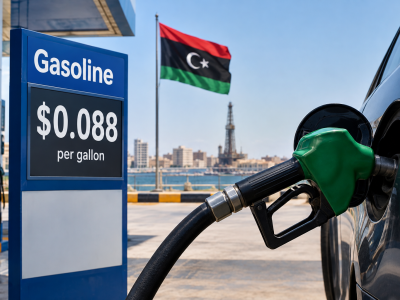
There is also a contradiction that makes the Dangote story particularly relevant to Libya. Libya produces the crude, while Nigeria is building the refining capacity. Yet Libya still imports much of the fuel it consumes.
That means Libya captures most of the value from its oil at the production and export stage, while importing finished products further down the chain. Dangote shows what Libya could gain from developing its own refining sector. A modern refinery can turn crude into gasoline, diesel, aviation fuel and other products, allowing a producer to capture more value from each barrel while reducing dependence on imports.
This does not mean every additional barrel should be refined domestically. Exporting crude will remain central to the country’s economy. But the continued growth of Dangote also shows that refining capacity is becoming a bigger part of Africa’s energy market. That could work in Libya’s favour in two ways: it creates another potential market for Libyan crude while also highlighting the economic cost of Libya’s own downstream weaknesses.
The Bigger Opportunity
Dangote’s planned IPO is ultimately about financing the next stage of the refinery’s growth. For Libya, the more important question is what that growth means for the regional crude market.
If Dangote doubles capacity and continues to import a significant share of its crude, African producers could gain a major new source of demand. Libya is already supplying the refinery with Sharara crude, and its plans to increase production could give it more barrels to sell.
The opportunity, however, goes beyond Dangote.
Africa is slowly building more refining capacity, creating the possibility of a more integrated regional oil market in which countries such as Libya supply crude while countries with new refineries process it into products for African and international markets.
For Libya, that means the future oil strategy cannot be only about producing more barrels. It also needs to be about where those barrels are sold, how they are transported and how much value Libya captures from them. Dangote’s expansion provides a clear example of why that question matters.