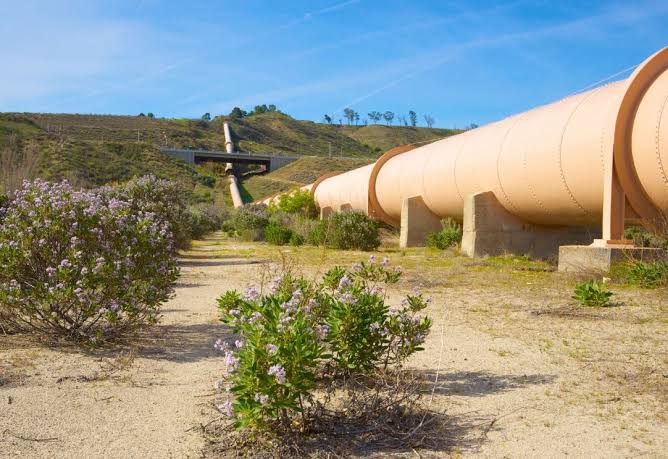
Egypt and Libya are studying a major new oil infrastructure project that could reshape crude flows across North Africa. The two countries are considering an 800-kilometer pipeline linking Tobruk in eastern Libya with Alexandria on Egypt’s Mediterranean coast.
The proposed pipeline would carry Libyan crude to Egyptian refineries, with preliminary costs estimated at more than $1 billion, according to a government official who spoke to Asharq Bloomberg. The two sides are now examining financing options, construction details, potential volumes and the pipeline’s final capacity.
The project comes as Libya pushes oil production toward 1.5 million barrels per day and Egypt looks for more reliable crude supplies. If the plan moves forward, it could give Libya another route to monetize growing production while helping Egypt secure feedstock for its refining system.
Libya’s Production Growth Creates New Export Options
Libya has increased crude production sharply this year. National Oil Corporation Chairman Masoud Suleman said output recently reached around 1.43 million barrels per day, with another 49,000 bpd of condensates. Total liquids production therefore approached 1.48 million bpd, the highest level since 2013.
That growth creates an infrastructure question for Libya. Higher production requires reliable export channels, storage and processing capacity. Libya currently relies heavily on seaborne exports through its Mediterranean terminals, while its domestic refining system still struggles to meet demand.
The proposed Tobruk-Alexandria link would add a different option. Instead of moving all incremental barrels toward export terminals and international buyers, Libya could send some crude directly into Egypt’s refining system.
That could become particularly relevant if Libya continues moving toward its 1.5 million bpd target and later pursues its longer-term ambition of reaching 2 million bpd.
The pipeline could also strengthen the economic relationship between eastern Libya and Egypt. Tobruk sits close to the Egyptian border, giving the route a natural geographic advantage compared with longer maritime supply chains.
Egypt Wants More Libyan Crude
For Egypt, the project comes at a time when energy security has become a growing priority. Cairo is seeking at least 1 million barrels of Libyan crude per month to compensate for the suspension of Kuwaiti crude supplies, according to an Egyptian government official cited by Asharq Bloomberg. Regional military escalation and disruptions around the Strait of Hormuz have increased pressure on oil supply chains.
Egypt has also been investing in its refining infrastructure. The government approved investment budgets for Alexandria Petroleum Company and Amreya Petroleum Refining Company for the 2026-27 fiscal year and has called for upgrades to increase output and improve product quality.
Egypt’s refining sector has already shown signs of stronger performance this year. The country exported more than 2.3 million tonnes of petroleum products worth about $2.3 billion during the first half of 2026, according to official data reported by Arab News.
A steady supply of Libyan crude could therefore support Egypt’s downstream strategy while reducing exposure to volatile international crude supply routes.
A Potential Shift From Crude Exports to Regional Value Chains
The strategic value of the project goes beyond the pipeline itself.
Libya has historically exported most of its crude while importing substantial volumes of refined petroleum products because domestic refining capacity remains constrained. The country has five refineries with a combined nameplate capacity of about 380,000 bpd, but actual output has remained far below that level because of years of damage and underinvestment.
Sending crude to Egyptian refineries could help bridge part of that gap. Libya could potentially receive refined products for domestic consumption while Egypt processes the crude and potentially exports surplus products.
That model would create a regional value chain rather than a simple crude export transaction.
It could also become increasingly important as Libya brings more production back online. The National Oil Corporation plans to restart the 220,000 bpd Ras Lanuf refinery within six to 12 months, which would improve Libya’s own refining position.
The combination of higher crude production, refinery rehabilitation and stronger links with Egypt could gradually give Libya more flexibility over where and how it monetizes its hydrocarbons.
Financing and Capacity Will Determine the Project’s Future
The pipeline remains at the study and planning stage. Egypt and Libya have yet to settle financing, construction arrangements, volumes or the final capacity. The NOC also did not respond to requests for comment from Asharq Bloomberg.
Those decisions will determine whether the project becomes commercially viable.
A pipeline costing more than $1 billion needs sufficient and dependable crude volumes to justify the investment. Libya’s rising production improves the outlook, but the economics will depend on long-term throughput, refinery demand, financing terms and the stability of cross-border operations.
Still, the timing is significant.
Libya is producing more oil, Egypt needs secure crude supplies, and both countries are looking to strengthen their energy infrastructure. An 800-kilometer Tobruk-Alexandria pipeline could therefore become an important piece of a broader North African energy corridor.
If the project advances, it would mark another step in Libya’s shift from simply increasing crude output toward building more integrated regional energy relationships.