Egypt and Libya are looking at an oil pipeline that could become one of North Africa’s most consequential energy projects.
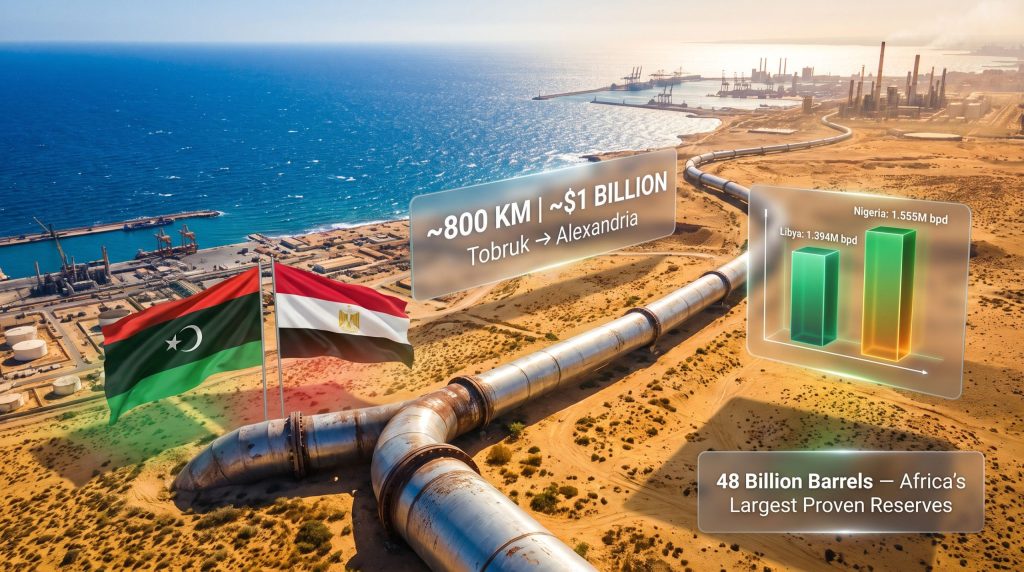
The proposed 800-kilometer link would connect Tobruk in eastern Libya with Alexandria on Egypt’s Mediterranean coast, giving Libyan crude a direct route into Egypt’s refining system. Early estimates put the project cost at more than $1 billion, although the final investment requirement remains unclear.
The idea has a simple commercial logic. Libya has crude. Egypt has refining capacity. Both need reliable energy infrastructure.
But turning that logic into a working pipeline will require much more than an agreement between two governments.
Egypt Needs Crude. Libya Needs Refining Capacity.
The project comes at a time when energy security has moved back to the top of government agendas.
The Strait of Hormuz crisis has reminded energy markets how quickly a geopolitical shock can disrupt established supply routes. That is encouraging countries to look again at pipelines, refineries, storage facilities and other infrastructure that can provide greater control over regional energy flows.
Egypt has a particularly strong reason to secure additional crude supplies.
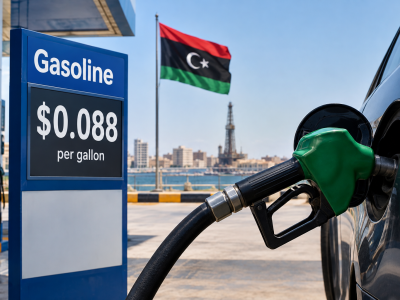
Its large refining system gives Cairo an opportunity to turn imported crude into higher-value petroleum products. Libya, meanwhile, continues to struggle with a persistent mismatch between its large oil production capacity and its ability to meet domestic demand for refined fuels.
That creates a natural economic relationship.
Libya could send more crude eastward for processing, while Egypt could supply Libya with refined products. A pipeline would also reduce reliance on maritime transport for at least part of the crude trade between the two countries.
The opportunity becomes more significant if Libya continues to raise production. Higher output will require reliable export routes and additional infrastructure to move crude to market.
For Egypt, Libyan crude also offers geographic proximity. Tobruk and Alexandria sit across a relatively short Mediterranean corridor compared with many alternative supply routes. The commercial case, therefore, is not difficult to understand. The difficult part is everything around it.
The $1 Billion Question Is Only the Beginning
A pipeline stretching roughly 800 kilometers will require substantial upfront capital and long-term confidence from investors.
Neither Egypt nor Libya can treat the project simply as a government infrastructure scheme if the final cost reaches into the billions. International lenders, infrastructure funds, energy companies and other foreign investors are likely to have a role in financing and developing a project of this scale.
That means the economics will matter as much as the politics.
Investors will want to know who owns the pipeline, who operates it, how tariffs will work, how much crude will flow through it and whether long-term supply agreements can guarantee sufficient volumes.
They will also look closely at Libya’s political and security environment.
This is where the project becomes more complicated.
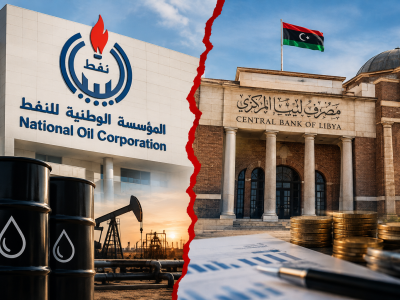
Energy infrastructure in Libya does not exist outside the country’s political struggle. Oil revenues remain at the heart of the competition between institutions and political factions, while foreign powers have developed significant interests across the country.
Any major Egyptian role in Libya can therefore attract political scrutiny, particularly in western Libya. At the same time, discussions about foreign influence in Libya cannot ignore Turkey’s deeply established economic, political and security presence in the west.
That makes the pipeline more than an energy project.
It would also represent a major expansion of Egypt-Libya economic integration and could alter the balance of regional energy infrastructure.
A Good Idea That May Still Be Ahead of Its Time
The Tobruk-Alexandria pipeline makes sense on paper.
Egypt needs reliable crude supplies and wants to make better use of its refining capacity. Libya needs markets for growing oil production and continues to depend heavily on imported refined products. Connecting the two systems could create value for both sides.
But commercial logic does not automatically overcome political reality.
For the project to attract serious international capital, investors will need confidence that Libya can protect the infrastructure, honor commercial agreements and maintain a predictable framework for managing oil revenues.
That points to the bigger issue. The pipeline could eventually become part of a wider North African energy corridor linking Libyan production with Egyptian refining, ports, electricity networks and potentially other energy infrastructure. But that opportunity depends on Libya moving toward stronger institutional coordination and a clearer national framework for strategic projects.
Optimism around the pipeline is justified. So is caution.
Egypt and Libya have a strong economic reason to build it. The question is whether Libya’s political environment is ready to support an infrastructure project designed to last for decades.