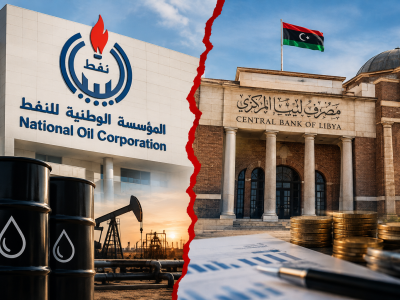
The European Union, Libya’s National Oil Corporation National Oil Corporation, and the United Nations Environment Program United Nations Environment Program launched a joint cleaner energy initiative in Tripoli during a high-level workshop focused on emissions reduction, oil spill prevention, and industrial modernization.
EU official Nicola Orlando opened the workshop alongside NOC Chairman Masoud Suleiman and UNEP representatives. The participants framed the initiative as a practical step toward cleaner production in Libya’s oil sector while maintaining output stability and strengthening Europe’s energy security.
The program reflects a wider effort to align Libya’s hydrocarbon industry with international environmental standards. It also signals stronger cooperation between Libya and European partners on energy transition priorities.
Cleaner Production Goals and Industrial Modernization
The workshop focused on four main areas: cleaner energy production, emissions reduction, oil spill prevention, and energy efficiency improvements across Libya’s oil infrastructure.
Participants stressed the need to upgrade Libya’s production systems across upstream and downstream operations. They highlighted the importance of reducing flaring, improving leak detection systems, and modernizing storage and transport infrastructure.
Libya’s oil sector continues to face environmental and technical challenges due to aging infrastructure and years of underinvestment. The initiative targets these weaknesses while supporting stable production levels that remain critical for national revenue.
The discussions also explored practical cooperation between Libyan institutions and European technical teams. These include monitoring systems for emissions, environmental risk management tools, and training programs for local engineers.
EU Energy Security Strategy and Libya’s Role in the Mediterranean
The initiative also reflects Europe’s energy security priorities. EU states continue to diversify supply sources and strengthen partnerships with North African producers.
Libya holds a strategic position in this strategy due to its proximity to European markets and its significant oil and gas reserves. The EU aims to support cleaner production in Libya to reduce lifecycle emissions while maintaining reliable energy flows.
For Libya, the cooperation offers access to environmental technology, technical expertise, and potential investment channels linked to energy efficiency and modernization.
The initiative also reinforces Libya’s position as a key Mediterranean energy supplier. It connects energy production with environmental governance, which increasingly influences trade and investment decisions in global energy markets.
Analytical Outlook
This initiative shows a shift in how Libya engages with international energy partners. The focus now extends beyond production volumes toward environmental performance and operational efficiency.
The EU, Libya’s National Oil Corporation National Oil Corporation, and the United Nations Environment Program United Nations Environment Program built a cooperation framework that links energy security with emissions control and industrial modernization. Libya benefits from this approach by improving infrastructure efficiency and strengthening its long-term export position. Europe benefits by securing lower-emission energy imports from a nearby supplier.
The success of this initiative depends on execution. Libya needs consistent implementation, technical coordination, and institutional stability to turn this framework into measurable environmental and operational improvements.