Global energy markets face renewed pressure as geopolitical tensions disrupt supply routes and reshape trade flows. These shifts increase demand for alternative crude suppliers, and Libya now sits at the center of that adjustment.
The conflict involving Iran and broader instability in key shipping corridors tighten global supply expectations. Buyers search for replacement barrels, especially light sweet crude that meets refinery requirements. Libya benefits from this shift because its oil matches those specifications and reaches Mediterranean markets quickly.
This change does not create new demand for oil. Instead, it redistributes existing demand. Libya captures a larger share of global trade as buyers adjust sourcing strategies.
Libya raises output to multi-year highs
Libya’s National Oil Corporation increased production to around 1.4 million barrels per day in April. This marks the highest level of output since at least 2013. The country also exported about 1.2 million barrels per day during the same period. This performance reflects both operational recovery and stronger global demand. Field operators increased activity as export channels remained open and international buyers showed stronger interest.
The production increase signals improved short-term stability in the energy sector. However, output levels still fluctuate depending on infrastructure conditions and investment flows.
Oil revenues rise sharply in early 2026
Higher output and stronger prices drive a sharp increase in Libya’s oil income. The National Oil Corporation reported revenue of about $2.9 billion in April, up from roughly $1 billion in February.
This jump reflects both higher export volumes and improved global pricing conditions. As Middle Eastern supply tightens, international benchmarks adjust upward. Libya benefits from this price environment without major changes to its production cost base.
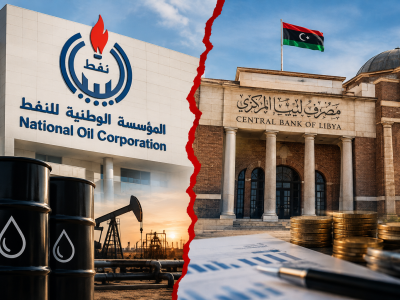
The revenue surge strengthens foreign currency inflows and supports central bank reserves. It also increases fiscal space in a country that depends almost entirely on hydrocarbon exports.
Libya gains from demand for alternative crude supply
International oil companies and refiners now diversify supply sources more aggressively. They reduce exposure to concentrated supply risks in the Middle East and increase purchases from alternative exporters.
Libya gains from this trend because it produces high-quality crude with strong refining yields. Mediterranean proximity also reduces shipping costs for European buyers. Market participants describe increased competition for non-Gulf barrels as global supply tightens. Libya fits into this gap as a short-cycle supplier that can respond quickly to demand changes.
This positioning strengthens Libya’s relevance in global energy trade during periods of disruption.
Energy windfall strengthens fiscal inflows
Higher oil revenue increases Libya’s foreign currency earnings and improves short-term fiscal stability. The country relies almost entirely on crude exports for national income.
Recent figures show a clear upward shift in monthly revenue flows compared to earlier in the year. This improves liquidity in the banking system and supports import financing.
However, revenue volatility remains a key risk. Libya’s income depends heavily on global price movements and production stability. Any disruption in fields or export terminals quickly affects fiscal outcomes.
Unified budget signals limited coordination progress
Libya recently introduced a rare unified budget after consultations between eastern and western authorities. The plan sets total public expenditure at around $31.5 billion, an increase from previous estimates.
The agreement marks a limited step toward fiscal coordination after years of division. It allows basic budget alignment across rival institutions and improves visibility on state spending.
However, analysts note that the budget does not resolve deeper political fragmentation. It formalizes existing power structures rather than replacing them.
Structural challenges limit long-term gains
Despite stronger revenues, Libya still faces structural constraints in how it manages oil wealth. Competing authorities in the east and west control different parts of the fiscal system.
Armed groups also maintain influence over key institutions and economic assets. This creates pressure on state revenues and weakens public financial management.
Experts warn that increased income does not automatically translate into public investment or improved services. Past patterns show that political networks often capture large portions of state spending.
As a result, higher oil revenue improves liquidity but does not guarantee broad economic development.
Inflation and domestic pressure remain key risks
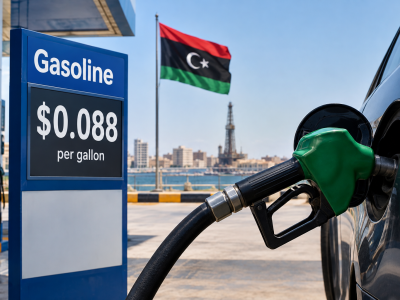
Higher foreign currency inflows can ease pressure on the Libyan dinar and help stabilise import costs. Some analysts expect partial relief in inflation if revenue stability continues.
At the same time, domestic conditions remain sensitive. Prices for essential goods rose significantly in recent months, driven by currency pressure and supply chain constraints.
While higher oil income supports macroeconomic stability, it does not immediately resolve cost-of-living challenges for households.
Outlook: strong energy cycle, uncertain transmission
Libya now enters a favorable energy cycle driven by global supply shocks and strong demand for alternative crude. Output reaches multi-year highs, and revenue shows a clear upward trend.
However, the country still faces a gap between energy performance and institutional capacity. Libya captures more value from global markets, but it struggles to translate that value into consistent national development.
The energy sector therefore drives short-term gains, while long-term outcomes depend on governance stability and investment conditions.
For now, Libya stands as one of the main beneficiaries of a shifting global oil market. The scale of that benefit will depend on how long current energy disruptions last and how effectively the country manages its increased revenue flow.