Suspected Drone Attack on Russian Ship Raises Maritime Security Risks for Libya
An explosion aboard a Russian naval vessel at Benghazi port has raised fresh concerns about maritime security in Libya, after eastern authorities said a preliminary investigation pointed to a suspected drone attack. The incident highlights the risks that growing geopolitical tensions could pose to the country’s ports, shipping activity and wider energy sector.
The explosion occurred early on Sunday, November 22, while the Russian vessel was docked at Benghazi’s naval base. According to the eastern-based government, the ship had stopped to refuel and take on supplies while returning to Russia under maritime cooperation arrangements between the two sides.
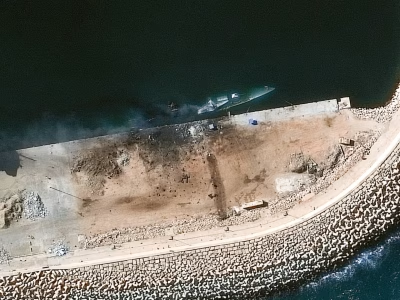
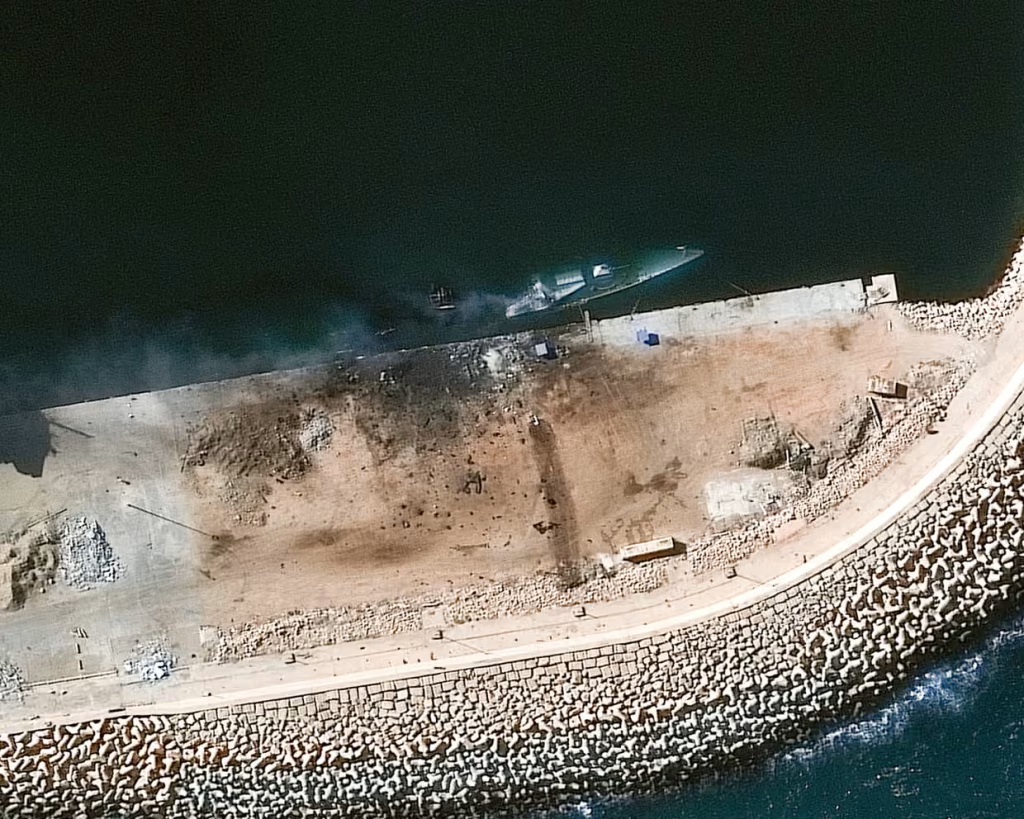
The vessel suffered severe damage and later sank, according to reporting by The Guardian. Satellite imagery showed the ship partly submerged following the explosion and fire.
Two medical sources initially told Reuters that no deaths had been reported, although several people suffered injuries. The number and nationalities of those injured were not immediately clear. No group has claimed responsibility, and Russian authorities had not issued an immediate response.
The incident also drew attention to the security of commercial shipping in the area. Reuters subsequently reported a separate incident involving a Maltese-flagged commercial vessel off Benghazi, which was also struck by a drone boat. Libyan forces reportedly rescued its crew.
The eastern authorities said port and naval base facilities, including warehouses, remained safe and that normal operations would resume after firefighters brought the blaze under control and secured the area.
Benghazi incident raises wider maritime security concerns
The suspected attack comes as the Russia-Ukraine war increasingly affects maritime activity beyond the Black Sea. Both countries have targeted maritime and energy-related assets during the conflict, while attacks involving drones have demonstrated how commercial vessels and infrastructure can face risks far from conventional battlefields.
However, the available evidence does not establish who carried out the Benghazi attack or whether it had any direct connection to the wider conflict. Any assessment of responsibility will depend on the ongoing investigation.
For Libya, the incident presents a particular challenge. The country relies heavily on maritime infrastructure to support its oil exports, fuel imports and international trade. Its Mediterranean coastline also hosts major ports, offshore energy facilities and shipping routes that connect Libyan producers with European markets.
An escalation in maritime threats could increase operating costs for shipping companies and insurers. Vessels entering Libyan waters could face higher risk assessments, while operators may demand stronger security arrangements before using certain ports.
Even without direct damage to energy infrastructure, these developments could affect confidence in Libya’s ability to provide a predictable operating environment for international businesses.
What could this mean for Libya’s energy sector?
The immediate energy implications remain limited. Authorities have not reported damage to oil terminals, pipelines, offshore platforms or other energy facilities. Nor has the incident triggered any confirmed disruption to crude production or exports.
However, the location of the explosion matters. Benghazi is an important commercial and maritime centre in eastern Libya, while the wider coastline supports the movement of energy products, equipment and imported supplies.
Libya also depends on tanker shipments to maintain domestic fuel and cooking gas supplies. The National Oil Corporation recently announced plans to bring an additional LPG tanker into service as part of its efforts to strengthen distribution. Reliable access to ports therefore remains important beyond the country’s crude export business.
The risks extend beyond individual shipments. If attacks involving vessels continue near Libyan ports, shipping companies could reassess their exposure to the country’s eastern Mediterranean approaches. Higher insurance premiums, delays and additional security requirements could raise costs for energy companies and importers.
The environmental dimension also deserves attention. An attack on a vessel carrying fuel or other hazardous cargo could cause a spill, threatening coastal areas, marine ecosystems and nearby infrastructure. Libya’s response to the damaged Russian LNG tanker Arctic Metagaz earlier this year demonstrated how quickly an incident involving a foreign vessel can become a national environmental and economic concern.
As LER examined in its previous report, Beyond the Tanker: What Libya’s Response Reveals About Maritime Risk Management, protecting the coastline requires more than securing individual ports. It also depends on coastal monitoring, emergency response capacity and coordination between maritime and energy authorities.
Security risks could complicate Libya’s investment ambitions
The incident comes at a sensitive time for Libya’s energy sector. The NOC is seeking to raise production capacity and attract billions of dollars in foreign investment. International companies have shown renewed interest in exploration, offshore gas development and existing producing assets.
Yet investors assess more than reserves and commercial terms. They also consider the security of supply chains, access to infrastructure, insurance costs and the ability of local institutions to manage emergencies.
Libya’s political division adds another layer of uncertainty. Rival authorities continue to exercise influence across different parts of the country, while foreign powers maintain relationships with competing political and military actors. This makes a coordinated national response to maritime threats particularly important.
The eastern-based government condemned the suspected attack as a violation of Libyan sovereignty and said it would pursue legal and diplomatic measures against those responsible. It also stressed that Libya should not become an arena for settling disputes between foreign powers.
The investigation will need to establish the circumstances of the explosion, identify those responsible and determine whether the incident exposed wider weaknesses in port security.
For Libya, the immediate priority is to prevent further incidents and protect commercial shipping. But the longer-term challenge is broader. As the country seeks to expand oil production, develop offshore gas resources and attract international capital, maritime security will remain an essential part of its investment environment.
The Benghazi incident has not disrupted Libya’s energy operations so far. However, it is another reminder that geopolitical tensions can reach the country’s commercial and economic infrastructure, even when the conflict itself takes place far beyond its borders.